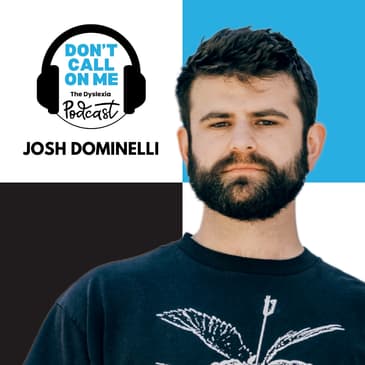
In this episode of Don't Call on Me, Megan and Eryn speak with Josh Dominelli, an inspiring adult diagnosed with dyslexia in first grade. From an early age, Josh committed himself to the hard work of learning, adapting, and thriving despite the challenges dyslexia presented.
Josh shares insights into how his diagnosis shaped his education, career, and personal growth. With a lifelong dedication to learning and perseverance, Josh's journey highlights the importance of resilience, self-advocacy, and embracing the unique strengths that come with dyslexia.
Tune in to hear Josh's powerful story, filled with lessons about persistence, the value of support systems, and the ongoing process of learning and working toward success.
-
Book a consultation with Megan to discuss CALT therapy.
-
Book a consultation with Eryn to discuss advocacy services.
With Love and Gratitude,
Megan, Eryn & The Don't Call On Me Team
[00:00:00] You Can Do Anything You Put Your Mind To. So when you just kind of like tell yourself, oh, I'm dyslexic, I can't do this. You're not going to do it. But if you can say I'm dyslexic, but I'm gonna figure it out. I'm going to do this. I am doing this. And then you just work around it. You go on YouTube, you go on podcasts, you listen to this podcast and just figure out what works for you. It may not happen overnight or it could happen the first try, you know, but as long as you work on it and you're not going to do it.
[00:00:30] And you just stay consistent with things that they're going to work out for you. This is Megan, owner of Dyslexia On Demand. And I'm Erin, owner of Advocate to Educate. And we are the Dont Call On Me Podcast. We are here to talk about dyslexia, to remove the stigma, to hear what families really go through and to share their stories.
[00:00:52] In both of our businesses and personal experiences on a daily basis, we listen to people telling their stories. Many of heartbreak, many of struggle, but most all have a silver lining, even eventually. It's all about the stories. The more we share, the more we realize we aren't alone and we are a community. No, a tribe standing together.
[00:01:22] Today's episode is sponsored by Dyslexia On Demand. Dyslexia On Demand uses only the highest trained dyslexia therapists, and it's all one-on-one and individualized to your child's needs. The best part is that it doesn't matter where you're located because it's all virtual. Visit us at dyslexiaondemand.com to learn more. Today's episode is sponsored by Advocate to Educate.
[00:01:48] We help parents navigate through the confusing maze of special education in public schools in California. We support families starting as early as preschool through 12th grade, creating individual education plans to support the specific needs of your unique and amazing child. To learn more, go to our website, advocate2educate.com. Welcome listeners to the Don't Call On Me podcast.
[00:02:18] Today, we have a very, very special guest, Josh. This is a little different than most of the people we have on our podcast today. So this is a little insight into what happens behind the scenes of Don't Call On Me. So my name is Josh and I am a creative producer in Los Angeles. I work on a podcast called Group Chat News and one of the hosts on it, Anand Murthy, knows Aaron.
[00:02:44] And she was seeking help with starting this podcast. She's like, no clue what I'm doing. I don't know how to start. Anand connected us via email. And then I actually edited the first episode, helped produce everything and help get everything right on track for Aaron and Megan. That's such a business way. I'll explain a business way to explain our connection.
[00:03:11] But what I will say is I have a friend who introduced me to Josh. And when we sent the first email, he wrote back and actually said, you know, we were actually looking for somebody to just help us and guide us because Megan and I had no idea how to produce a podcast. I don't even think we were using the verbage produce a podcast. No, we didn't even know what that was. Right. So it was more like we want to do this podcast.
[00:03:40] What do we do? And Anand happened to have his own podcast. So I called him and I was like, hey, how'd you do it? He's like, I think you need to talk to Josh. And in Josh's email back, he said, well, I'm actually dyslexic, too. And I freaked out and I called Megan and I said, holy moly, we found our person, but I don't think we can afford him. But let's still just beg him and beg him and beg him to help us.
[00:04:08] To have somebody produce and give us the ins and outs of starting this the right way with with actual professional experience is the biggest gift. I have to say thank you, Josh, so much for taking this project on and knowing that, you know what our listeners and our guests go through and experience really made me feel like you are a the right person to do this.
[00:04:37] But also you would understand this at such a deeper level. Yes. And it's been such a fun, such a fun process and just seeing everything. And like you just made it out the scene like you didn't know anything and it was horrible. But it's the part of the process that people don't see starting from day one. You guys did the biggest thing, which was activate and just run and figure it out as you go.
[00:05:03] And that's the biggest thing with projects I see is people just need to do it and then you figure it out as you go. And you guys have a podcast that's running and it's only up from here. So I'm really happy with the process, getting to be involved and just really excited to see where it ends up. But today we want to remove Josh from the professional side of things and have him just be a guest and share. And I think that's a great story.
[00:05:30] The reason why I wanted to hear your story is you're going to be such a inspiration for young kids who say, oh, I want to be I want to have a podcast because we know you had one. They think they want to be a star on YouTube or whatnot. And I mean, my own son just did a report on what he wants to be when he grows up, a YouTube person, whatever. And my son's also dyslexic.
[00:05:56] So for him to hear your story about how it went for you and also you being dyslexic, you're going to speak to lots of little ones that want to be in the field professionally so that they can see that there's multiple different roles in the professional world when you're dyslexic. So let's roll back to little Josh back in the day.
[00:06:20] Why don't you share with us where you went to school growing up, how it was for you in elementary school and speak to your experience, whether you knew you were dyslexic, you and you knew that word dyslexia as a kid, if you didn't and and kind of those first memories. Right.
[00:06:44] So all the way back a little bit time now, I was very fortunate and my parents really seen the value in education with me and my brothers. So I got the opportunity to go to Catholic school, K through eight and enjoyed going to school, felt great, was doing good, was math and everything. My mom started to test me for dyslexia in second grade.
[00:07:09] Up until right around like maybe first or second grade is when I kind of started to see the problems. I didn't know what dyslexia was or anything like that. But my mom started to see that I was starting to decline with some math and reading and spelling. I still can't spell. My grammar is still horrible.
[00:07:32] But my mom wanted to test me for dyslexia in second grade, but they did a IQ test instead in the summer. So we went through that one summer. And then I remember that some of the stuff was severely behind, but I had a couple of things. Like I remember personally that the teacher telling me when I was like in second, going into second grade, that I had a second year in college comprehension in second grade.
[00:08:02] So I had things that were very above average and I had things that were starting to fall behind. And it wasn't until actually sixth grade that I actually got tested for dyslexia and got it confirmed that I was or am dyslexic. And then through there, I was fortunate enough to get the tutoring and get extra like an extra teacher in my Catholic school.
[00:08:30] And things really started to pick up from there. So I want to ask because your mom was interested in having you tested in second grade, but you guys, how did the IQ test piece stop? Or do you even know the answer to getting tested? So I did my homework and I called my mom before we did the test. Yeah, okay. We should have had her come. You knew we were going to slice and dice this. Right, exactly.
[00:08:58] But it was still, I wouldn't say early, but it was still kind of not as widespread as it is right now. So they did that and then they just kind of stopped. My mom was very adamant and she kind of had a feeling I was dyslexic. She thinks my dad is dyslexic. My uncles are dyslexic. So it was just like a two and two kind of thing. But it wasn't until sixth grade she was able to find somebody that actually did the proper testing. Gotcha, gotcha.
[00:09:28] And it's not atypical by any stretch of the imagination to have that college level comprehension. You know, kids with dyslexia, individuals with dyslexia are highly intelligent with the majority being average to above average intelligence. So it really has nothing to do with that. We will see, especially verbal comp scores off the charts, but then the reading and spelling are so compromised. Right. And that's the big flag.
[00:09:57] Like that's, that's, we have this language processing issue. Right. Do you mind me asking or getting you to tell everyone where you were and what years roughly we're talking about? Yeah. Yeah. So I grew up in Delaware and roughly, I don't know, I was in what? Sixth grade when 9-11 happened. So kind of give like a timestamp. I'm 33. Okay.
[00:10:26] Well, that just, when you say that, I'm just like sixth grade. It makes me like immediately go, I'm much older than you. I mean, I was in college during 9-11. So not, you know, not that far away, but you were in Delaware. That was very important. That's important. In Delaware, yeah. I think it just helps to understand and kind of like set the stage. For, because every state handles things differently.
[00:10:55] Some are more ahead than others, all that kind of stuff. So I think it really helps listeners to get an idea of your experience and comparison with others. So even the fact that the school was helping to support you once you were identified in a private school is impressive. Right. Yeah. We had a really good community within that school. It was connected to the church that everybody went to. And once that my mom had some sort of paperwork saying, hey, this is what's going on.
[00:11:24] My whole family's gone there and they knew my grandparents. So it was just like a community thing where there's like, hey, I'm going to take some time. We'll pull you out of this class for a little bit and then you can get some one-on-one. And then it just, you know, my brain works differently. Yeah. So it just took a little bit of time to kind of have me catch up. And then it was everything caught up.
[00:11:48] You know, it was one of those things like that we've talked about with other guests that once I kind of got to the point where I was starting to not run as fast as everybody, like academically, that I was not feeling the smartest, was not having the best time in school. And my mom kind of credits that to me not wanting to pursue college and anything like that when I was just over it.
[00:12:16] Like I grew up with a blue-collar family, seen that option of just like working with my hands, which, you know, was how I learned. I learned hands-on. So that just was the path of least resistance for me. So I want to go back to, okay, so you're in second grade, you get tested, and it sounds like at that time nothing really came out of that other than seeing that you have, and we call them splinter skills. You have skills that are really, really high along with skills that might be lower.
[00:12:46] And your comprehension, that was a strong point. So do you think that you compensated with your comprehension skills, meaning that you were able to understand everything, but then when you had to go put it on paper or respond in a way where you had to formulate those ideas in writing, that's where it was showing up? Or how was it showing up in school?
[00:13:11] Because it sounds like you developed the same inner dialogue that most of us have, which is you're stupid or you don't compare to others and you aren't picking up on it. And you described like kind of falling behind others. So how do you feel like what strengths got you through, but also during that time, what were you saying to yourself? Definitely.
[00:13:36] I definitely used my strengths to kind of make up for the things I was lacking in at the time, and it really just kind of got me through and used those strengths. And then I was well-behaved. I listened to the teachers. I worked with everything. So it was generally just like all the teachers enjoyed me being in their class. So when I was not doing as best, they're like, hey, do you want to try this again? Like I got a little leeway. Okay. So yeah, they gave you a little leeway. But what was the inner dialogue?
[00:14:07] What were your inner thoughts? My inner dialogue was to the point where I was not feeling smart. You know, I'm not, I was stupid. Like I played sports. I used sports as my focus at the time. And it was just really kind of over school. Didn't really want to go. I enjoyed the teachers and I enjoyed my friends there, but I was not really looking forward to the classes that I was having issues with.
[00:14:35] I just wanted to point out, because I just think that's so important for, I mean, I would really like to think that we end up having a lot of teachers listen to this and just say, you know what? Like, even if you aren't a dyslexia expert, which you don't need to be, right? You're going to encounter so many different needs. We don't need you to be.
[00:14:58] But if you could just remember that the message of your behavior that you send to the children makes or breaks them, you know, in this whole experience. Right. I was, I was really young, so I don't really know too much if they had too much understanding with it, but it was really just kind of like the sheer compassion that the teachers had and just taking the time where, hey, we see you're trying.
[00:15:28] It's not like you've just completely given up and then you're being a burden in class. Like you're trying and it's not working. So they, like I said, they just had the compassion to take a little bit extra time in their day. My biggest dream for this podcast is that educators listen and realize that it only takes 20 minutes to go online. There's so much information out there.
[00:15:53] Just looking up and listening to sold a story, for instance, listen to one sold a story and realize that 20% of the kids at your school are dyslexic, 15 to 20%.
[00:16:05] They're coming in on a daily basis and what they feel when they walk into a classroom and they don't feel you are compassionate about their way of learning will turn them either into a student who has trauma or a student who knows that they're loved and accepted for who they are. And like Megan said, you don't need to be a dyslexia therapist.
[00:16:32] You don't need to make them feel like you're highlighting everything they're doing wrong. And those little changes can make the biggest difference. It's not rocket science here at all. It's common sense. And I hope they listen to everyone's stories because you'll see that theme. The teachers who embrace their students, like my second grade teacher, I remember I never felt judged or anything like that by her.
[00:17:01] But I do distinctly remember my third grade teacher not feeling the same way and feeling embarrassed of my needs in front of her, which that's no place to learn. You can't learn in that environment. All right. So let's go back to middle school. And you said you got some help and it was uphill from then. But you also mentioned that your spelling is subpar. Atrocious. Okay, atrocious. There you go. Me too.
[00:17:29] So we're two peas in a pod there. So what did this extra support do for you to get you through high school or I guess middle school and high school? When you said it's up from here, what does that mean? In the summer, we went to this dyslexic therapist and weekly we would go and then she would help me.
[00:17:50] I don't remember exactly what we did, unfortunately, but it was a consistent just working on everything that I needed to work on and showing me tools. And maybe, hey, your brain works this way if the teacher is saying this. And if you get the same answer repeatedly, just do it your way. That helps me bring the pieces up that I needed the help with. And it kind of got me back to a base level of things. And the dyslexia never goes away.
[00:18:20] It's just learning to adapt with it. So in high school, I still wasn't the best in school. I ended up going to a VOTEC school to do what ended up being electric. So working with my hands and it was still having issues in math, still having to go to summer school multiple times for math, one time for science.
[00:18:46] You know, still was not excelling in school. But what I learned in sixth grade this summer going into sixth or seventh really kind of helped me just like get a base. And I still wasn't enjoying school, still wasn't thrilled to go. But it was able to kind of get me by and I just barely passed high school. So it was like a trade school for high school? Yeah.
[00:19:12] So my parents, like with their commitment to my education and my future and just me in general, were like, hey, like you're either going to go to college or you're going to learn a trade. Like you don't get to just go to regular high school and then just figure it out later. You need to make a decision right now. So with me not enjoying school at all, I was like, all right, well, I'm just going to go do a trade.
[00:19:40] So ninth grade, I got accepted into electric and I actually did electric for 10 years. I was a journeyman, was moving up through companies and was right when I left to kind of jump forward. Right when I left to pursue my creative endeavors with my own company, like they were trying to, I was running jobs, reading the blueprints, had people working for me and like a big massive company.
[00:20:06] And it was just kind of like, I'm going to do what I want to do now creatively because I've always been creative. Like I feel like a lot of people who are dyslexic, they are extremely creative and their mind just works different way. And they can come up with good stories or draw pictures or play music, all different types of things. So I've always had that as well. High school, I still didn't enjoy, still didn't excel in high school.
[00:20:31] But once again, I was fortunate enough to have these programs set up where there was, it wasn't like a, I don't know the proper phrasing for it, but it was like a slower math class. It was a smaller group. There was like maybe five or six people. And I got put in that after I failed the first, the first math program twice. And of course the school, they gave me the same teacher in the same program back to back.
[00:21:01] Right. And then I got her after I finally went to the summer school and passed it, which kind of blew my mind with like how the system was set up. It was like a half, there was a double period. So basically I would do a whole class in half of the year and then I would do a group, a different group of classes the second half of the year. I failed it so I had to do it again. So I had the exact same teacher for the whole year.
[00:21:30] And then I went to summer school and summer school was two weeks and I learned everything in two weeks. And I was, wow. So it was the way the teacher was teaching that did not work for you. How the program was set up. Obviously summer school is a faster program. There's less people in it, but it just still blows my mind to this day. I was like, if, if I can learn everything in two weeks, why don't I just do it in two weeks?
[00:21:56] Why did I have to spend the whole year or let alone two whole classes on this and not figure it out? This is the kind of torture that most of these kids complain about. So when we see these schools trying to fit a square peg in a round hole, it happens over and over and over and over and over. And what happens? The kids are traumatized by the experience.
[00:22:24] They come up with their own nerd dialogue that they're stupid. And then later in life, they have the experience, Josh, you're describing of being able to do math and figure it out in two weeks with the right instruction. And then you're sitting here as an adult reflecting going like, okay, wait a second.
[00:22:47] So if my experience in these two math classes that took you all year got you nowhere, but it also created this inner voice. How do you ditch that inner voice? But, and I want to use the word tortured lightly, but like tortured in these math classes for such a long period of time, which trains our brain to believe certain things, especially when it happens for a long period of time.
[00:23:15] Then you think about kids that are in public school from kindergarten through 12th grade, all the same system, not being identified. And they didn't have parents. Bless your parents' hearts. I swear. Like what a gift for them to give you to do something hands on at such a young age. I'm like, where are these schools in California? Cause I don't see them anywhere when it comes to high school.
[00:23:44] But what an impact it could have on kids at such, at a much younger age. I have a question though. Okay. So you were saying that obviously we've already gone through it, but in sixth grade from there, it was, you know, more uphill. You did also get a dyslexia diagnosis in sixth grade. And after that, you still did struggle.
[00:24:07] But did that knowledge that your brain just worked differently, that you had an answer to the why of your struggle, did that change how you approached your learning or how you saw yourself and kind of what helped you to keep pushing through? Or do you think it didn't matter either way? I think it gave me a little bit of reassurance knowing that, oh, I'm dyslexic. My brain works a little bit differently.
[00:24:33] This is why I'm not doing as well because I need to get this extra help and extra learning to kind of pick everything back up to par. But I was still like feeling not as smart either way. It's like, oh, this. And then just the very basic like public knowledge of dyslexia. Everybody's like, oh, you read backwards. Like, no, I read fine. It's these other pieces that kind of get to me.
[00:25:03] Can you believe that still in 2024, that's still a myth or like still something that we hear people say? Or when I have parents approach me about getting intervention for their kids, the primary thing that they describe is that they reverse their B's and D's. And it's just like there's just so much lack of knowledge despite the amount of like information out there about dyslexia.
[00:25:30] So I can see how as a kid, how frustrating that probably was that, you know, that misconception amongst your peers and teachers that you just see things backward. Yeah. And I also want to say that whoever talked to you about being dyslexic or maybe it was your parents that shared with you. I am such a big pusher and advocate.
[00:25:50] I would say more like I push parents because to continue mental health support, even if it's a mentor, it doesn't have to be a therapist. So all of that to be said, what I am wanting our listeners to hear is that the mental health component of dyslexia is so important that even though your kids are going to say to you, I'm fine, I'm fine.
[00:26:20] I don't I don't need to talk to anybody. Find them somebody who can speak to them in a way that they can understand, not some stuffy therapist. Get a mentor. Call me. I don't care. I'll talk to anybody about dyslexia, any child, because it's really different if you don't have dyslexia and you're trying to coach your child through it.
[00:26:43] I know I went to my dad because he's dyslexic and he hated school also, and he didn't understand why he just wasn't doing well when he was in school. So he can relate to that kind of pain and comparisons are a big deal. Like that's how we enter the world and we look around and we're like, well, they're able to do it. So what is wrong with me?
[00:27:08] Even though, right, you might know I'm dyslexic, but if you don't have the understanding of what dyslexia affects and all different, it can affect all different areas and you could be a great reader. So you can also become a great reader. So that's another thing where that mental health support should really follow you through. Even despite going to dyslexia therapy and getting better, it'll show up in other ways.
[00:27:33] And going off of that, I do want to say I got an incredible amount of support from my mom through the whole process on things. And then even what you were just saying, like you could be a great reader. I wasn't. I could read. I could write. I could do all that kind of stuff. But later in life, as technology kind of came out, I've been listening to Audible.
[00:27:58] And I can still read, but just like my attention span and just the amount of brainpower it takes for me to just kind of really run through a book. Later in life, I've found just like my love for education and learning and just reading. My Audible is just full of books. You know, I read all the time. And it's just finding what works for you and just figuring out like, okay, this is what's happening with me.
[00:28:27] This is not going to change. It's not going to go away. And just figuring out how to make it work for you. Like you can do anything. You put your mind to. So when you just kind of like tell yourself, oh, I'm dyslexic. I can't do this. You're not going to do it. But if you can say, I'm dyslexic, but I'm going to figure it out. I'm going to do this. I am doing this. And then you just work around it. You go on YouTube. You go on podcasts. You listen to this podcast.
[00:28:56] And just figure out what works for you. It may not happen overnight or it could happen the first try, you know. But as long as you work on it and you just stay consistent with the things that they're going to work out for you. I was going to say an audible, all of these audio books. It's not cheating. It is not cheating. There is no reason for somebody who's dyslexic to just sit and muscle through a book. Reading for pleasure should be that.
[00:29:25] It should be because you're hungry for the knowledge that's on the paper. However that gets into your brain is irrelevant. It's the fact that you are not being stopped by, oh, well, there's only one way to read. And there's a lot of kids that their parents are reinforcing that listening to a book is cheating. And it's so frustrating. Oh, it's so frustrating because it's not cheating.
[00:29:52] And it's really ableist to say that you have to read to gain information. So if you were ever wondering if it is reading or not reading, you heard it here from both us and all dyslexia professionals will also say ear reading is reading. So there's no cheating.
[00:30:21] And I love how you equated it to that or just said that it was very ableist to suggest the alternative. So that's really, yeah, Josh, you gave a whole bunch of what sounded like advice to someone with dyslexia. And that is one of our questions is what is the best advice that you can give to others with dyslexia? Would it be what you just said? Yeah, I think once you figure out what works for you.
[00:30:52] And then personally, I've just been on this long journey of just getting into a really positive mindset and just really kind of like attracting what I want in my life to me and just working really hard. You know, I grew up blue collar, like I said, and it was hard work. And that's how I was kind of raised through my dad. He was like, hey, if you want something, you need to work for it. And it may not be easy, but you need to work for it.
[00:31:19] So transferring that into my journey with dyslexia and working in the entertainment industry now, like it just makes everything it makes it's night and day, you know? So just like my biggest thing would to be like, don't be too hard on yourself. Give yourself some grace and just believe that you can do it, you know?
[00:31:42] Because if you want to work on something, you need to put in the time, you need to put in the effort, but just remain positive. Everything's going to work out if you put in the work and just be consistent with it. The putting in the work is a big area I want to stress because being dyslexic and being in therapy for dyslexia, it's a lot of work.
[00:32:04] And Megan and I see kids on a daily basis that are putting in four to five hours a week on therapy. And for a little person, that's a lot of time to be devoting. And you're at school for six hours prior to it.
[00:32:21] So the hard work you're putting in now will teach you not just how to become more proficient with reading and writing, but you are going to have a sense of grit and hard work that most of your peers have no idea what it's like. No idea. So you have to continue to work hard. And it's not the outcome. It's not how fast you end up reading.
[00:32:46] You showed up every day and you just kept moving forward, which is something that parents ask me all the time. Will this ever get easier? Well, what gets easier is, you know, whenever you do something for the first time and it's really scary and then you do it multiple times and you realize it's not that bad and then you can just do it in your sleep. No big deal.
[00:33:09] So that's the muscle that we're building when it comes to having to work harder when you're smaller in our education system. So, you know, I think that there's a lot of opposition out there as to this concept of dyslexic strengths or hashtag dyslexic thinkers. That's a whole new hashtag series on LinkedIn.
[00:33:35] Kate Griggs was made by dyslexia and Richard Branson. They all started this and I think it's fabulous, but I think it's getting some opposition in the community. Because if I had to put words to what they're feeling is that it's a lot of what Aaron suggests is that like if you're not a parent with dyslexia, you can't understand.
[00:33:55] So it's that same concept of did people who don't have dyslexia invent this concept of let's put a positive spin on it so that we can push our kids through. Show them the light. And I think that there's always heart and understanding in this.
[00:34:11] And the truth is there is even research that shows that because dyslexic individuals are primarily right brain thinkers, so many great strengths come with that, that like someone like myself without dyslexia doesn't have. And so it's just kind of like, what's your opinion, Josh? Do you feel that like through your entire journey, now they've come out, you know, somewhat on the other side? Do you look back and say, you know what?
[00:34:41] There are gifts that came along with this. And it's also that term, the gift of dyslexia. Is it a gift? You know, people feel different ways. And I could say what I see as someone without dyslexia, looking at like big picture and how many students I've been in touch with and just, you know, like seeing their stories. But I don't walk this journey. So that's kind of what we're trying to get at. It's something, honestly, I don't even think about my dyslexia anymore.
[00:35:09] I think I've just kind of come into it being how I live my life. And I don't really spend too much brain power on it anymore. I just realize I can't spell. My grammar is horrible. But then also that my brain thinks a different way.
[00:35:28] I feel like I credit a lot of my creativity to dyslexia and just being able to think and problem solve in another light, you know? So I definitely do see benefits with it, you know? But it's like there's good with the bad, you know? But it's something that I don't harp on anymore. I'm not like ashamed to be dyslexic. I've really never been.
[00:35:57] And it just is what it is, you know? I am dyslexic. But I'm still like a functioning human that needs to work a million hours this week. And I can say also that I think what makes me angry when I hear and see people really focusing on dyslexia as a strength is that it's okay to think of it like that.
[00:36:23] But also we have to remember that for most people that are still in K through 12 or in college are struggling. And if it's a way to say, okay, well, I am going to tell you from the perspective of being a famous individual with dyslexia after they have accomplished all these things, right?
[00:36:50] And then they're coming back to say, well, see, I could do it because I'm dyslexic and I was able to do X, Y, and Z. I think we're kind of missing the mark. And some of those people that are used as examples, I think we need to bring in what kind of family were they born into? Were they born into wealth? Were they?
[00:37:11] Because my mind goes straight to, well, you know, I don't know, maybe your parents were actresses and actors and that's how you got into the field. And yeah, you're dyslexic, but it was like a shoe-in anyways type thing, right? So I want to know more about that person's story. And I really think we should be talking about the hard work that you learn when you're a young child if you're fortunate enough to learn it.
[00:37:37] Because not a lot of, I don't know the percentage of individuals that actually get help with dyslexia, which is something we should start to investigate, right? I think we need to be focused more on the fact that we have in our current school system, those of us that went through it being dyslexic had to work a lot harder than our peers. And when you work harder, that builds grit and stamina and things like that.
[00:38:07] But for some of us, it didn't. For some of us, we ended up in prison, right? Because nobody was there for us and we were not literate and therefore our paths went a really different direction. So I think I get irritated when it's all about find your strength. Oh, yes, you must be creative and an artist and this and that.
[00:38:32] But the strength, I don't know, the strength piece, it still makes me frustrated because I want those of us that are dyslexic to not just share the strengths. I want to hear how bad it was for you when you were in school because I want other teachers to open their eyes and see what they're doing and take some accountability.
[00:38:55] Because without hearing that side, then we're not giving teachers the opportunity to do better by their students. If all we're talking about is strengths and covering up the torture or the horrible experiences and all the tears that we have shed, then we're not giving them the opportunity to see, OK, what's my part in this?
[00:39:22] Until our education systems are fixed, I don't think that we can just do the strength part. I think we need to hear why it's broken and what our systems are currently causing and what outcomes they're causing, because we have to fix that first.
[00:39:42] So, Josh, to kind of wrap up, I'd like to hear in your profession right now what areas you could recommend our little listeners to get interested in.
[00:39:55] Well, the thing is with that is even in a blue collar trade, there are so many opportunities for people, whether it's electrical like I did, but you can do HVAC or plumbing or masonry or IT or computer science. And just like all of these things that are, you use your hands, you have to problem solve sometimes.
[00:40:24] At least in my experience, I got to see, OK, I'm using my hands. This goes with this. This goes with this. This goes with this through my apprenticeship. And then I learned how everything went. But on the production side of things, it is just completely endless. Like you mentioned that one of your children wants to be a YouTuber when they grow up. That's the highest answer of what kids are saying now, what they want to be when they grow up.
[00:40:50] And you literally, like, I want to be the first person to say you can do whatever you want to do. Like, I started out later. I didn't pick up a camera until I was like 23. It's when I bought my first camera. And there's kids these days at 16, you know, with 4 million subscribers on YouTube. Right. You know? So, but I had a friend who taught me how to do that.
[00:41:18] But then from there, I just went on YouTube and figured out how to do video myself. There's a million different tutorials. I would type in, hey, how do I do this? And then there would be seven different ones there. Like, if you want to do something, whether it's drawing or being a designer or videos or photos or YouTube or starting your own podcast or kind of wrangling everything in and producing everything and putting all the pieces together for the project to work, you can do that.
[00:41:47] It just goes back to what Aaron and I were saying earlier. You just need to put in the work and you need to be consistent with it. So whatever you want to do, you can do it. And it's like I was happy doing electric, but it wasn't like what I really wanted to do. I was kind of told from a young age, hey, you're going to do this because I do everything besides electric and I don't want to touch it. You know, so that's where I kind of ended up when I made the decision that I don't want to go to college.
[00:42:17] And I was around all my friends. I have a million friends that play music and they're in bands and they tour the world and they're very successful. It's where I just happened to grow up, you know. And I was always doing my own thing with the construction when they were in Sweden and Germany and all these beautiful places. And I didn't let it get to me. I waited when I was ready, when it was my time to do what I wanted to do. And now I do this full time.
[00:42:46] I've been doing this full time for five years now and things are only picking up. I've been in California for a little bit now. So it's just one of those things that as long as you put in the work and sometimes the work can be scary, but you have a risk reward. And if it doesn't work out, that's OK. You learned. And you just apply the consistency to it. You're going to figure it out. Or maybe you figure out that wasn't what you wanted to do and actually you're going to do this.
[00:43:10] You know, it's just putting in the effort and trying and having as much fun as possible while you're doing it. You know, I never imagined to be a producer. I just wanted to take photos. And then I learned how to do video on my own. And then I'm doing these big events and I'm working with these worldwide brands and producing podcasts for Aaron and Megan. You know? I really appreciate you put that in the look. Had to throw it in. Had to throw it in. You know?
[00:43:40] But it's just being patient, being consistent and just like having fun. Thank you so much. I feel like we were all meant to meet. A hundred percent. No question about it. For sure. And how you came into our lives and supported us through this process. We are so grateful. We will always be. We will.
[00:44:02] And I'm so excited for younger listeners to hear your story because you do have a unique story from private school to trade school to hands-on just going in the world, just being part of the world and putting one foot in front of the other. And my takeaway and my reminder from our conversation today is you have to put in the work. Nothing in life is easy. You have to put in the work. You have to put in the grit.
[00:44:31] And while you might look at your neighbor and say, oh, well, they have it so easy. They're on their own journey. None of your business. You got to stay focused. And for our listeners who have that extra element of, you know, they have the diagnosis of dyslexia. So they have this thing that, yes, it's going to be harder. That's OK. It's OK. You just put one foot in front of the other and you keep going.
[00:44:55] And the people that we look at, us dyslexics look at and we go, how can you even spell that word? Or like, really? I mean, I look at my nine year old and I'm like, are you kidding me? Not the dyslexic one. Going, how did you read that? I'm shocked. Or how did you know to spell that, right? Where I look at that as, oh, that comes easy. They're going to have other challenges or she will have other challenges and that's OK. But it's the same takeaway.
[00:45:26] You put one foot in front of the other. You keep going and you learn from the experience. So this is this is a great takeaway today. Thank you. Yeah. Thanks for empowering everybody, Josh. Thanks for having me. That's it for today's episode of Don't Call on Me. If you enjoyed this conversation, share it with someone who might need to hear it. We'll be back soon with more real stories and shared strength of living with dyslexia.