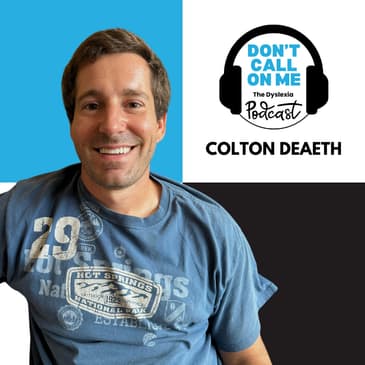
Join Megan and Eryn in this enlightening episode as they interview Colton, a passionate advocate for dyslexia awareness and education. Diagnosed with dyslexia in first grade, Colton shares his personal journey through reading recovery and Orton-Gillingham instruction, revealing the challenges and triumphs he faced along the way. With a wealth of experience navigating accommodations in both high school and college, Colton offers valuable insights into how support systems can empower students with learning differences. Now armed with a bachelor's degree in education, he's committed to helping others overcome obstacles in their learning journeys. Tune in for an inspiring conversation that highlights resilience, understanding, and the transformative power of education!
LINKS + RESOURCES FROM THIS EPISODE:
-
Book a consultation with Megan to discuss CALT therapy.
-
Book a consultation with Eryn to discuss advocacy services.
With Love and Gratitude,
Megan, Eryn & The Don't Call On Me Team
[00:00:00] Pilot School is pretty weird. The FAA is government ran and what I was told when I went into pilot school, and I'm sure it's different between all, they recommended I don't say I'm dyslexic.
[00:00:12] Yeah, yeah.
[00:00:13] And as far as accommodations, they kind of look at that like, so you need an accommodation? You need extended time? What are you gonna do if that airplane goes down? Nope, no good.
[00:00:24] This is Megan, owner of Dyslexia On Demand.
[00:00:27] And I'm Erin, owner of Advocate to Educate.
[00:00:32] And we are the Dont Call On Me Podcast.
[00:00:34] We are here to talk about dyslexia, to remove the stigma, to hear what families really go through, and to share their stories.
[00:00:43] In both of our businesses and personal experiences on a daily basis, we listen to people telling their stories.
[00:00:51] Many of heartbreak, many of struggle, but most all have a silver lining.
[00:00:57] Even eventually.
[00:00:59] It's all about the stories.
[00:01:01] The more we share, the more we realize we aren't alone and we are a community.
[00:01:06] No, a tribe standing together.
[00:01:12] Today's episode is sponsored by Dyslexia On Demand.
[00:01:16] Dyslexia On Demand uses only the highest trained dyslexia therapists, and it's all one-on-one and individualized to your child's needs.
[00:01:25] The best part is that it doesn't matter where you're located, because it's all virtual.
[00:01:31] Visit us at dyslexiaondemand.com to learn more.
[00:01:36] Today's episode is sponsored by Advocate to Educate.
[00:01:39] We help parents navigate through the confusing maze of special education in public schools in California.
[00:01:46] We support families starting as early as preschool through 12th grade, creating individual education plans to support the specific needs of your unique and amazing child.
[00:01:58] To learn more, go to our website, advocatetoeducate.com.
[00:02:05] Welcome back, listeners, to the Don't Call On Me podcast.
[00:02:09] We are super lucky today to have two folks, a mother and son combination, to tell us about their journeys.
[00:02:17] And if you are watching on video, if you notice this super cool background for Colton, it's because a little thing that we happen to know, Insider, and it's a cool little factoid, is that they were some of the extreme home makeover benefit tours, I guess you would say, way back when.
[00:02:40] So that's a cool little nugget that probably won't come out in our podcast.
[00:02:44] But welcome, guys.
[00:02:46] All right.
[00:02:46] Wait, hold on.
[00:02:47] Hold on.
[00:02:47] Wait, wait, wait, wait.
[00:02:48] You were on like Extreme Home Makeover, the show?
[00:02:51] Yes.
[00:02:52] What the?
[00:02:53] I know.
[00:02:54] Send me the link immediately.
[00:02:56] Okay.
[00:02:57] Anyways.
[00:02:58] I've watched it in the past.
[00:02:59] Colton, was that fun?
[00:03:00] Oh, yeah.
[00:03:01] One of the top five things in life that you experienced.
[00:03:03] How old were you?
[00:03:04] 13.
[00:03:06] Oh, my God.
[00:03:07] That's so cool, right?
[00:03:08] So cool.
[00:03:09] Well, why don't you guys take a second to introduce yourselves?
[00:03:13] I'll go first.
[00:03:14] I'm Colton Death, 31 years old.
[00:03:16] I am dyslexic.
[00:03:17] And I'm right now a commercial rated pilot working on building time.
[00:03:21] Yeah.
[00:03:22] And I'm Melanie Death, Colton's mom.
[00:03:24] I live in Brenham, Texas.
[00:03:27] I am a teacher, but I am also do animal rescue.
[00:03:31] And I'm a diagnostician.
[00:03:33] Yep.
[00:03:34] And you're a celt.
[00:03:35] You can't forget that part.
[00:03:36] And I'm a celt.
[00:03:36] Everybody needs to know about celt.
[00:03:38] All right.
[00:03:39] For our listeners that don't know what a diagnostician is or a celt, can you give us some information?
[00:03:46] Describe what those two things are.
[00:03:47] Yeah.
[00:03:48] A diagnostician, I'm trained to administer standardized evaluations and determine weaknesses in a child
[00:03:57] and sometimes make determinations as far as if they're dyslexic or dysgraphic or have other
[00:04:04] weaknesses that need special remediation.
[00:04:07] And a celt is a certified academic language therapist.
[00:04:11] And so I am also trained to give dyslexia therapy to students with dyslexia.
[00:04:19] The perfect mother for Colton.
[00:04:22] Interesting.
[00:04:23] Completely.
[00:04:25] But I bet that's not where it started.
[00:04:28] No.
[00:04:29] Or that.
[00:04:29] It didn't.
[00:04:31] It didn't.
[00:04:32] I, yeah.
[00:04:32] Do you want me to tell that?
[00:04:34] Well, I was going to say, speaking of, how about you guys kind of tell us a little bit
[00:04:39] about your journey?
[00:04:40] Like how you got to where you are today, how you found out that you had dyslexia, Colton,
[00:04:46] and then just kind of how that played out in your life.
[00:04:52] Yeah.
[00:04:52] Do you want me to, I'll start Colton.
[00:04:54] Cause he doesn't remember a lot of this early journey.
[00:04:57] So.
[00:04:57] I can remember as a kid, you're just a kid bouncing around in school.
[00:05:01] And I mean, basically started out with, I didn't, couldn't read, didn't know the alphabet.
[00:05:05] And I was behind the ball of where you should be, I guess, in the school district at that age.
[00:05:10] And then that's when mom kind of stepped in and started figuring things out.
[00:05:14] And I remember little pieces.
[00:05:15] Yeah.
[00:05:15] I mean, I didn't know what was going on.
[00:05:16] I was six years old, you know?
[00:05:18] You were six.
[00:05:19] Okay.
[00:05:20] So mom, mom was on it.
[00:05:21] Yeah.
[00:05:22] Before Melanie jumps in, actually, because I'm dyslexic also, I want to kind of talk a
[00:05:28] little bit more about that time when you were six, because while you don't necessarily remember
[00:05:35] exactly, you probably remember how it felt being a six-year-old and not knowing the alphabet
[00:05:43] or that beginning phase of being dyslexic.
[00:05:47] Can you share with us kind of how you felt about school at that time or what you remember?
[00:05:54] Like, are you an individual that remembers hating school, liking school?
[00:05:59] Just how was it for you in the beginning?
[00:06:02] I luckily, in the beginning, I mean, I went to the same school district my mom worked at.
[00:06:07] So that was always kind of nice too.
[00:06:09] I did have a teacher that did yell at me a lot in the beginning, and I got switched over.
[00:06:14] And this is when you kind of find out good educators.
[00:06:16] And I got switched over to a class.
[00:06:18] Her name was Miss Vegas.
[00:06:19] I still remember her clear as day.
[00:06:21] It was one of the sweetest ladies I've ever met in my life.
[00:06:23] And she was such a good teacher.
[00:06:25] And I couldn't, you know, read, do the alphabet, what you're doing in that process.
[00:06:28] And to go out and play time, you used to have to be able to spell a word, a new word
[00:06:33] every day.
[00:06:33] And I couldn't spell anything.
[00:06:35] And I had a friend teach me how to spell CAT cat.
[00:06:37] And so CAT cat was the only word I used every day.
[00:06:41] And she never said a word about it.
[00:06:42] Just let me spell CAT cat.
[00:06:44] So I enjoy going to school, luckily, because of her, you know, that woman as an educator
[00:06:49] herself.
[00:06:49] And I had good teachers throughout.
[00:06:50] I can't complain on that.
[00:06:53] Except for the one.
[00:06:55] Right.
[00:06:56] And do you remember that?
[00:06:58] Did that one teacher like put you on the spot?
[00:07:00] What was she yelling at you about?
[00:07:02] Do you remember?
[00:07:03] The bad one.
[00:07:03] I, it was so early on.
[00:07:06] That was a time when I didn't want to go to school.
[00:07:09] And my mom noticed it.
[00:07:10] And I think I was in her class for like three or four weeks.
[00:07:13] I think she's just very strict.
[00:07:15] I almost would look back and say she was a few years past retirement.
[00:07:19] She should have retired a little sooner.
[00:07:22] I always feel like that's like part of every person's description when they have a teacher
[00:07:28] like that, sadly.
[00:07:29] So, uh, Melanie, I noticed that you're tearing up like that memory.
[00:07:33] I know it's super hard as a parent to watch your child struggle and it still triggers you
[00:07:39] today, I guess.
[00:07:40] Yeah, definitely.
[00:07:41] Yeah.
[00:07:42] Colton actually said to me, I knew, I know is in the, and teachers yell at me.
[00:07:46] He told me that he doesn't remember saying that, but he did.
[00:07:51] And, um, you know, they were getting him to memorize the books.
[00:07:54] He was in reading recovery, you know, where they would just put the books in front of you
[00:07:58] and he had to memorize them and he would memorize them, but it was really hard for him.
[00:08:04] And, um, he was pretty much shutting down, you know, thank goodness for Ms. Fakus.
[00:08:08] Cause we got him, I got him moved out of, I feel sorry for when you're not a parent and
[00:08:13] an educator working in a school and can see that and move him from that teacher into another
[00:08:19] classroom.
[00:08:20] That was a better fit, um, to help him out.
[00:08:22] Because if, if not, he would have been in there with the other teacher getting yelled
[00:08:27] at all year.
[00:08:28] So, well, and what's so sad as an advocate supporting families now, when parents ask me,
[00:08:34] Hey, can you advocate to get my child out of X class?
[00:08:38] Because the teacher is just not following accommodations or they're forgetting they get
[00:08:45] extra time and then getting upset at them because they're not doing well and asking them, well,
[00:08:50] did you study?
[00:08:51] And all these condescending things.
[00:08:53] What's so frustrating is that a lot of times asking for a different teacher,
[00:08:58] doesn't go well, just generally speaking, because the parents come in and they're like, well,
[00:09:03] I don't like this teacher for X, Y, and Z reasons.
[00:09:06] But when it's this reason, when it's because the child's dyslexic and the educator is either
[00:09:13] close to retirement and they're like not going to learn anything new and they don't know anything
[00:09:18] about dyslexia or it's a brand new teacher, or let's just say it's a teacher that doesn't
[00:09:23] understand how traumatizing it can be for kids with dyslexia.
[00:09:27] That basically means that the rest of the year, your child is potentially going to gain trauma that
[00:09:36] will affect them later in life.
[00:09:38] So it's so frustrating for me when I'm trying to explain that to the administrator to say,
[00:09:43] we're not just asking because we don't like somebody or even because that teacher is more strict or mean.
[00:09:51] It is genuinely because we are trying to dodge a potential situation that's going to lead to a
[00:09:57] mental health need that could stick with that person for the rest of their life.
[00:10:03] But of course, when they hear an advocate say that, they're like, yeah, yeah, whatever.
[00:10:08] You're so dramatic.
[00:10:09] How do you know this is going to be fabulous and they do all the things that they do?
[00:10:13] But ultimately, we're just trying to protect that child from being traumatized because that is what
[00:10:19] happens.
[00:10:20] Completely.
[00:10:21] And so if there's any teachers out there listening to like just how important you are in the big scheme
[00:10:27] of things and it, you know, not even necessarily dyslexia.
[00:10:31] I have a child who is like literally has trauma because he was basically bullied by his teacher.
[00:10:37] And multiple years later now, he is in therapy as a result.
[00:10:41] And his self-concept is completely damaged.
[00:10:43] So it's so important that you recognize just how impactful your behavior is.
[00:10:49] So anyway, but so Melanie, tell us, I know you were sounded like you were kind of wanting
[00:10:55] to lead off the story a little bit because Colton didn't remember as much, but I got,
[00:10:59] you know, Colton jump into as you do have those memories.
[00:11:02] Yeah.
[00:11:03] Yeah.
[00:11:04] So yeah, when he was struggling and it was really difficult to switch teachers, it definitely
[00:11:11] had to be about that it was affecting Colton in ways that made him kind of go internal so
[00:11:17] much that he didn't even know he wasn't participating.
[00:11:20] And we had to go through quite a bit, but it did help that I was there and knew how to go about
[00:11:25] that process because it's a difficult process.
[00:11:27] I was teaching inclusion at the time.
[00:11:30] So special ed, when I started was really self-contained quite a bit and just getting those kids out
[00:11:36] into inclusion.
[00:11:37] So I was big on inclusion and in supporting all the kids and getting all to work together.
[00:11:43] And I took a training in dyslexia as part of my special ed training.
[00:11:48] And, um, I used both my sons as, uh, the Guinea pigs to test, you know, and I knew my boys
[00:11:54] were struggling, but I thought we're going to work this out.
[00:11:56] It'll be fine.
[00:11:57] And, and, uh, when I tested my boys, I brought the papers in and in front of the expert and
[00:12:03] they put it on an overhead projector back then.
[00:12:05] Ah, yeah.
[00:12:06] And it went up on the overhead and, uh, they were going through it and they're like, your
[00:12:10] boys are both dyslexic.
[00:12:12] And I just about dropped, you know, I'm like, they're what?
[00:12:15] I'm a special ed teacher.
[00:12:17] How is it that my boys are dyslexic?
[00:12:19] And I never knew.
[00:12:20] And this was if Colton's 31 now, so that's 25 years ago.
[00:12:25] So from there, I kind of made it my business to make changes.
[00:12:29] I worked in the school district, uh, and got more dyslexia interventionists involved.
[00:12:35] Um, they were tested by their diagnostician on top of the testing I did and determined
[00:12:40] with dyslexia.
[00:12:41] And I started, uh, doing reading intervention, went to night house, took it upon myself to
[00:12:46] learn more, decided if I didn't know my own boys were dyslexic, how many children can I
[00:12:52] help by getting this training and knowing really what I'm doing?
[00:12:56] So that's kind of where it went and Colton got the intervention.
[00:13:01] Weren't me and me and Gracie were the first two students in dyslexia program.
[00:13:06] And they came in with some of my, uh, special needs like self-contained kiddos.
[00:13:12] And it was kind of also interesting because it was kids that yell.
[00:13:16] Well, Gracie, I think was pretty surprised.
[00:13:19] I was like, that's what my mom does.
[00:13:20] Whatever.
[00:13:21] Yeah.
[00:13:21] Yeah.
[00:13:22] You've seen these kids before.
[00:13:24] Yeah.
[00:13:24] I remember that.
[00:13:24] So Gracie was in your SDC class, you're saying, and then you had, and you were able to work
[00:13:31] with Colton at school.
[00:13:32] So, yeah.
[00:13:33] So Gracie, I taught, especially, you know, the self-contained, but Gracie wasn't her T her
[00:13:39] parents, her father was the head coach of the district.
[00:13:44] Yeah.
[00:13:44] And her mom was also a teacher and they were pretty affluent in the area.
[00:13:48] And she had gotten Gracie tested outside of the school as well.
[00:13:52] It just so happened.
[00:13:53] I took this training.
[00:13:55] Gracie got this training.
[00:13:56] She's, you know, so we had two parents saying, look, we need this, this intervention.
[00:14:01] So they allowed me to do my intervention during an hour of my self-contained special ed.
[00:14:07] So Gracie, you know, the coach's daughter and Colton came into my class with my self-contained
[00:14:15] special needs children and got their intervention that way.
[00:14:20] Well, that is unique and probably a one-off for all of our listeners because that would never fly
[00:14:28] in a California classroom.
[00:14:30] But lucky for Colton because, and Gracie, that is such a gift that you were able to also work
[00:14:39] with him in a way that Colton, you were open to it.
[00:14:43] Because, I mean, maybe, maybe there was some extra treats here and there.
[00:14:49] I have no idea how you motivated him, but my mother knew zip about how to help me.
[00:14:58] And I'm curious how your relationship has been.
[00:15:03] And I bring that up because when I reflect on my relationship with my parents, my dad's
[00:15:10] also dyslexic.
[00:15:11] And him and I were two peas in a pod and still are.
[00:15:14] And my mom and I, now that I have my own kids and I'm in my 40s, we are very, very,
[00:15:21] very close.
[00:15:22] But growing up was really difficult because I felt that she didn't understand.
[00:15:27] So when I would ask her for help with homework and she would try to tell me, oh, well, let's
[00:15:34] sound out the word or let's try to spell it.
[00:15:37] Oh, God, the anger within me.
[00:15:39] I just wanted to stab her with my pencil.
[00:15:42] Honestly, I know that sounds harsh.
[00:15:43] But as a kid, that is what I felt because I wanted to just scream at her like, you don't
[00:15:48] understand how hard this is for me.
[00:15:50] Please just tell me how to spell the dang word.
[00:15:54] And now looking back, I mean, I know she didn't really know when she said to sound it out like
[00:15:59] she had no idea what she was talking about technically.
[00:16:02] But still, she was doing the best that she can.
[00:16:04] But I feel that because she didn't know how to help me as a child, I interpreted that as
[00:16:13] she doesn't understand me.
[00:16:15] And that really drew a line in the sand between my willingness to work with her on school assignments
[00:16:23] and my dad and I.
[00:16:25] My dad was like, ask your mother.
[00:16:26] I can't help you.
[00:16:27] So it was kind of that.
[00:16:30] First, like I would.
[00:16:31] I remember working with her and being so frustrated all the time and annoyed at just her suggestions.
[00:16:38] But it was really because I felt she was judging me.
[00:16:41] So I'm just curious how your relationship was maybe while you were working with him and
[00:16:48] after.
[00:16:49] And from Colton, your perspective as well.
[00:16:52] Because your mom as your teacher, that's an interesting perspective.
[00:16:57] It's both sides.
[00:16:58] You can say your mom, you felt like she didn't understand you.
[00:17:01] My mom understood me too well.
[00:17:03] So it was like, she'd be like, do it this way.
[00:17:05] And you're like, no, I don't want to do it that way.
[00:17:06] And she's like, this is what I do.
[00:17:07] I know.
[00:17:08] I know.
[00:17:09] And you're like, no.
[00:17:11] Okay.
[00:17:11] Okay.
[00:17:14] Oops.
[00:17:14] Yeah.
[00:17:16] Can I ask, Erin, how old were you when you were identified?
[00:17:22] I was in second grade, but I wasn't formally identified because my dad's dyslexic and a
[00:17:29] clinical psych and was a school psych in the same district I was in.
[00:17:33] So it was more like once I started taking spelling tests and I too remember my second grade teacher,
[00:17:41] Miss Biggins, she is still teaching.
[00:17:45] And I recently saw her and I remember her being so sweet and so understanding and the impact
[00:17:54] that she made.
[00:17:55] I remember significantly my third grade teacher not being that way.
[00:17:58] And that's how I see the difference.
[00:18:00] But anyways, my dad basically was like, yeah, the apple doesn't fall far from the tree.
[00:18:05] Like I'm a hundred percent dyslexic.
[00:18:07] So are you joined the club?
[00:18:09] All right.
[00:18:09] Now, now we're going to go and you're going to see a tutor.
[00:18:13] And that's kind of how it was.
[00:18:15] I've never been formally diagnosed.
[00:18:16] Um, but I mean, it's very, very obvious.
[00:18:21] There is not.
[00:18:22] Yeah.
[00:18:23] I mean, there's no question.
[00:18:25] And now my seven year old is also dyslexic and same thing.
[00:18:30] It's like, we're just a different breed.
[00:18:32] I don't know how else to put it.
[00:18:34] Seriously.
[00:18:34] We're, we're, there's so many characteristics of a dyslexic individual, so much more than
[00:18:40] just their ability to spell and read and things like that, that I have been able to identify
[00:18:47] in my son.
[00:18:49] Um, but yeah, so I was, I was around a similar age as well.
[00:18:53] Um, well, if you ever want to get diagnosed, Erin, uh, Melanie is the lady to go to.
[00:19:00] She does it for dyslexia on demand.
[00:19:02] There you go.
[00:19:03] Do I get a discount?
[00:19:04] Well, you know what?
[00:19:06] It's on the house.
[00:19:07] Oh, thank you.
[00:19:08] Thank you.
[00:19:09] Thank you.
[00:19:09] Yeah.
[00:19:10] So how was, how was elementary school, the rest of it?
[00:19:13] And how was middle school, high school, maybe Colton, why don't you share what you remember?
[00:19:18] I mean, these can be like just general, but overall the feelings about school and when,
[00:19:25] you know, did you continue to struggle?
[00:19:28] Did you feel like you were able to survive because you had the intervention?
[00:19:33] Like, how was it?
[00:19:35] I'd say, I mean, I, you know, the early part looking back at like first grade and
[00:19:39] kindergarten that gosh, Miss Vegas, but I, yeah, I couldn't read and I was struggling.
[00:19:43] I started going to pull outs and it was just me and Gracie getting pulled out.
[00:19:47] So you have that, you know, kids are like, what is he getting pulled out for?
[00:19:50] What is this?
[00:19:51] You know, pulled out for the hour.
[00:19:52] And that was weird.
[00:19:53] But I guess kind of the way I was raised just is what it is.
[00:19:56] You know, you do what you do.
[00:19:57] And I mean, through, I'd say fourth grade is when stuff started to click.
[00:20:01] And by the time I got into fifth and sixth grade, I was reading on level for that grade
[00:20:04] level.
[00:20:05] Yeah.
[00:20:06] Spelling was always a little dodgy, but it still is to this day.
[00:20:10] I'll say with technology just in general, it seems like that's kind of getting to be something
[00:20:14] that's really not even needed anymore with having spell check and all that.
[00:20:19] Through middle school, I was reading on grade level, high school through grade.
[00:20:22] I mean, junior high through grade level.
[00:20:24] And then high school was on grade level.
[00:20:26] So it really didn't seem that much of a problem.
[00:20:28] I would use my accommodations, though, as far as extra time or, you know, stipulations
[00:20:34] as far as not getting graded so harsh on grammar and spelling like that.
[00:20:38] Spelling never has really gotten that much better at all.
[00:20:41] Yeah.
[00:20:42] Spelling is obviously the last thing to come for kids that are learning to read, write,
[00:20:48] and spell through remediation.
[00:20:50] That being said, I feel like for me, I never quite got over that hump.
[00:20:54] And definitely technology is my saving grace.
[00:20:58] If I had to send emails without spell check, like, I don't know, I'd get it.
[00:21:06] I wouldn't get a response.
[00:21:07] They'd be like, this person needs to go back to kindergarten.
[00:21:10] This is a really big problem.
[00:21:11] When I was in college, I'd write a paper and I'd had Microsoft Word.
[00:21:15] I'm like, I gotta go back and spell check.
[00:21:17] My mom's like, oh, maybe I'll get like one of those in a paper.
[00:21:20] And I showed her like a two page paper.
[00:21:21] It was about 90% red lines through it.
[00:21:24] It takes me a while.
[00:21:26] And sometimes the computer has no idea what I even tried to spell anyway.
[00:21:29] So yeah, absolutely.
[00:21:32] That's one of the things that we always say too, is that like, we have to teach him well
[00:21:36] enough to be able to recognize in spell check, which one is the right answer.
[00:21:42] So, um, so in a nutshell, it sounds like Colton, what you're saying is that your mom changed
[00:21:49] your life, right?
[00:21:50] Oh, without a doubt.
[00:21:51] I bet she needs to hear that more often.
[00:21:54] She kind of knows that I've told her that from the, you know, the get go, always looking
[00:21:58] back and where I've gone in life and seeing my dad who was, you know, is dyslexic.
[00:22:03] That's where I got it from.
[00:22:03] Um, and I guess you kind of say shortcomings as far as he just, they kind of put him in
[00:22:08] a special ed class in school and his dad was a chemist.
[00:22:11] And from what I understand, his dad just said he was dumb.
[00:22:14] And my dad did nothing more than just blue collar work.
[00:22:17] And it was nothing to do with, he wasn't intelligent enough.
[00:22:20] It just was, it wasn't recognized and seeing my path of going through intervention and coming
[00:22:26] out with a bachelor's degree in education.
[00:22:28] I mean, I'm a certified teacher and have taught and now I'm in pilot school and I'm a commercial
[00:22:33] pilot, you know, seeing just from that intervention and what I've been able to accomplish compared
[00:22:38] to my dad, it just kind of got shoved off as he's dumb and lazy is what it is.
[00:22:42] You know, as sad as that's still happening today in 2024, um, a little bit less so, but,
[00:22:49] uh, it's still, still going down on the record.
[00:22:52] Yeah.
[00:22:53] And that's so important for the teachers to understand that.
[00:22:56] And even Colton who might not want me to say this, but there's times when I'm, you know,
[00:23:02] he's like, Oh, I, I didn't do well on this pilot schools, hard college was hard, you know,
[00:23:08] throughout all of this process where he's just like, it's just me.
[00:23:11] I just can't do these.
[00:23:13] I can't do it.
[00:23:14] And like, and I know that's his dyslexia brain from hearing you can't do it.
[00:23:18] Or feeling like you can't do it or looking and being different than the other kids.
[00:23:22] And that'll still come into his head and we have to talk through it.
[00:23:27] So if the teachers could understand, even with the intervention and Colton's success,
[00:23:32] how detrimental those, those words are and the way you make those kids feel,
[00:23:37] it affects them for the rest of their life.
[00:23:40] Yeah.
[00:23:40] I'm so, I'm so glad you brought that up because I have the same voice.
[00:23:44] It's like, you're dumb.
[00:23:46] And then, and then I somehow added an ugly too.
[00:23:49] So dumb and ugly became like that record that would play and play and play.
[00:23:54] And as a 42 year old, it still comes into play and having enough therapy to recognize that that's an old voice.
[00:24:04] And look, this isn't unique to being dyslexic.
[00:24:08] Obviously there's all sorts of kids that have ADHD and then think they're dumb because why can they do chemistry?
[00:24:16] And they can't remember to turn in their paper, like things like that, that occur.
[00:24:20] And they're going to make that same assumption about themselves.
[00:24:23] But if schools did a better job of emotionally supporting us through the process and also having more opportunities for kids with dyslexia to show their strengths.
[00:24:39] Like for instance, I'm not, I'm, I happen to not be an artist, but if art class was just as important as a math class, for instance,
[00:24:47] then the dyslexic who are great at math, it's their time to shine.
[00:24:51] And I always tell my clients, find whatever your child is good at those with dyslexia and get them involved.
[00:24:59] And that's where you push them.
[00:25:02] That's where you, if they're great at sports, guess what?
[00:25:05] You're going to be the soccer mom because they need you to focus on their strengths so that that voice can be louder.
[00:25:11] So that at least when we are down in the dumps on ourselves, we can think, okay, yeah, I'm, I'm dumb, but I'm a really good soccer player or volleyball player or whatever.
[00:25:23] And that's another way for me to get to that next level, especially in communities where college is, you know, in my opinion, completely overrated.
[00:25:34] It's just, if not, it's even more important because sometimes, yes, kids are going to get intervention, but they're still dyslexic.
[00:25:43] Most of the time, they're still going to be what could be considered a shortcoming in the realm of whether it's how fast you read or how you comprehend or your spelling.
[00:25:55] And that's a constant reminder because we live in an age where we have to read constantly.
[00:26:01] So just kind of piggybacking off of the commentary about teachers, just assuming it's laziness, et cetera.
[00:26:11] I am going to random, I just happen coincidentally to be working on a presentation right now.
[00:26:17] And so I have a stat for you because I'm looking at the slide, but it's from a research study that understood.org did.
[00:26:25] And 33% of classroom teachers and other educators believe sometimes what people call a learning or attention issue is really just laziness.
[00:26:34] So that is just like crazy.
[00:26:38] But not surprised.
[00:26:39] I mean, to me, not surprising, but I think it's something that kind of everybody needs to hear.
[00:26:45] So listening to that conversation that you were reading at grade level, but now you're a pilot.
[00:26:56] Tell us a little bit more about what your dyslexia looks like on a day-to-day basis.
[00:27:02] And what do you consider to be the strengths related to it or the weaknesses related to it?
[00:27:07] What super strengths do I have from dyslexia?
[00:27:10] Hmm.
[00:27:12] All in all, I guess, is we're very, what you said, right brain thinkers, which is like 3D thinkers and everything that I've done as far as horseshoeing and being an av as a teacher.
[00:27:21] But I taught ag mechanics, so it was nothing but welding, carpentry, electrical.
[00:27:25] And then pilot is also, it's a skill job.
[00:27:27] So working with building a skill, basically.
[00:27:31] And I obviously I'd say that's where I strived at.
[00:27:33] It was nothing to do with, I guess, more or less my reading skills to get me through those.
[00:27:39] So that being more skill-based, that's how I've gotten by and been successful.
[00:27:45] Are you a book reader?
[00:27:47] I am not.
[00:27:48] Just to put it out there.
[00:27:50] Not at all.
[00:27:51] Not a book reader.
[00:27:52] If I can do audio, not much book reader at all.
[00:27:55] But audio is probably the best as far as going towards getting through a book.
[00:27:59] Mm-hmm.
[00:28:00] In my household, it's really funny because I'm always listening to audio.
[00:28:04] And any room my husband walks into and the audio is on, he's bombarded by the audio.
[00:28:10] And to him, who is, he's so far from dyslexic.
[00:28:15] He's on such the opposite end of the spectrum.
[00:28:19] He's like, God, doesn't that just drive you nuts?
[00:28:22] Like all this yapping in your ear.
[00:28:24] How can you deal with it?
[00:28:26] And I'm thinking, that is how I get information.
[00:28:29] What do you mean?
[00:28:30] This is my lifeline right here.
[00:28:33] So I find it interesting.
[00:28:38] And that's why I asked the question because there are some people that really can't handle
[00:28:42] that input.
[00:28:43] But for you and me, it's the best way to get information.
[00:28:47] Yeah.
[00:28:48] As far as things that have happened throughout, I remember being in education class.
[00:28:53] I told mom this story.
[00:28:54] We had to make a lesson plan on how salary changed throughout the years or something.
[00:28:59] I think it was how salaries change, I don't know, economics.
[00:29:03] The economy.
[00:29:04] Yeah, the economy.
[00:29:05] And I thought it said, was it slavery?
[00:29:08] I thought the word was.
[00:29:10] So I did a lesson plan on that.
[00:29:11] And when I got up to present, they were like, what?
[00:29:16] Oh, that is so good.
[00:29:18] That is so good.
[00:29:20] I remember when I was teaching, writing on the whiteboard was just my biggest fear.
[00:29:25] So instead, I would just ask the...
[00:29:27] I taught middle school SDC.
[00:29:29] And I would ask the kids like, okay.
[00:29:32] They'd call something out to write on the board.
[00:29:34] I'm like, how do you spell it?
[00:29:36] And they would be looking at me like, aren't you the one that's supposed to spell it?
[00:29:39] And our whiteboards would just look illiterate, honestly, because I'm thinking, well, their
[00:29:47] spelling might be better than mine.
[00:29:48] So let's see if we can get them to support me.
[00:29:51] But I, yeah, there was a lot in teaching that I remember kind of probably because I didn't
[00:29:57] read the directions enough times or I just skimmed through them.
[00:30:04] Like my first year of teaching, I didn't know we needed to turn in lesson plans.
[00:30:08] Oh my God, it was so embarrassing.
[00:30:10] And of course I couldn't tell my administrator.
[00:30:13] So I just made them up at the end of the year because that's what you do, right?
[00:30:17] I guess you just fake it.
[00:30:18] But it's because I missed the memo and I probably didn't read the memo to be quite honest.
[00:30:24] So anyways, yeah, teaching was a blast.
[00:30:27] But I was able to connect with those kids so much better because I truly understood their
[00:30:35] struggle.
[00:30:35] I really did.
[00:30:37] And I don't know, Colton, how was it for you connecting with kids?
[00:30:40] When I was taught ag mechanics, so I'd say 99% of my kids, 90% of them, they all were dyslexia
[00:30:47] or severely ADHD anyway.
[00:30:48] And I remember getting in front of the whiteboard and had to spell out a word and I'd look back
[00:30:52] and say, how do you spell something?
[00:30:53] And they'd look at me and go, I don't know.
[00:30:56] We're on the same wavelength.
[00:30:58] We all have no idea, you know?
[00:31:00] Exactly.
[00:31:01] Dyslexic kids.
[00:31:02] But it was fun.
[00:31:03] It was honestly one of the funnest jobs.
[00:31:05] I had two professors, Dr. Frazier and Dr. Lombaris, through all four years of education.
[00:31:10] And what they beat in my head and I think is like the prime fundamentals of teaching to
[00:31:14] me was they were always like, it's never the student's fault and you got to actually like
[00:31:18] them no matter what.
[00:31:19] And that's how I went into education the whole time I taught and it was successful for me
[00:31:24] as I actually, the kid, it was never the kid's fault and I always liked him.
[00:31:28] I generally did.
[00:31:29] But that was my, what I took away from those education classes and Frazier and Lombaris
[00:31:33] were just beaten to it all the time.
[00:31:35] I remember them telling stories.
[00:31:36] If you have a class with 24 kids in it and you just got this one kid that you're like,
[00:31:40] oh, it's this kid's fault.
[00:31:42] Why my class?
[00:31:42] This, this class is out of a, you know, array and I can't get them to handle them.
[00:31:47] They go, it's not, it's your fault.
[00:31:48] It's not that one.
[00:31:49] Wow.
[00:31:50] And you need to make it work.
[00:31:51] I had, I had very good professors.
[00:31:53] Very good.
[00:31:54] And you did a great job with those kids.
[00:32:01] They were fun.
[00:32:02] Well, all right.
[00:32:03] I'll say he, he would come home and say, you know, I went in there and in ag class and
[00:32:08] most of those kids sit and they play on their phone and the teacher picks out a few of them
[00:32:14] that they can trust to go out and work in the shop.
[00:32:16] And Colton got every single kid, even the most difficult, most challenging kid out there
[00:32:22] making something and not just something.
[00:32:25] It's like this kid's making a bench.
[00:32:27] This kid's making a desk.
[00:32:29] This kid's making a rocking chair.
[00:32:32] Right, Colton?
[00:32:33] You got all those kids.
[00:32:34] I mean, it's been a part of just liking them.
[00:32:37] It's never their fault.
[00:32:38] And also to use your personality.
[00:32:40] I mean, if you go in there excited and you want to go out in the shop, even the coolest
[00:32:44] kid, you know, that I'm not into that.
[00:32:46] Eventually they kind of feed off that energy and they're going to be out there too, having
[00:32:49] a good time.
[00:32:50] And that's just how I made it work.
[00:32:53] That's awesome.
[00:32:54] And I got, that is such sage advice that came from those professors.
[00:32:57] I mean, as somebody who also has an education degree, that was never brought up.
[00:33:02] Pretty much when I look back at my education degree and knowing what I know now, I'm like,
[00:33:08] what did I gain out of that?
[00:33:11] Not really sure.
[00:33:12] But that right there, like those like two words of advice, I wish that had been drilled into
[00:33:18] my head.
[00:33:19] You like, you have to figure it out or like things like, you know, to really manage a classroom,
[00:33:25] you have to understand, you have to get into the head of the kid, right?
[00:33:30] Like, or just understand what motivates them.
[00:33:32] That was never told me.
[00:33:34] I had to teach for like years before I figured that kind of stuff out.
[00:33:39] And I remember Dr. Frazier was, you know, going and introducing yourself each morning,
[00:33:44] asking the kid how they're doing.
[00:33:46] Yeah.
[00:33:46] And not how did he tell us to just do that.
[00:33:48] He actually practiced what he preached.
[00:33:50] I remember our first class that we had at Tarleton was an introductory to ag education.
[00:33:54] It was like 84 students in an auditorium.
[00:33:57] Dr. Frazier would go around and shake everyone's hand and ask you how you were doing.
[00:34:02] Yeah.
[00:34:04] Yeah.
[00:34:04] Sit right there at that door.
[00:34:05] And if he missed you, he'd walk up to you in the aisle and shake your hand and never miss
[00:34:09] a day ever.
[00:34:10] It just makes you feel like valued and important.
[00:34:12] Like he gives a, you know what?
[00:34:15] So.
[00:34:16] Every kid deserves that because a lot of those kids didn't hear it when they went out the
[00:34:20] door.
[00:34:21] That's a big one.
[00:34:23] I know.
[00:34:23] It's so true.
[00:34:24] Colton, I was going to ask you what accommodations in college were critical for you?
[00:34:31] The biggest two, honestly, was extended time on tests.
[00:34:34] And I don't even, how was that one word in mom and my accommodations for like grammar and
[00:34:39] spelling for like my English classes or any class I had to write papers for?
[00:34:44] Great content, not mechanics.
[00:34:46] Those were the two I just primarily remember, extended time.
[00:34:49] And I'd be able to go, sometimes I'd go to a testing center at the college and I'd usually,
[00:34:53] I think it was double time.
[00:34:54] So if we got an hour in that class to take it, I get two hours.
[00:34:57] And a couple of times I'd go to a testing facility and do it, but not just getting that
[00:35:01] extended time period always helped.
[00:35:03] The extended time was big.
[00:35:05] Did you need those accommodations in pilot school or did you get them?
[00:35:11] Pilot school is pretty weird.
[00:35:12] The FAA is government ran and what I was told when I went into pilot school, and I'm sure
[00:35:18] it's different between all, they recommended I don't say I'm dyslexic.
[00:35:23] Yeah.
[00:35:24] Yeah.
[00:35:24] And as far as accommodations, they kind of look at that like, so you need an accommodation?
[00:35:30] You need extended time?
[00:35:31] What are you going to do if that airplane goes down?
[00:35:33] Nope.
[00:35:34] No good.
[00:35:35] That's, I'm pretty sure how the military is also because we had like an adult go through
[00:35:41] dyslexia therapy because they knew that that would be something they would face in the
[00:35:44] military.
[00:35:45] And that was like so important to them that they got in.
[00:35:49] So I think it was like a special forces or something.
[00:35:52] But anyway.
[00:35:53] Yeah.
[00:35:54] So did you, is that how you approached it?
[00:35:57] You just went in and kind of did what you had to do on the side?
[00:36:02] Because essentially, right, like throughout life, writing a grocery list, for instance,
[00:36:06] you're not like making a federal case about needing an accommodation to write a grocery
[00:36:10] list.
[00:36:11] Right.
[00:36:11] And in pilot school, my guess is I have never in my life sat in the front of a plane.
[00:36:20] So like, or it's the cockpit, right?
[00:36:23] That's what it's called.
[00:36:24] Like never in my life.
[00:36:25] Okay.
[00:36:25] But I have peered in and to me, looking at all of that, it looks like something a dyslexic
[00:36:31] could actually learn because it's not that we're not reading textbooks here.
[00:36:38] This is all hands on.
[00:36:39] This is all, what do I do to manage this?
[00:36:43] But is, is there reading?
[00:36:46] Like when you're flying a plane?
[00:36:49] Yeah.
[00:36:49] I should be talking about the aerodynamics of it.
[00:36:51] There's a lot of groundwork as far as your aerodynamics and learning about, I mean, your
[00:36:56] electronic systems.
[00:36:57] Like I said, we had G1000s.
[00:36:58] Learning about instrument approaches, all that stuff.
[00:37:00] But it was all self-learned.
[00:37:02] So I could, I could do it however I wanted.
[00:37:03] If I wanted audio or however method worked for me, they really never really even had grounds
[00:37:07] with an instructor.
[00:37:08] You just kind of self-taught.
[00:37:10] Okay.
[00:37:10] As far as that.
[00:37:11] In an airplane, that was what I've always spelled out hands on.
[00:37:15] So in the airplane, generally, if I read it in a book, I almost kind of be like,
[00:37:19] I don't understand.
[00:37:21] And as soon as I got in the airplane, I was like, oh, got it.
[00:37:24] You know?
[00:37:24] Yeah.
[00:37:25] Yeah.
[00:37:25] So I'm going to go and ask you one of our kind of very pivotal questions that we ask
[00:37:33] everybody.
[00:37:34] And you do seem quite well adjusted, Colton, but everybody has one of these and it's your
[00:37:40] inner voice.
[00:37:40] So what would you say that your inner voice says to you?
[00:37:45] When I start struggling and, and everybody struggles, you know, I don't know anybody
[00:37:49] in the pilot world that just went ahead and went in there and whacked out of the park and
[00:37:53] was great at it.
[00:37:54] I'd say more is, and my mom says it's that self-esteem that I probably got throughout the
[00:37:59] years of school of never feeling like I was good enough.
[00:38:02] I'm hard on myself.
[00:38:03] You know, it's, it's my fault.
[00:38:05] I can't do it because I'm just not good enough.
[00:38:06] I'm just not smart enough.
[00:38:08] I'm just dumb enough.
[00:38:08] I try to succeed at this.
[00:38:09] I'm very hard on myself.
[00:38:12] Which kind of comes out too.
[00:38:14] It's, I guess the fine line is being hard on yourself too.
[00:38:17] I think does make you push that extra mile to be good.
[00:38:20] But at the same time, it does kind of, it could set you back to if you're too hard.
[00:38:24] Well, and there's a reason we ask everybody that because everyone's answer is more or less
[00:38:31] the same for everyone that we interview.
[00:38:34] So, um, you know, I have an inner voice, but it's different than yours.
[00:38:39] Coincidentally, it's pretty much the same.
[00:38:41] Um, you just pretty much listed off all of the ones that we hear from everyone we interview.
[00:38:47] Colton, what advice would you give to somebody that was seven, eight, nine, and they were just
[00:38:57] about to start dyslexia therapy?
[00:38:59] And, you know, that's a quite a big hill to climb for a little one.
[00:39:05] They don't even, you know, they can't even see how big this mountain is going to be.
[00:39:10] I mean, obviously this, this imaginary child is dyslexic.
[00:39:14] Um, what would you want them to know?
[00:39:17] I mean, kind of actually, I was kind of faced this question for real in the school, as far
[00:39:21] as going through that phase is do it.
[00:39:24] I mean, just kind of, as you get older, the experiences come together and you just kind
[00:39:28] of got to go through it and have the experiences come together for it to make sense, but trust
[00:39:32] the process, trust the people that are, that are putting you through it.
[00:39:35] I had a student, um, in my class that I thought this was funny because I'm like, I look at
[00:39:40] my life like, Oh yeah, I'm dyslexic guy, a crap show, you know?
[00:39:43] And one of the kids who's complaining about life and just how it is and this and that.
[00:39:47] I'm like, he's like, after high school, it's all downhill.
[00:39:50] He's like, uh, I'm just going to be a welder or whatever.
[00:39:53] And I was like, you don't know that.
[00:39:54] I said, look at me.
[00:39:55] And towards the end, they knew I was going to popsicles.
[00:39:57] Look at me.
[00:39:57] I shot horses for 12 years.
[00:39:59] I'm a teacher and a, you know, ag shop.
[00:40:01] And now I'm going to fly planes.
[00:40:03] And that kid looked at me and he goes, well, that's because your life is awesome.
[00:40:07] DA that I was like, what?
[00:40:10] Never thought that ever.
[00:40:12] I'm just sitting here struggling along.
[00:40:13] I was dyslexic.
[00:40:14] Couldn't read, you know, shoeing horses, fighting my way through college.
[00:40:18] You just have to trust the process and trust the people that are putting you through it
[00:40:21] and go through it.
[00:40:22] If it's put in front of you, do it.
[00:40:24] And as time goes on, that's when those realizations of how good it was have benefited you, you
[00:40:30] know, from underplayed and understand it.
[00:40:32] Yeah.
[00:40:33] Yeah.
[00:40:33] And his, his perspective really shows you that everyone's perspective and how they see things
[00:40:41] are so like hugely different.
[00:40:44] Yeah.
[00:40:45] It's the, it's the fact that from the outside, you probably look like you have it all together.
[00:40:50] And I think about this a lot when I think of individuals with kids that have really significant
[00:40:56] physical needs like cerebral palsy or down syndrome when you can see it and they are faced
[00:41:04] with that every day.
[00:41:05] And ours is something that it's, you can't see it, but it's deeply felt.
[00:41:11] And because I don't have a physical disability that is seen on the outside, I shouldn't, I
[00:41:17] won't even pretend to compare or assume that I understand what it's like, but I think it's
[00:41:24] really interesting to bring up because had that, had you been knock on wood in a wheelchair
[00:41:29] or, you know, missing a limb or something right physical that they could see, would they have
[00:41:36] said that to you?
[00:41:38] And it's just something interesting to think about.
[00:41:41] Dyslexia is, it absolutely affects your whole life yet.
[00:41:45] It's not something people can see.
[00:41:47] So they assume it must not be that bad.
[00:41:50] And especially if you're successful, I mean, I also went to college, got degrees, became
[00:41:57] a teacher.
[00:41:58] Now I have my own business.
[00:42:00] My mom's like recently, she's like, gosh, you're such an entrepreneur.
[00:42:03] And I'm thinking I am not at all, but from the outside, that's what it looks like.
[00:42:09] And in my head, I'm still that kid.
[00:42:13] It depends on the day.
[00:42:15] But when I'm having a day where I am sulking, I'm still that kid that just got, you know,
[00:42:21] handed a book in 10th grade and is like, this is your novel for the next two months.
[00:42:27] And all I can think about is, is there a movie?
[00:42:29] Where are the cliff notes?
[00:42:31] And asking my best friend about the chapters we have to read.
[00:42:35] I still go into that mindset because there's no way, air quotes, like I can do it because
[00:42:42] of my limitation, which is, is it all in my head?
[00:42:48] Right?
[00:42:49] Like when we think about it, is it?
[00:42:50] Because I did get through it.
[00:42:54] But I think there was where you kind of came out on that part of saying is, I think that
[00:42:59] has to do with a lot of, I guess, societies and fitting in on what's the woe of it.
[00:43:04] And you, oh, I can't read.
[00:43:07] So you're real hard on yourself in those aspects, real hard on.
[00:43:09] I can't do that.
[00:43:10] But you need to focus on what you're good at.
[00:43:11] And you played at your strengths.
[00:43:13] The reading part didn't hold you back.
[00:43:16] I played on my strengths too.
[00:43:17] Don't let the fact that you can't read be the thing that's going to keep you down because
[00:43:21] it doesn't fit in with what I guess a society norm would be like.
[00:43:25] I guess I'm trying to say it the right way.
[00:43:27] I can't think of it, but yeah.
[00:43:28] Yeah.
[00:43:29] Well, yeah.
[00:43:30] And you were, you were like lifted up, right?
[00:43:33] Because I'm sure that that was the message that you did get.
[00:43:37] And, you know, not everybody gets that message.
[00:43:41] And so it is so important kind of fusing like the two things that Aaron and Colton are saying
[00:43:48] is just the importance of, you know, digging in and recognizing that kids with dyslexia,
[00:43:55] you know, that dyslexia iceberg where they have all this stuff under the surface that people
[00:44:01] don't recognize and the huge increase in anxiety and depression that occur with kids with dyslexia.
[00:44:08] So the check-in is just so important because you carry it into your adulthood, all of it.
[00:44:15] Yeah.
[00:44:15] And just to be clear with what I'm saying is that's when I'm down in the dumps.
[00:44:21] But for the most part, I'm living my life in my strengths as a mother.
[00:44:27] I never thought I'd be a mother.
[00:44:28] Now I'm a mother.
[00:44:29] Like my dad literally said to me the other day in a birthday card because my birthday was this month.
[00:44:33] And he wrote, you finally have everything you dreamed of.
[00:44:37] And it's true.
[00:44:38] Like I have the most amazing husband and two kids and two dogs and two chickens.
[00:44:45] And we live close to my parents.
[00:44:46] And I'm doing work on a daily basis that I love to do.
[00:44:51] I will work on Saturday and Sunday because I just love it.
[00:44:54] Don't call me on Saturday and Sunday clients.
[00:44:57] That is not a free-for-all to call me.
[00:44:59] But I will do it because I know I'm making a difference for these kids in real time in life.
[00:45:06] That being said, it's why the dyslexia books on being strength-based is so important,
[00:45:14] all stemming back to the fact that if we only focus when kids are in remediation in elementary
[00:45:21] school and middle school and high school or even after, if you're only focused on that
[00:45:26] and they are not having fun somewhere else in their life, that's very depressing.
[00:45:32] They have to find something else.
[00:45:34] It's like that saying when you, and this is something I learned in credentialing school for teaching.
[00:45:42] What is it?
[00:45:42] The three-to-one ratio.
[00:45:44] Is it three-to-one?
[00:45:45] I don't remember.
[00:45:46] Five-to-one where it's five positives to one negative.
[00:45:49] When you're interacting with students because you want to overshadow the constructive criticism
[00:45:56] that they're going to see as negative with five positives so that when they leave the environment
[00:46:02] and they look back on you as their teacher, they're going to remember the positive parts
[00:46:07] and not the negative parts.
[00:46:09] And that is why we encourage parents who are supporting these kids with dyslexia to get
[00:46:14] them involved in activities that they love.
[00:46:17] And whether or not they're good at it, that's all about the child's personality because some
[00:46:22] kids don't mind doing things that they're not good at.
[00:46:24] They just love it so much that they're happy.
[00:46:26] And that is the importance of being strength-based and why we need to continue to advocate for that
[00:46:35] for our kids.
[00:46:36] See, that's another good one, teachers who are listening.
[00:46:39] I didn't learn that either.
[00:46:41] Like, clearly, my teacher prep college coursework was just mild trash.
[00:46:49] So nobody look up where I went to school.
[00:46:54] All right.
[00:46:55] So last question and a really important one.
[00:46:59] But if you could craft your life again, Colton, would you choose for dyslexia still to be part
[00:47:05] of your experience?
[00:47:07] I'm 100%.
[00:47:08] Okay.
[00:47:09] Your experiences in life and what you do is what brings you to where you are.
[00:47:13] And I wouldn't do it any different.
[00:47:15] Yep.
[00:47:15] I think that probably everybody can agree with that.
[00:47:19] Melanie, what about you?
[00:47:21] I mean, I'm just thinking about this because I know as a mom now, when my child's going through
[00:47:26] pain, it's so painful to watch.
[00:47:28] I mean, emotional pain.
[00:47:30] It's the worst.
[00:47:31] Yeah.
[00:47:31] So how do you feel about crafting his life again?
[00:47:36] I wouldn't change anything about him, but I think we need to keep changing the educators
[00:47:42] in the way that we handle it.
[00:47:44] And the way that we, you know, because thank goodness for Colton who can make things and
[00:47:49] fix things.
[00:47:49] Thank goodness for Colton who can get in an airplane and do a spin and they turn the engine
[00:47:54] off and it goes like it's going to crash.
[00:47:56] And Colton just pulls it back up.
[00:47:59] I'm not dyslexic and I couldn't do that.
[00:48:02] We have to keep building our kids from and developing their strengths so that we have pilots
[00:48:09] and plumbers and mechanics and all those wonderful surgeons and all that.
[00:48:14] So, yeah.
[00:48:15] I saw what I was going into within the school district in my 30 years in this life.
[00:48:19] When I was in school, it was the mid 2000s.
[00:48:21] I graduated.
[00:48:23] It was college based.
[00:48:24] You go to college, go to college, go to college, go to college.
[00:48:26] That's all there is to it.
[00:48:27] And the trade jobs kind of got pushed out.
[00:48:29] And now it's coming into the education world and being an ag educator.
[00:48:32] It was the push of the trade jobs back in because not every kid is to be in that
[00:48:37] direction of college.
[00:48:38] And a lot of those kids that I had in classes were dyslexic.
[00:48:42] And they don't feel very good about themselves, do they?
[00:48:46] They're not on a good track.
[00:48:48] Those kids in high school that hate school, that have been shoved in a corner and shoved
[00:48:55] in a corner are sitting in that ag class feeling like bad about themselves.
[00:49:01] Well, I lived that because I went to UC Boulder my first year of college.
[00:49:06] And I came home so depressed.
[00:49:09] I didn't even go back to get my things.
[00:49:11] I straight up just left.
[00:49:12] To this day, I really don't even know where they I mean, obviously threw my stuff in the
[00:49:17] dumpster.
[00:49:17] But I couldn't even go back because I was in classes with 500 kids.
[00:49:23] It did not matter if you went to class or not.
[00:49:26] There was one test and that was it.
[00:49:28] And I ended up going to photography school.
[00:49:31] And my first bachelor's degree is in photography because in my head and after talking to my parents,
[00:49:39] I needed to do something tangible, something hands on.
[00:49:42] And I loved photography, but I had no professional experience or even had taken a class.
[00:49:48] And my parents said, you know what?
[00:49:49] Let's try it.
[00:49:50] If you don't like it, we'll shift gears.
[00:49:52] And I absolutely loved it.
[00:49:54] Again, you're bringing up trade schools.
[00:49:57] That avenue needs to be just as important and just as competitive.
[00:50:02] That's another thing.
[00:50:03] It should be hard to get into those schools.
[00:50:05] So those of us that shine in that arena can also feel good about it and not say, oh, well,
[00:50:11] I'm just going to a trade school because I feel like that is still coming out of our high school
[00:50:18] kids' mouths.
[00:50:19] Like, oh, yeah, it's like less important.
[00:50:23] And that is ridiculous.
[00:50:25] Absolutely ridiculous.
[00:50:27] I'll talk about being a farrier and why you were a farrier, Colton.
[00:50:31] Actually, I forgot about that.
[00:50:32] But I went and got accepted to Morrisville College was what to do.
[00:50:36] And I went and got accepted to Morrisville in New York.
[00:50:38] And I was going to get an ag, what the heck was it?
[00:50:42] Equine science degree.
[00:50:44] Yeah.
[00:50:44] An equine science.
[00:50:45] And I went to a place about looking for, what was it, financing, I guess, for being dyslexic?
[00:50:51] And they had to get tested for dyslexia so he'd have accommodations.
[00:50:55] Yeah.
[00:50:56] And the lady, basically, they did the test and came back in.
[00:50:58] And I still remember sitting in that room with my dad.
[00:51:00] And basically told me, college is not a good fit for you.
[00:51:04] You shouldn't go.
[00:51:05] You can go to this horseshoeing school.
[00:51:07] And that's how I ended up in horseshoeing school.
[00:51:09] What is horseshoeing?
[00:51:11] Sorry.
[00:51:11] Just to, what does that mean?
[00:51:13] Putting shoes on, like the horseshoes on horses?
[00:51:16] Exactly.
[00:51:17] Okay.
[00:51:18] Just wondering.
[00:51:19] It's also a really hard job.
[00:51:22] But we made Colton, whenever he starts something, we make him finish it.
[00:51:28] So he's a horseshoer.
[00:51:30] And good on you.
[00:51:32] Because again, like for whatever reason, it brought you to where you are today.
[00:51:36] And you will never find this dyslexic flying a plane.
[00:51:40] I hate flying.
[00:51:41] I might call you every time I get on a plane now to be like, okay, am I safe?
[00:51:46] Is it going to be okay?
[00:51:47] Because I'm the crier under the blankets in the corner.
[00:51:50] Or pretending.
[00:51:51] My kid's holding my hand, like smiling, like, let's open the window and look out.
[00:51:55] And I'm like trembling in my boots being like, yeah, let's open the window.
[00:52:00] So no.
[00:52:02] Maybe lots of pilots love it.
[00:52:05] It's not for this dyslexic over here.
[00:52:07] But I love hearing your story.
[00:52:10] You've touched on doing a lot of different things after high school.
[00:52:14] And that's also part of the journey and the process.
[00:52:17] The making a decision of your first step after high school, that's not where most people land.
[00:52:25] So that message is important for anyone listening that is in high school thinking, well, I'm so
[00:52:31] dyslexic.
[00:52:32] I don't know what I'm going to do.
[00:52:33] And most likely, your first stop isn't going to be your last stop.
[00:52:38] And that's just because you need some time to figure it out.
[00:52:42] And that should be part of our process in America.
[00:52:44] And it's not.
[00:52:46] But it should be.
[00:52:47] Kind of one of those things of just, I think you're better off just picking something and
[00:52:50] doing it and going in that avenue and see where it brings you along.
[00:52:53] So you went to photography school, and then it brought you to somewhere else.
[00:52:56] I went to Horseshoe, and then it brought me to somewhere else.
[00:52:59] I never knew exactly what I wanted to be.
[00:53:01] I had friends that were like, this is what I was going to do.
[00:53:03] And they did it.
[00:53:04] And that's what they do.
[00:53:05] Awesome.
[00:53:05] If you don't know, just pick something that gets put in front of you.
[00:53:09] And all right, let's do it and see it through.
[00:53:12] Yeah.
[00:53:13] See it through.
[00:53:15] And that is something as a dyslexic, I feel like there were so many moments that I just
[00:53:21] wanted to give up.
[00:53:22] I just was like, I'm done.
[00:53:24] I don't want to study anymore.
[00:53:25] I'm done.
[00:53:25] I can't do this.
[00:53:27] So the seeing it through part is a big part of what builds our strength and character.
[00:53:33] Because now I know I was able to learn the, I mean, photography is so complicated when
[00:53:41] you're actually going to school for it.
[00:53:42] It has nothing to do with just taking a good picture.
[00:53:45] The technicality of it is absolutely insane and difficult.
[00:53:50] And I learned that I could push myself all the way through the program until the end where
[00:53:55] I never knew that I could do any of that because it was such a different skill.
[00:54:00] I'm sure with, with horseshoeing, same thing.
[00:54:03] There's more to it than what I just described it as putting horseshoes on horses because
[00:54:09] I am a California girl that doesn't live near horses.
[00:54:13] And well, actually I do live near horses.
[00:54:15] I'm not a horse girl, put it that way.
[00:54:17] But that being said, you're dealing with animals.
[00:54:20] Like that's a big deal.
[00:54:21] And you could also get whacked in the face very easily.
[00:54:24] So there is a lot to it.
[00:54:26] The point is to see it through and to get good at it and not give up when it gets hard
[00:54:31] because that's what we dealt with all through school.
[00:54:37] And we wanted to give up the whole time.
[00:54:39] I know I did.
[00:54:40] I, you know.
[00:54:40] I'd be lying if I said I didn't want to quit horseshoeing at some point during the learning
[00:54:44] process.
[00:54:44] Some point during college I wanted to quit and there was some points during pilot school
[00:54:48] I wanted to quit.
[00:54:49] But you take one step forward, go to sleep, wake up and give it a go again.
[00:54:54] Nine times out of ten that giving it a go again is better than it was the day before.
[00:54:59] Yeah.
[00:54:59] Yeah.
[00:54:59] Yeah.
[00:55:00] Well, this was awesome.
[00:55:02] Thank you both so much for taking the time out to share your story with all the listeners.
[00:55:08] It's been like really empowering, I think, as like as always.
[00:55:14] So thanks so much, guys.
[00:55:16] Thank you, guys.
[00:55:17] And it was great getting to know you more.
[00:55:19] I know, Melanie, we've passed each other on screens, but great to hear your mommy story.
[00:55:25] And Colton, let us know when you're flying over California.
[00:55:28] I'll wave for my house.
[00:55:31] And then you can do like loops and I'll be like, I know that guy.
[00:55:36] I'll tell my dyslexic seven year old, you could be him if you want to.
[00:55:41] He's dyslexic.
[00:55:43] So thank you so much.
[00:55:45] And listeners tune in for our next episode.
[00:55:49] Bye.
[00:55:50] Bye.
[00:55:51] Bye.