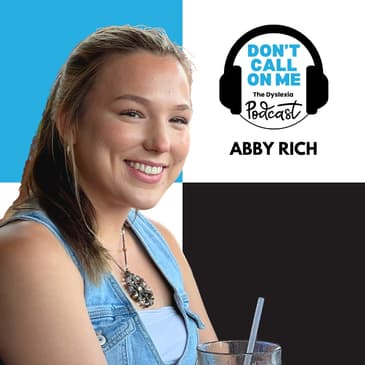
In this episode, we sit down with Abby Rich, who shares her personal story of being diagnosed with dyslexia and ADHD in third grade. Abby opens up about her family's move to Rockwall in search of better educational support and the challenges she faced in a dyslexic class with only a handful of other students. From being bullied by peers and feeling singled out by teachers to navigating a school system that made her feel misunderstood, Abby talks candidly about the emotional and academic struggles she endured growing up. Her story sheds light on the resilience it takes to rise above labels and the importance of fostering understanding and support in educational environments.
Join us as Abby reflects on her experiences and offers insights for others who may be facing similar challenges.
LINKS + RESOURCES FROM THIS EPISODE:
-
Book a consultation with Megan to discuss CALT therapy.
-
Book a consultation with Eryn to discuss advocacy services.
With Love and Gratitude,
Megan, Eryn & The Don't Call On Me Team
[00:00:00] I think I definitely would have dyslexia be a part of my life. It pushed me. I'm like one of the hardest workers at my job. I just got promoted to be a manager. Like I worked my butt off. And I've always pushed myself. My mom and my dad have always pushed me because of my dyslexia. I think outside of the box, I'm very creative person. I think differently than a lot of other people, not in a bad way, but in a good way.
[00:00:24] This is Megan, owner of Dyslexia On Demand. And I'm Erin, owner of Advocate to Educate. And we are the Dont Call On Me Podcast. We are here to talk about dyslexia, to remove the stigma, to hear what families really go through, and to share their stories. In both of our businesses and personal experiences on a daily basis, we listen to people telling their stories. Many have heartbreak,
[00:00:53] many have struggle, but most all have a silver lining. Even eventually. It's all about the stories. The more we share, the more we realize we aren't alone and we are a community. No, a tribe standing together.
[00:01:12] Today's episode is sponsored by Advocate to Educate. We help parents navigate through the confusing maze of special education in public schools in California. We support families starting as early as preschool through 12th grade, creating individual education plans to support the specific needs of your unique and amazing child. To learn more, go to our website, advocate2educate.com.
[00:01:40] Today's episode is sponsored by Dyslexia On Demand. Dyslexia On Demand uses only the highest trained dyslexia therapists, and it's all one-on-one and individualized to your child's needs. The best part is that it doesn't matter where you're located because it's all virtual. Visit us at dyslexiaondemand.com to learn more.
[00:02:04] All right. Welcome back, everybody.
[00:02:06] Welcome back, everybody. We have a really exciting guest today, and I am super excited to be able to share her because she is someone that I just absolutely adore.
[00:02:17] She is one of my best friend's daughters, and we have vacationed together, and I have listened to her story, and I just felt like she was the best person to bring on to talk about herself and for everybody to be able to really connect with her.
[00:02:34] So I'm going to turn it over to her and let her introduce herself so you can see what a gem she is.
[00:02:40] Hi, I'm Abby. I live in the Dallas area. I'm 18 years old.
[00:02:45] I don't do a lot. I work at a coffee shop, and I like to paint and draw, and that's really it.
[00:02:52] Hey, girl. Yeah, let me tell you. My first coffee shop job, I got fired, so you're a step ahead of me.
[00:02:59] I had to freaking wake up at four in the morning to open those doors. You better believe I got there at five.
[00:03:05] Like, what?
[00:03:07] It's early.
[00:03:08] No, thanks.
[00:03:08] Yeah.
[00:03:09] Yeah, it's really early, so that is not easy to work at a coffee shop.
[00:03:12] No.
[00:03:13] Really, it's not. Like, fired.
[00:03:15] Fired. First day.
[00:03:16] And when I was 18, if you asked me what I like to do, I'd be like, I don't know. I don't know. I don't know anything.
[00:03:25] So, all right. So we ask everyone the same question. So we are going to start with our standard.
[00:03:31] And that is just, and you answer this however you kind of want, grab from it whatever you want, but tell us a little bit about your journey.
[00:03:41] Like, things like when you learned you had dyslexia, you know, emotions around your learning, what your school experience was, all that kind of stuff.
[00:03:51] And so just kind of give us like any nuggets that you want to share, feel comfortable to share the word that you connect with.
[00:03:58] Okay. So I lived in Kauffman, Texas, a little small town.
[00:04:03] Yeah.
[00:04:04] So they didn't have any classes for people with dyslexia.
[00:04:06] Yeah. So my parents didn't know I was dyslexic until third grade.
[00:04:12] Second grade, my teacher went up to my mom and she's like, I'm not supposed to do this, but I think your daughter might have dyslexia.
[00:04:18] You should get her tested out or tested.
[00:04:20] So I get tested. I got, I was dyslexic and ADHD.
[00:04:24] So the next year we moved to Rockwall, um, I got in dyslexia classes.
[00:04:29] It was weird. Um, because you know,
[00:04:32] there's only like five people in the class and you have like your homeroom and you're supposed to go to five different classes with your same homeroom.
[00:04:39] But I had like five different classrooms, like five different classes.
[00:04:43] So it was different. I had to meet a lot of new people.
[00:04:46] So what was that like for you as somebody? Okay. First of all, I think that probably, and I've said this before, a lot of listeners are probably like, what?
[00:04:56] Like, even though you're only 18 when you were in third grade and I can't do quick math on that.
[00:05:03] What? Like, I don't know. I don't know how many years ago, but like enough 10 years ago, whatever.
[00:05:10] Um, yeah, probably about 10 years ago that there was even a dyslexia class for you.
[00:05:16] Um, and I'll say again, she's in the Dallas area.
[00:05:20] It's like different than the rest of the country. So that's pretty cool.
[00:05:24] But how did that make you feel having to go to that class?
[00:05:29] Was that cool with you?
[00:05:32] I hated it. Okay.
[00:05:33] I thought I was stupid. Um, everyone in there was like weird kids.
[00:05:37] And like, I've always been like a weird kid. So I just felt even weirder.
[00:05:41] I was like, I don't want to be in this class.
[00:05:43] They, they make, they had to sound out like our O's and U's.
[00:05:47] And I was like, this is stupid. Like, this doesn't mean anything.
[00:05:50] Like teach me how to read. Like the words are coming off the pages.
[00:05:53] Like, I don't understand. Like the I's and the U's aren't going to make it easier.
[00:05:57] I'd go home. I complained to my mom about it.
[00:05:59] She'd tell me it's fine. Like, it's going to work out.
[00:06:02] Eventually they got me like this purple, like layer for the sheet.
[00:06:07] Like, you know what I'm talking about?
[00:06:09] Yes.
[00:06:10] And it did kind of help a little bit, but I thought it was so stupid.
[00:06:13] Like on my test, I'd have to pull it out and use it.
[00:06:16] It was embarrassing. I mean, everyone else had, you know, their paper and their pen.
[00:06:20] And I had my paper, my pen and my little purple sheet.
[00:06:22] Like it was, you know, I felt dumb.
[00:06:25] Was this, wait, can we go back for a second?
[00:06:27] So when you were in third grade and they found out you were dyslexic
[00:06:32] and not specifically kindergarten for a second, but like overall during that time,
[00:06:37] what was going on for you as a little kid going to school and feeling what?
[00:06:45] Well, I wasn't very emotional about it.
[00:06:48] Growing up, my mom, like she never knew I had dyslexia.
[00:06:51] And we would sit down at the table for hours, just rereading the same line over and over and over again.
[00:06:56] And she, she, she was confused.
[00:06:58] She called me lazy.
[00:06:59] Like you just read this line.
[00:07:00] Like, why can't you read it again?
[00:07:02] And I'm sitting here like, I don't understand.
[00:07:03] Like I'm trying, but I can't.
[00:07:06] So I don't know.
[00:07:07] I can't really, really remember getting diagnosed and how I felt, but probably released, you know,
[00:07:15] like after so long of struggling, like we finally had a diagnosis and it kind of makes sense why I'm the way I am.
[00:07:22] Yeah.
[00:07:23] Yeah.
[00:07:23] Well, share, share what, when you just said, finally, I probably felt relieved.
[00:07:28] Cause like, clearly like we don't remember we, there's things in our life that we remember and
[00:07:33] things that were like, no, this is like, this is what I suspect I felt.
[00:07:37] But I think by you just saying that, and the way you said it, you were relieved in some form because
[00:07:41] then your family took a different approach because the current one wasn't working.
[00:07:45] Yeah.
[00:07:45] But when you were in classes with other kids in second grade and then first grade,
[00:07:52] do you remember being in the classroom feeling a certain way about yourself?
[00:07:56] Like, did you do the kid?
[00:07:57] Did you compare yourself to others?
[00:07:59] Like, how did you feel as a learner walking in every day?
[00:08:02] Like, were you the kid that was happy to go to school every morning?
[00:08:07] Would, do you think that you liked school, hated school?
[00:08:11] Like that sort of thing.
[00:08:12] I feel like I have like a, I like it and I hate it.
[00:08:14] You know, um, I definitely was the class clown.
[00:08:17] Um, I always was very energetic and always had fun, but when it came down to learning,
[00:08:22] I felt off.
[00:08:24] Like I, I, like I'd always get called on like, you know, the popcorn reading.
[00:08:30] Everybody talks about popcorn reading.
[00:08:32] I don't want to play that game with y'all.
[00:08:34] No, but, um, I'd get called on and I would just freeze.
[00:08:38] Like I didn't know what to do in the moment because I knew I couldn't read it.
[00:08:41] And I, I remember when the games would go on, I would like read the whole thing
[00:08:44] before anyone else would get to that line.
[00:08:46] Just so I would like, you kind of got it, but I never got it.
[00:08:49] Like I couldn't, I would just stress out.
[00:08:51] I'd freak out.
[00:08:52] I'd freeze.
[00:08:53] I'm not, I don't really, I don't know.
[00:08:56] Well, that's, that's it because that's why we named the podcast.
[00:09:00] Don't call on me literally because that feeling of like sheer embarrassment.
[00:09:06] And oh my God, I remember being like counting the kids, counting the paragraph.
[00:09:11] Yes.
[00:09:12] And then so that I knew when it was going to be my turn, but then going, wait, maybe I
[00:09:16] counted wrong.
[00:09:17] So like, and then I'd read the one above and then the one below.
[00:09:20] Right.
[00:09:20] Or, and then the bell would ring or something.
[00:09:22] And I'd be like, oh my God, I did.
[00:09:24] Then I was like resentful.
[00:09:25] I read all that from nothing.
[00:09:27] Like what?
[00:09:28] That's so funny.
[00:09:30] And PS, every kid with dyslexia.
[00:09:32] I mean, not to say everybody's the same, but all the coping techniques are the same.
[00:09:38] Like that exact same thing of like, I figured out what I was going to have to read and I
[00:09:44] practiced and I practiced.
[00:09:45] And then I, you know, that, that is one obviously like leaving the classroom acting out so that
[00:09:51] you don't have like a different kind of attention called on you.
[00:09:56] It's like always the same stuff.
[00:09:57] So.
[00:09:58] Oh my gosh.
[00:09:59] Yes.
[00:10:00] Yes.
[00:10:00] So you do, you do remember, it doesn't sound like you had, like, you still had fun.
[00:10:06] Cause it sounds like you were good spirited and you had friends, but when it came to the
[00:10:11] academics, you were like, okay, how can I prepare?
[00:10:14] But then you still remember being unprepared even when you did prepare.
[00:10:18] And I remember that that was my experience too.
[00:10:21] It was like feeling like, okay, I'm going to study.
[00:10:24] Yes.
[00:10:24] And then I'd work really, really hard and then I'd still fail the test or, or get four
[00:10:30] out of 10.
[00:10:31] And I'm like, wait, I studied.
[00:10:32] I don't understand what happened.
[00:10:34] Yeah.
[00:10:35] Okay.
[00:10:35] And then your school that you were in, it was a traditional, just regular school up until
[00:10:41] third grade.
[00:10:42] Yeah.
[00:10:43] When you switched, when you switched, was that a specialized school that you switched to?
[00:10:48] Or.
[00:10:48] I don't think so.
[00:10:50] I think they just had dyslexia classes that the school prior didn't have any of those classes.
[00:10:56] So I know my mom did a lot of research on Rockwall and it had like one of the best like
[00:11:01] dyslexia programs in our area.
[00:11:03] Okay.
[00:11:03] So that's, yeah, that's why we.
[00:11:06] Yeah.
[00:11:07] Okay.
[00:11:08] Yeah.
[00:11:08] They still do.
[00:11:09] All right.
[00:11:10] Awesome.
[00:11:10] So now we are in third, fourth, fifth grade ish, and you're in these classes and you think
[00:11:19] they're stupid and you feel even more embarrassed because you're getting pulled out.
[00:11:24] And that, that I have so many parents.
[00:11:28] And so I'm an advocate.
[00:11:29] So I help parents navigate the school system.
[00:11:34] So back then your mom could have called me and said, what do I do?
[00:11:38] And then I would say, oh, this is a great school.
[00:11:40] And then I would help your mom through the process to make sure that, you know, you weren't
[00:11:45] too embarrassed to use the, the purple layover.
[00:11:49] And if you were coming up with another solution, because we don't want to make school even more
[00:11:55] embarrassing because then we're going to run into other problems later.
[00:11:59] So that, that's what I attempt to do.
[00:12:02] Um, so tell us what happened.
[00:12:04] Don't recommend that they get colored overlays.
[00:12:08] I'm not recommending.
[00:12:09] Okay.
[00:12:10] No, I'm just kidding.
[00:12:11] But I'm just like, if you're talking like for now, like in your practice, don't do that.
[00:12:16] I don't do, I don't do that.
[00:12:19] I know.
[00:12:20] Did I say I do that?
[00:12:21] No, you said I would be the person that you would like help out with that.
[00:12:26] And I was like, let's not help out.
[00:12:28] Yeah.
[00:12:28] Oh, no, no, no.
[00:12:29] Yeah.
[00:12:29] No, I actually never recommend color overlays, but I meant if there was something
[00:12:34] embarrassing, like being pulled out of class, that's something that, you know, what, what
[00:12:41] parents don't initially think about is like a solution to that would be maybe we pair up
[00:12:46] your recess time when you're coming back in the classroom from recess, instead of going
[00:12:51] back to the classroom, you go to your resource classroom.
[00:12:54] And so you're not, and so it's not like the teachers coming in, in the middle of class being
[00:12:59] like, hi, I need Abby and this person and that person.
[00:13:02] And they would do that.
[00:13:03] More of a natural, right, right.
[00:13:05] It's more of a natural transition.
[00:13:07] So that's what I mean by like getting creative so that we could work with the timing.
[00:13:12] And then I would say, yeah, no overlays.
[00:13:15] That's not going to work.
[00:13:16] So there's no point in using them.
[00:13:17] Anywho.
[00:13:18] All right.
[00:13:18] So tell us what happened once, once you were in those stupid, stupid classes.
[00:13:25] Um, I don't remember like reading getting any easier.
[00:13:28] I mean, I was so young.
[00:13:29] I can't really think back that far, but as the years went on, I think I opted out to
[00:13:35] going to those classes because I hated going to them.
[00:13:39] And my schedule was different than all of like my other friends.
[00:13:42] And I just wanted to be like normal and fit in with my girlfriends.
[00:13:46] So I think like sixth or fifth grade, I stopped doing those.
[00:13:51] And that's it.
[00:13:53] I mean, in middle school, I had a 504, but I didn't use it very often.
[00:13:59] Like, you know, like they'd be like, okay, like we'll come read your test for you.
[00:14:03] Come outside.
[00:14:04] And I'd be like, oh, stop right there.
[00:14:05] I'm good.
[00:14:06] I'll read it.
[00:14:06] Yeah.
[00:14:07] Yeah.
[00:14:08] And that was all from just that feeling of being different.
[00:14:13] And yeah, yeah.
[00:14:15] It is really common to feel like that.
[00:14:19] And now luckily they have different things like Google classroom, you know, where you
[00:14:26] can integrate your accommodations a little bit more, but that's like a real, that's
[00:14:30] a reality for a lot of kids.
[00:14:32] Did your mom let you decide there was no, like you were just gonna move away from having,
[00:14:40] it wasn't an IEP in Texas.
[00:14:41] What are they called?
[00:14:42] ARDS?
[00:14:43] Yeah.
[00:14:44] Well, it's an IEP meeting, but would they call them ARDS?
[00:14:47] Yeah.
[00:14:48] Okay.
[00:14:48] So was, did your mom give you the choice?
[00:14:51] So at that time it was all 504.
[00:14:54] Like it's not until recently that it all, yeah.
[00:14:57] That's right.
[00:14:57] Okay.
[00:14:58] That's a whole nother.
[00:14:58] So the services.
[00:15:00] Yeah.
[00:15:00] Yeah.
[00:15:00] So did your mom just let you stop the services?
[00:15:03] How did that go?
[00:15:04] Um, I don't remember.
[00:15:07] I think she, I know she let me stop.
[00:15:10] I'm not sure even what grade we stopped, but I remember like, I'd have a lot of issues
[00:15:16] with like a lot of different teachers for like some of the reasons, like just calling on
[00:15:20] me or embarrassing me in front of everyone.
[00:15:22] And every time I tell my mom, she'd go up to school.
[00:15:24] Like she always had my back.
[00:15:25] But for that reason, I got really embarrassed because like your mom's going up to the school
[00:15:30] and she's telling, you know, she has, you know, like I love her for it.
[00:15:34] Like she had my back and I always thought my mama has my back, but it did get embarrassing.
[00:15:38] So the more it happened, the less I'd speak about it.
[00:15:42] And so eventually I was just like, I just need to, I just, I don't know.
[00:15:45] Like I just need to get out of these classes.
[00:15:46] Like I just can't.
[00:15:47] Yeah.
[00:15:48] Yeah.
[00:15:48] And that is your mom's personality.
[00:15:50] Like in our friend group, it's a big joke that like Sarah's, Sarah's going to throw
[00:15:55] down, you know, like she's going to get, and it's a joke, but like she has that fire.
[00:16:02] And by the way, like Abby also has a similar fire.
[00:16:06] It might not look exactly the same.
[00:16:08] You are saucy and sassy.
[00:16:10] I can tell.
[00:16:10] I love it.
[00:16:11] I love it.
[00:16:12] Um, okay.
[00:16:14] So I'm like cliffhanger here.
[00:16:16] So you decided you are not reading my test to me.
[00:16:21] Uh, get out of here.
[00:16:23] That's embarrassing.
[00:16:24] Um, is there anything else they tried to offer you that you were like, no, I can't really
[00:16:30] remember just like reading.
[00:16:32] Um, yeah, I think that's really it.
[00:16:35] But how severe would you say your dyslexia is as far as like in middle school, were you
[00:16:42] able to get passing grades or was that impossible?
[00:16:46] I've never had an A in my life.
[00:16:48] Like literally never had an A in my life, in my life.
[00:16:51] Um, I was C's and B's all through elementary school and middle school and same with high
[00:16:56] school.
[00:16:57] Um, me too, me too, me too, me too, me too, me too.
[00:17:01] And you know what?
[00:17:02] I remember my parents saying like, my parents never really put a lot of pressure on me with
[00:17:06] grades.
[00:17:07] It was just like, just do the best you can and whatever you get, you get like, that's
[00:17:11] fine.
[00:17:11] No big deal.
[00:17:12] But I remember being amongst like my friends that was wild.
[00:17:17] Like that they weren't like, what?
[00:17:19] You don't have to get A's and B's.
[00:17:20] And I'm like, no, I don't.
[00:17:22] Um, and I'm giving you an A today.
[00:17:25] That's my gift to you.
[00:17:26] Thank you.
[00:17:26] Although A's don't matter and they're irrelevant, but just, I'm going to give you
[00:17:31] I want to like type you up a fake report card that says A, A, A, A, A, A, A.
[00:17:35] And then like all the bad words that go with A, like A, S, blah, blah, blah, blah, blah.
[00:17:42] I won't say it on here so that like we can remember that A's are not important, but I'll
[00:17:47] give it to you just because I'm sure like there was a time in your little childhood that
[00:17:51] you would want it and you deserve it.
[00:17:53] Yeah.
[00:17:53] But that, that inner child of you deserves, because you were working, my guess is you
[00:17:59] were working as hard, if not triple.
[00:18:03] Yeah.
[00:18:03] Yeah.
[00:18:04] What those kids were doing to get those A's, you were working way harder than they were.
[00:18:11] I mean, every day I'd come home and my dad would help me with my math and my mom would
[00:18:15] help me with other stuff.
[00:18:16] And I'd be really, I'm like, I'm prepared for this test.
[00:18:19] Like I'm going to ace it.
[00:18:20] And I'd go in and I'd make an act and I'd be like, I studied, like I did all this work.
[00:18:24] Why can't I?
[00:18:25] But it's the comprehension part for me.
[00:18:27] Like I would read a question and I can't comprehend the question.
[00:18:31] So I would reread it a million different times.
[00:18:33] And the more I read it, the more complicated it gets in my brain.
[00:18:36] And I'm like, I'm done.
[00:18:37] Like I'm overwhelmed.
[00:18:38] I can't do this.
[00:18:39] I need a break.
[00:18:40] So I think sometimes when the teachers would read it, I would be able to comprehend it
[00:18:45] a lot easier with someone else reading it for me.
[00:18:47] Like even with the interview questions, I sat down and I was like, I can't comprehend.
[00:18:52] Like, I don't even know.
[00:18:53] Like, I can't like, Oh, I'm rereading it over and over again.
[00:18:55] And I'm like, mom, please help me.
[00:18:56] And she's like, you got this.
[00:18:57] You got this.
[00:18:58] I'm like, I got this.
[00:18:59] But it's just, it's a battle that you really have to keep trying and trying and trying.
[00:19:03] And so you get it.
[00:19:05] And it's, it's a struggle for sure.
[00:19:07] It's frustrating.
[00:19:08] Yeah.
[00:19:08] Yeah.
[00:19:09] And that's kind of feel just extremely defeating all of the time.
[00:19:13] All right.
[00:19:14] So tell us what happened after, after eighth grade.
[00:19:18] COVID hit eighth grade year.
[00:19:21] So I went online half and during like seventh grade, I started, I was with the wrong crowd
[00:19:26] for a hundred percent.
[00:19:27] I was cheating.
[00:19:28] I wasn't paying attention in school.
[00:19:30] I was talking in the back of the class, talking over my teachers.
[00:19:33] So when COVID hit, I was excited.
[00:19:35] I was like, Oh, no school.
[00:19:36] Like, this is fun.
[00:19:37] So I went online the half, halfway through my eighth grade year.
[00:19:41] And I cheated.
[00:19:43] Cause I didn't want to work for the school.
[00:19:45] Like I'm not even in person.
[00:19:46] I'm like, I can cheat.
[00:19:47] Like it's fine.
[00:19:49] Well, freshman year comes and I'm online for the first semester, cheating my way through
[00:19:53] go in second semester.
[00:19:54] Cause I'm like, I need my girlfriend.
[00:19:56] Like I need to see people, you know, socialize go in.
[00:19:58] So confused.
[00:20:00] Don't even know what algebra is.
[00:20:02] Like I can't, I can't do anything.
[00:20:04] So I'm trying to like learn, but I can't.
[00:20:06] So I still cheat.
[00:20:08] So sophomore year, I go in first semester, cheat my way through, had a lot of issues with
[00:20:13] the school I was going to.
[00:20:15] I ended up moving to Colorado, went online my sophomore year in the middle of it.
[00:20:19] Um, junior year went to Colorado, um, did really well there in that school.
[00:20:25] Actually, um, still was pretty confused.
[00:20:28] Still was kind of cheating, but I had girlfriends to help me like we could study.
[00:20:32] Um, and then I had like a big issue at the end of my junior year and, um, I had to leave.
[00:20:40] So we moved back to Texas.
[00:20:42] Um, I went, I lost all those credits.
[00:20:44] So like freshman year didn't have really any credits cause I went online and I failed, I
[00:20:49] think.
[00:20:49] So that didn't count.
[00:20:51] Sophomore year, none of those credit counts.
[00:20:54] Um, junior year, none of those credit counts because of what happened.
[00:20:58] And then senior year, I get online to Texas tech.
[00:21:01] And they're like, you can graduate in December.
[00:21:03] And I'm like, Oh, like, this is great.
[00:21:05] Like I can graduate in December.
[00:21:06] Easy.
[00:21:06] December comes around.
[00:21:07] She's like, Oh no, you'll graduate on time.
[00:21:09] Like normal.
[00:21:10] I'm like, you know what?
[00:21:10] That's fine.
[00:21:11] Like as long as I'm not late, like I'm, I'm cool.
[00:21:14] Then like in the middle of this year, she's like, you need an extra three years of high
[00:21:19] school to graduate.
[00:21:21] Oh no.
[00:21:22] I'm like, no, like, that's just, that's not going to work.
[00:21:24] Like I've worked so hard.
[00:21:25] Like, I don't, I don't want to do this all over again.
[00:21:28] And so I, me and my mom decided to stop what we're doing and just get the GED.
[00:21:32] I mean, I work full time and I didn't have, I can't three more years.
[00:21:39] Like that's a lot.
[00:21:40] Well, and how could she make that like kind of level mistake?
[00:21:44] I don't know.
[00:21:45] I don't even understand how like that could happen.
[00:21:49] Like I, we were confused.
[00:21:51] I could get six months.
[00:21:52] Right.
[00:21:52] But like three years, like after she already pushed you out six months, like that's crazy.
[00:21:58] Yeah.
[00:21:58] Here's the part that my advocacy hat comes on and I want to scream at every school you
[00:22:05] went to.
[00:22:05] There was more they could have done for you.
[00:22:08] Even if you were the class clown and, you know, being wild there, that's all communication,
[00:22:14] you know?
[00:22:15] And as a former special ed teacher, I've had girls just like you in my class.
[00:22:22] And I know you, you were the one that needed the connection.
[00:22:25] You needed the teacher to pull you aside and say, Hey, come have lunch with me.
[00:22:29] Yeah.
[00:22:30] And I never had that with any of my teachers.
[00:22:33] They never wanted to get to know me.
[00:22:35] None of them.
[00:22:35] No.
[00:22:36] No.
[00:22:37] I mean, it's, it's clear.
[00:22:39] And you needed to have a young woman teacher, like be your mentor and be there for you.
[00:22:47] And to say, listen, like, I know you're cheating and I get why you're cheating and that's okay.
[00:22:55] We're going to work together to figure out what you need, because when you cheat for long
[00:23:01] enough and I don't know what was the, what ended up being the final hurrah for you, but I do have
[00:23:06] a couple of clients that have their, I call my clients, the parents, but the students like confided
[00:23:13] me and say, I've been cheating.
[00:23:15] Like, and also I'm sorry, but in this day and age with the access that you guys have to the
[00:23:21] internet, I would cheat also.
[00:23:24] So because when I, I mean, I didn't read a book until 11th grade.
[00:23:27] Yeah.
[00:23:28] And it was the, the story of Helen Keller.
[00:23:30] I said this on another episode.
[00:23:32] So I don't want to like, I feel like Megan, sometimes I'm going to repeat myself 1800 times,
[00:23:36] but I want to share it with you, Abby, because I'm like, yeah, it was Helen Keller.
[00:23:41] And I was thinking, wow, she's deaf and blind and like figured it out.
[00:23:46] I should probably work, like work harder at this because she really had an uphill battle
[00:23:52] and seeing her story laid out and me, like I would close my eyes and put cotton in my ears
[00:23:58] and be like, could I learn this way?
[00:24:00] Like, how did she do this?
[00:24:02] This is insane.
[00:24:03] But my best friend was an avid reader.
[00:24:06] She would like come over and bring books that I would hide.
[00:24:09] And we're still best friends to this day.
[00:24:13] And I would say, okay, what was it about?
[00:24:15] Like, just tell me what it's about.
[00:24:17] Or we, at the time, we'd have to go to the library and check the book out or excuse me,
[00:24:22] not the book.
[00:24:23] Sorry.
[00:24:23] I would never check a book out.
[00:24:25] Excuse me.
[00:24:25] Go to the library and check the, the VHS tape at the time and the cliff notes, because
[00:24:32] you could not Google any of this.
[00:24:35] There was no Google in high school.
[00:24:36] There were no cell phones.
[00:24:38] I mean, we were, this was pagers.
[00:24:40] That was the stage was pagers.
[00:24:42] There wasn't all this information that you could just go Google.
[00:24:46] And now I think about my students and I'm like, I'm surprised there is not more kids getting
[00:24:52] like caught for cheating on a regular basis that it's not in the news more and things like
[00:24:58] that because I would have cheated my whole way through.
[00:25:01] And I did cheat.
[00:25:03] I mean, don't get me wrong.
[00:25:03] I also cheated.
[00:25:05] I changed my grades on like, oh my gosh, God, God, take care of me here.
[00:25:10] Cause I'm going to H E L L for this.
[00:25:13] But like, we literally, we literally broke into our high school, into the Spanish class.
[00:25:19] And I swear to God through the roof there and, and, um, through, we went on the roof and opened
[00:25:27] the hatch, climbed in the classrooms, straight up changed our grades in Spanish.
[00:25:33] Oh my gosh.
[00:25:33] Oh my gosh.
[00:25:34] You really thought out of the box there.
[00:25:37] Yeah, we definitely did.
[00:25:39] And, uh, and it was with the ASB like student body president.
[00:25:43] So like he had the keys to all of the classrooms.
[00:25:46] Now thinking back, I'm like, why did we break in on this, the roof?
[00:25:50] If he had the keys, that doesn't make sense.
[00:25:52] But anyways, so I mean, there it's just now you guys get caught, unfortunately, because
[00:26:00] there's cameras everywhere and there's all this software that you can just put in their
[00:26:05] essay or snap a picture and say, did they use chat GBT or whatever?
[00:26:09] I don't think I would have written anything if I had access, even I'm thinking about being
[00:26:17] in grad school.
[00:26:18] Like we didn't have it then too.
[00:26:21] Yeah, I would have.
[00:26:23] So I get it, girl.
[00:26:24] I get it.
[00:26:25] And I, I didn't have intervention that was, um, intense enough.
[00:26:29] So I really do know what it's like to not be able to read the material and comprehend.
[00:26:36] And at a certain point, you just end up kind of giving up in the sense of like, this is going,
[00:26:42] you give up before you get started because you're like, this is not going to be worth my time.
[00:26:47] And I'm going to spend all of this time and still break even or not even.
[00:26:51] And what's the point?
[00:26:52] Yeah.
[00:26:53] Like really, what's the point?
[00:26:54] So I relate while we have different paths.
[00:26:58] I totally relate.
[00:27:00] And I probably would have been you had the, the, had the checks and balances been developed
[00:27:07] at the time.
[00:27:08] Cause you know, they knew right away.
[00:27:10] If I, if you watched the movie, like from your essay or whatever, because there were two
[00:27:15] versions, the book and the movie.
[00:27:18] So you can't like, now you can Google, tell me a synopsis of the actual book, not the movie
[00:27:24] and you'll get the information, but that's not how the information was given back then.
[00:27:30] So I relate.
[00:27:31] I just want you to know that even though I have a different story, I would have been you.
[00:27:35] And there are so many kids that also would and have the similar, a similar story.
[00:27:45] So you are not alone at all.
[00:27:48] I think that's like always the message that we're wanting to share is that even though people
[00:27:54] with dyslexia definitely like take different paths and all of that piece is not the same.
[00:28:01] There are so many parallels and themes that come out of your stories.
[00:28:07] And so when you, especially like in our lines of work, that's how this whole thing started.
[00:28:13] Is it like, we keep basically at the core of it, hearing the same story, either from kids
[00:28:18] or from parents.
[00:28:19] And, um, just that recognition and commonality that it's all the same.
[00:28:24] And like, I am hearing from you cause I didn't have that same story.
[00:28:30] Cause I don't, I'm the only one on the screen who doesn't have dyslexia, but I do like work
[00:28:35] real, you know, in the arena.
[00:28:38] And I hear so much anxiety.
[00:28:41] Like I'm putting myself in your shoes of even cheating.
[00:28:45] Like everything around cheating is anxiety producing.
[00:28:49] Right.
[00:28:49] Or like going to school, like when you did go back to school and had to face that you
[00:28:55] didn't know what algebra was or whatever.
[00:28:57] Cause you had cheated how anxiety producing that is.
[00:29:01] And that is why like 40 to 60% of kids with dyslexia all.
[00:29:07] And it like, I read that statistic that y'all all develop anxiety if it didn't already like
[00:29:13] happen genetically.
[00:29:14] But I'm like everyone, I don't think it's 40 to 60%.
[00:29:18] Um, I think it's like 95%.
[00:29:21] And same thing with ADHD.
[00:29:24] I'm like, Oh, baloney.
[00:29:26] It isn't 30% because I'm telling you what I, what reports I'm reading every day.
[00:29:30] And it's like 50%.
[00:29:31] Like it's always together.
[00:29:34] So, um, yeah, just.
[00:29:36] So I wish I could have been your teacher.
[00:29:39] I wish you were my teacher.
[00:29:41] I just, I really feel like in, I'm thinking back to this one classroom and I had these
[00:29:48] girls that, I mean, we were laughing at each other all the time because they, this was
[00:29:55] a combo six, seventh and eighth.
[00:29:58] And my spelling was like just the same as theirs, honestly.
[00:30:03] And so it, they'd asked me how to spell something.
[00:30:05] I'm like, I don't know.
[00:30:06] Look it up.
[00:30:06] Like, I really don't know.
[00:30:08] I I'm sorry, but to just have one teacher, one mentor that not to say that what you did
[00:30:17] was the wrong thing to get your GED.
[00:30:20] Cause I have friends that got their GED that honestly, like there wasn't a place for them
[00:30:25] to continue in high school.
[00:30:26] And quite frankly, um, you got set up almost to fail.
[00:30:32] Like they're going to tell somebody who's approaching their 18th birthday that you have three more
[00:30:37] years of high school.
[00:30:38] Like, are you out of your ever loving mind?
[00:30:41] What did they think was going to happen there?
[00:30:43] So that the path you, you chose was perfect because what you're going to sit there for more
[00:30:48] torture in a, in a school that can't help you.
[00:30:52] They're not, they're, they're not telling you, listen, Abby, we're going to give you intensive
[00:30:56] intervention.
[00:30:57] And we're going to bring your core reading skills up and your writing skills up.
[00:31:01] They're like, no, we're going to make you take these classes that you're already struggling
[00:31:06] in and just shove it down your throat.
[00:31:09] And then you're going to have to regurgitate it and show us that, you know, it, and that's
[00:31:14] going to be the next three years of your life.
[00:31:16] Like, no, no, sorry.
[00:31:19] And I'm very, you can tell I'm very mad at this, this school.
[00:31:22] I want to call them and tell them that they really failed you.
[00:31:25] I won't, but I want to, because they had an opportunity to change how you felt about yourself
[00:31:33] and as a learner.
[00:31:34] And what they did was reinforce that because you're dyslexic, you have to work so much harder
[00:31:43] and repeat things that you thought, phew, I'm over with.
[00:31:47] And I'm sorry.
[00:31:47] I don't care if like the verdict was they found out all three years you were cheating.
[00:31:52] That's on them.
[00:31:54] Like, even if that was the, the, that is on them because they need to know, or they needed
[00:31:59] to know the precursor to why you were cheating.
[00:32:04] And they did know she had dyslexia because the girl has a 504.
[00:32:09] She's like in the system.
[00:32:11] So it's not like they couldn't connect the dots.
[00:32:14] That's what she's trying to say.
[00:32:16] So if you're ever wondering if Erin's good at her job, she's letting that, like her past
[00:32:21] trauma is propelling her and fueling her forward to like beat some doors down.
[00:32:28] Speaking of all, I was going to say, if, if you were in California, which is super interesting,
[00:32:33] right.
[00:32:33] And I don't know, I'll, I'm just going to make up a story because you don't need to share
[00:32:37] every detail of like what, how, like when you've got in trouble, whatever you want to share,
[00:32:42] that's fine.
[00:32:42] But I will say that if you had an IEP and you got in trouble for cheating and you got
[00:32:50] suspended, let's say for a certain amount of time in California, they do a manifestation
[00:32:56] determination hearing.
[00:32:58] I don't know about what they do in Texas, but they would have had to look at whether or not
[00:33:03] your behavior was a repercussion of your disability.
[00:33:09] And when I think about this, I'm like, hell yes, it was.
[00:33:13] If you weren't dyslexic and it wasn't so hard.
[00:33:17] And we, we have the history of you working so hard in elementary school with your parents
[00:33:21] helping you and all of that.
[00:33:23] So it didn't start off.
[00:33:25] Like you just woke up one day and was like, I'm going to cheat.
[00:33:28] You were trying to, like, you were, you were drowning in a pool and you're like, how can
[00:33:34] I catch my breath and just tread water and survive and get through it?
[00:33:39] Cause like kids have to get through school.
[00:33:41] So I, it's just interesting to me in different States, their checks and balances also.
[00:33:46] No, they, we do have that here.
[00:33:49] Um, but that, you know, it dyslexia just moved over to the special education system a couple
[00:33:55] of years ago here in Texas.
[00:33:56] And, and if anyone is listening here and they are trying to opt more towards a 504, this is
[00:34:02] one of the reasons that we want it under special education where it belongs.
[00:34:07] So anyway, um, but Abby, I'm going to ask you another question because, um, it can tend
[00:34:13] to turn into the Megan and Aaron show.
[00:34:16] And sorry, no, I don't know.
[00:34:19] I think that everything you're sharing is like so valuable also for Abby to hear because
[00:34:23] like she can identify with you because you are her like multiple years fast forward.
[00:34:30] You know, not that many years, but you know, you text me anytime, Abby, anytime.
[00:34:36] Do you have to write?
[00:34:38] Yeah.
[00:34:39] Do you have to write names on the cups when you give coffee out?
[00:34:42] No, if that was a thing, I probably wouldn't be there.
[00:34:46] I was going to say, I mean, I'll be bad.
[00:34:50] That is a wonderful question.
[00:34:52] I love that.
[00:34:53] Make up names.
[00:34:54] I'd be like, Hey, I'm, Oh, I'm just doing initials today.
[00:34:58] What are your initials?
[00:35:00] And why don't they do that?
[00:35:01] Yeah.
[00:35:02] Why don't they do that anyway?
[00:35:03] Seriously?
[00:35:03] Cause they never get it right anyway.
[00:35:05] But, um, all right.
[00:35:07] So because like I had brought up like anxiety and that kind of stuff like that, what I was
[00:35:13] hearing.
[00:35:13] So I'm going to like flip flop the questions around a little bit.
[00:35:17] And I want to ask you what your inner voice says.
[00:35:20] Like, do you know what I'm talking about with your inner voice?
[00:35:23] Like my inner monologue?
[00:35:24] Like, yeah, basically like we all have one and they're usually developed in childhood and
[00:35:30] they usually plague you your whole life.
[00:35:33] And I'm 48 and I have one and I'm doing my best to like with therapy figured, like stop
[00:35:39] it.
[00:35:40] But Megan, what is what, what is mine?
[00:35:43] Oh, it's complete like worthy.
[00:35:45] Um, it is imposter syndrome.
[00:35:47] It is, which all goes back to worthy.
[00:35:50] Like, you know, there's a lot of that.
[00:35:52] So I don't know that I have like one message.
[00:35:54] I've got lots of messages.
[00:35:55] Okay.
[00:35:56] Like the voices.
[00:35:57] I'm not worthy.
[00:35:58] I am an imposter.
[00:36:00] I, I don't.
[00:36:01] Yeah.
[00:36:01] I own a business, but it's like not real, but even though it's totally real dyslexia
[00:36:06] on demand is 100% real.
[00:36:07] But I was just asked to speak at, um, plain talk dyslexia, which is like, I mean, the, the
[00:36:16] people who are asked to speak there are, I mean, okay.
[00:36:20] They didn't ask me to be a headliner, but either way, like, right.
[00:36:23] And like associated names.
[00:36:27] And when I, and then when I asked, of course, cause I'm the kind of person who is like, Oh,
[00:36:32] a hundred percent, I'm doing that.
[00:36:34] But on the inside, I'm like, Oh no, like I'm going to have to start preparing now.
[00:36:39] So they don't like see through me.
[00:36:41] Like that is 100% something I'm trying to work on.
[00:36:47] So like, and, um, yeah, like how could somebody put me in the same bucket?
[00:36:51] I'm vice president of my national professional organization.
[00:36:55] And I'm like, and I'm like, how, Oh, they just like, I am full of smoke and mirrors, man,
[00:37:02] because they think I'm something.
[00:37:04] And I, you know, and so that's like a, that's a problem I have.
[00:37:08] And I'm really trying to work on that.
[00:37:10] So we all have one.
[00:37:12] And mine, mine came from being dyslexic 100%.
[00:37:17] And it is a reel that just goes over and over that says, no matter how hard you try,
[00:37:25] the joke's on you.
[00:37:26] It's not going to matter.
[00:37:28] So like, maybe you just shouldn't.
[00:37:31] Um, and I see it in my behavior when I, um, within my own business, trying to expand and
[00:37:41] grow and how I'm limiting myself because of my own belief, because I feel that I'm going
[00:37:47] to fail no matter what.
[00:37:49] And that's brings me back to being in the classroom in second grade and studying for that test and
[00:37:55] failing it and me experiencing, giving it air quotes, giving it my all led me to failing
[00:38:04] a test, um, multiple times, of course, but that's mine.
[00:38:08] So what's mine?
[00:38:09] Mine goes back to never being like popular in school or like being like included just so
[00:38:16] that, you know, and so it's always tied back to something.
[00:38:19] Yeah.
[00:38:20] Yeah.
[00:38:20] I'd say I'm the same way.
[00:38:22] Like I was never popular.
[00:38:23] I was never included.
[00:38:24] I really only had two girlfriends and I'm still girlfriends with them and they're my
[00:38:28] only friends.
[00:38:29] And I, um, I don't know.
[00:38:32] Like I always, I felt that way too.
[00:38:34] And so to this day, I always think that I'm not worthy enough to have friends and I'm not
[00:38:38] good enough to do this or that.
[00:38:40] And I, even now, like I haven't applied for colleges cause I'm scared.
[00:38:45] Like, I don't think I'll do good.
[00:38:47] Like I still think like, I don't need to go to college.
[00:38:50] Like I know I don't, and I know school is not for me, but a part of me really wants
[00:38:55] to like do something like really big and really cool, but something's holding me back.
[00:39:00] And I think it's that I won't be able to do it.
[00:39:03] And I don't fully believe in myself and I don't fully commit in myself.
[00:39:06] And yeah.
[00:39:09] And, and you know what?
[00:39:10] Like I am looking at you and this is not about looks.
[00:39:14] Okay.
[00:39:14] At all.
[00:39:15] But looking at you, I would have like given anything to like be you when I was 18.
[00:39:23] And, um, also I'm like, that's an under, that's like an understatement.
[00:39:28] I would see you.
[00:39:30] Yeah.
[00:39:30] At the coffee shop.
[00:39:33] And immediately, like if I didn't know you at all, I would see you at the coffee shop
[00:39:37] and be like, Oh my God, she must be like part of like the most popular crowd.
[00:39:42] Like she's part of like, not that you're a mean girl, but like, you know, the one that
[00:39:45] everyone emulates.
[00:39:47] Like, so, you know, you see a different mirror than what everybody else sees.
[00:39:52] And I'll tell you that the first time that I ever met Abby, I was like obsessed with her.
[00:39:57] And, uh, I, I, that like, so like even as a 48 year old, because I, well, I was 40,
[00:40:03] I was younger at the time, but either way, um, because I think I see you as it's my inner
[00:40:09] child of, Oh, I wasn't cool enough to hang out with somebody like Abby.
[00:40:13] And that could be something what tied me.
[00:40:15] And you're just like, you have a heart of gold that just seeps out and you can, you need
[00:40:23] to like, take that mirror that you're looking into and you need to break it because it is,
[00:40:30] um, you're looking in the wrong mirror girl.
[00:40:32] Cause what everybody else sees is not that.
[00:40:34] And even if you do have that voice, recognize we all have that voice, no matter who you are
[00:40:40] or how successful you end up being, we all have it.
[00:40:46] And so, um, I think that I'm trying at my age to rewrite.
[00:40:51] I'm trying to change my mirror and I'm trying to rewrite my inner voice.
[00:40:55] And, uh, like it takes therapy and don't get this far.
[00:40:59] Like let's let, let's change that inner dialogue now.
[00:41:03] Yeah.
[00:41:04] Um, also one thing, if you haven't thought about it, just like, I'm, I'm thinking about how I,
[00:41:10] when I went to college, I went to a photography school, the first bout of college.
[00:41:17] Cause I thought I don't want to read, so let me go and learn how to take pictures.
[00:41:22] I actually had never taken a high school photography class.
[00:41:26] It was cause I, I went to UC Boulder my first year and I, yeah, don't go there.
[00:41:33] Um, it's not a place for somebody who can, can get wrapped up in the wrong crowd.
[00:41:40] And I mean that because it is such a party school that unfortunately it's, that's how it
[00:41:48] was in the year 2000.
[00:41:50] That being said, the classes were huge.
[00:41:53] I mean, 500 kids in a class, the teacher would talk and then for two hours, every class, and
[00:42:00] then we'd show up and take one test.
[00:42:02] And our whole grade was about that one test.
[00:42:05] I did not do good at, uh, and I became a mess.
[00:42:10] I, there were other things plaguing me and I left.
[00:42:13] And when I came home to California, I said, I don't know what I'm going to do.
[00:42:18] And randomly my mom was like, what about photography school?
[00:42:21] You're good at math.
[00:42:22] And in photography, there's a lot of math kind of like there is, but you don't have to be
[00:42:28] like a mathematician, but you know, math, technical, technical math type things is part of it.
[00:42:36] But anyways, so I went to Brooks Institute of Photography and I learned an art that I had,
[00:42:41] like I had scrapbooks that I took with like disposable cameras, but I had never taken
[00:42:47] a photography class or anything like that.
[00:42:49] I ended up loving it, but I always wanted to be around kids.
[00:42:54] Always.
[00:42:55] I always wanted to be a preschool teacher and my dad being a clinical psychologist working
[00:43:01] in school districts was like, yeah, no, like you're, you're not going to make a living as
[00:43:05] a preschool teacher.
[00:43:06] It's not something like long-term.
[00:43:09] Yes, you can do it, but the pay is so low and there's no growth in being a preschool teacher.
[00:43:15] So, so I said, fine, if I'm not going to be a preschool teacher, I'll do photography.
[00:43:19] So I did that.
[00:43:20] And then I ended up taking pictures of kids and families.
[00:43:24] And then I ended up saying, you know what?
[00:43:28] I need to go be in the classroom.
[00:43:29] I want to, I want to be a teacher because I want to help these kids.
[00:43:32] Yeah.
[00:43:33] And I will tell you at Brooks, I got like D's and C's on all of my academic classes because
[00:43:40] you don't have to take academic classes your first year there.
[00:43:43] So they kind of bamboozle you when you learn that you actually do have to take English and
[00:43:48] history.
[00:43:49] Oh my God.
[00:43:49] I like did not do good in any of those classes, but I loved the, the, I loved working in groups
[00:43:55] with people.
[00:43:56] It was creative.
[00:43:58] You know, I'm a, I'm a people person.
[00:44:00] So we got to meet random people saying, well, you model for us.
[00:44:03] We have to do a project, whatever.
[00:44:04] I loved all that part.
[00:44:05] But then, you know, I ended up back in the classroom.
[00:44:08] And the reason why I bring all this up to you is you have a gift of your experience and
[00:44:15] maybe you feel this now, and maybe you're not there yet, but eventually I feel people
[00:44:21] with our stories end up wanting to go back and help the kids get what help others get
[00:44:28] what we never got.
[00:44:30] And even for you to have a peer buddy, I'm just thinking about like all the kids that
[00:44:37] are families I support with their elementary age kids for you to be able to say, listen,
[00:44:43] I didn't think I could do it.
[00:44:45] And that caused a lot of like issues for me and a lot of pain and like things that like,
[00:44:53] had I just believed in myself more and the, the gift that the parents know that they are
[00:44:59] dyslexic, you could make such an impact for these.
[00:45:02] I'm thinking all these little girls.
[00:45:04] That's just what's coming into, into my head.
[00:45:06] You mentioned you paint also.
[00:45:08] Are you an, are you an artist?
[00:45:10] Yeah.
[00:45:10] So there's your, there is your gift right there.
[00:45:14] And I know I am thinking of one client in particular that I already want to connect you
[00:45:18] with because she is also an artist and she's in the mix of, um, intensive intervention and
[00:45:26] Megan, you know, who she is actually, but I can't say who she is.
[00:45:30] So we're all connected actually.
[00:45:33] I want, I want you too, because of the students.
[00:45:36] Yeah.
[00:45:36] So I, you have a gift to give.
[00:45:39] So remember that.
[00:45:41] And when you choose what you want to do, remember that, that there is nothing you're going to
[00:45:48] be able to learn in college, no matter where you go, whether you go to a tech school, you
[00:45:53] don't go to college, whatever, whatever you choose to do, you already have a gift of knowing
[00:45:59] what it's like.
[00:46:00] And that is, you can't learn that if you don't experience it yourself and you can't go to
[00:46:09] school to learn it because that's called like street smarts.
[00:46:13] That's what you, that's the street smarts you learned by experiencing what you did in school.
[00:46:19] So I invite you to share about yourself and we will connect you to other girls.
[00:46:26] Like, does that sound crazy to you?
[00:46:28] Like top mentor kids?
[00:46:29] No, I love that.
[00:46:30] That would be awesome.
[00:46:31] That would be.
[00:46:32] And I think it like would give you, um, not that you need purpose, but I know that when
[00:46:36] I do that kind of work, it gives me purpose and drive into something.
[00:46:41] And so, I mean, that would be my bigger, like for you, like moving forward.
[00:46:46] Cause no one, uh, you never asked us for like life advice, but, um, we just as your
[00:46:53] elders feel like that's what we're supposed to do.
[00:46:56] Um, but it would be like, first of all, I'll tell you like college is like something that
[00:47:02] like, it's like going through the motions because really at the end of the day, you don't really
[00:47:08] learn anything.
[00:47:09] That's like that, uh, like, like earth shattering and whatever you're studying, you learn it
[00:47:14] while you're doing it.
[00:47:16] But like to figure out what it is that what's the fire inside of you and just find, like
[00:47:22] follow that route.
[00:47:23] Because I knew what my fire was, but I went through a route that like studying that wasn't
[00:47:30] it.
[00:47:31] So then I took another turn and then another turn.
[00:47:33] And even when I did find my professional experience, then I had to find out what it was in that,
[00:47:38] that was what drove me.
[00:47:39] And so like, you don't need to have an answer, but, but what you do need to figure out is like,
[00:47:45] or just know is what is the, what's the motivator?
[00:47:50] Like what's the fire?
[00:47:50] And like, Aaron clearly found hers.
[00:47:52] I found mine eventually.
[00:47:54] Right.
[00:47:55] But it all comes down to that central like theme and mine all always has involved helping
[00:48:01] people, you know?
[00:48:02] So just kind of, you're going to get there girl.
[00:48:06] Like, and you, uh, I have gifts that you need to see, um, and believe in them.
[00:48:13] And, and you know what, even when you don't believe in yourself yet, like fake it till you
[00:48:17] make it.
[00:48:18] That's what I do.
[00:48:19] Right.
[00:48:19] So like, that's why I say, yeah, I will 100% speak at your conference.
[00:48:25] Um, you know, cause I'm faking it till I'm right.
[00:48:28] Like still to this day, that's what, that's what you do.
[00:48:32] And that's what the, like, you know, and that's what helps you to be successful.
[00:48:37] Yeah.
[00:48:37] Tell us about your art.
[00:48:38] I want to know what kind of art you do.
[00:48:40] Can we show you?
[00:48:41] It's like right here.
[00:48:42] Oh yes.
[00:48:43] Please.
[00:48:44] So I started my art journey in like elementary school.
[00:48:49] I always watched Bob Ross.
[00:48:51] I, I loved him.
[00:48:52] Yeah.
[00:48:52] And like, I hate, I can't never sit down and watch something, but for some reason I can
[00:48:56] always sit down and watch Bob Ross.
[00:48:59] He just saw my first painting was me looking at Bob Ross.
[00:49:03] Here's.
[00:49:04] Is it happy little trees?
[00:49:05] Wow.
[00:49:06] A little, stop it.
[00:49:07] A little mountain.
[00:49:09] Wait, can you not move so quick?
[00:49:11] A cute, a cute little mountain, y'all.
[00:49:13] Okay.
[00:49:14] Yeah, no.
[00:49:15] If you're just listening.
[00:49:16] Is there something here that I can be like, oh, this is a cute, one of my cute little piles
[00:49:23] of SHI.
[00:49:24] No, that is a gift right there.
[00:49:26] Like I couldn't even start to consider doing what that is.
[00:49:32] Like, that's amazing.
[00:49:33] Thank you.
[00:49:34] You have such a talent.
[00:49:37] Yeah.
[00:49:37] You're going to make me one, right?
[00:49:39] You're going to send it to me.
[00:49:40] I got you.
[00:49:41] Please.
[00:49:42] Please.
[00:49:43] I'm going to give you my house colors.
[00:49:44] Yes, ma'am.
[00:49:45] And honestly, I'm like, I, I'm already thinking of 80 businesses for you.
[00:49:50] Like, like the art that was inspired by hating school that do not use that title.
[00:49:57] Cause it's not good, but like I write and like make a website.
[00:50:01] Platform or a Tik TOK.
[00:50:03] That's like, show me your art that stemmed from having a learning issue or hating school
[00:50:08] or taking a different route because that's the flip side of our brains is that there's
[00:50:14] always something else that is our gift and it ain't reading and spelling.
[00:50:21] Sometimes dyslexics are incredible writers.
[00:50:25] They might not hand write it, but they're incredible storytellers.
[00:50:29] Not really my jam, but that's okay.
[00:50:32] But just the creativity.
[00:50:34] Yeah.
[00:50:35] Exactly.
[00:50:35] The right brain piece.
[00:50:36] It's this creative side.
[00:50:37] And I mean, do you do enough art in your life?
[00:50:41] Do you, like, are you always doing art or do you wish you painted more?
[00:50:45] I wish I did it more.
[00:50:46] I don't do it as much, but I try to do it like every weekend.
[00:50:50] Try to do something.
[00:50:51] Sometimes I can't always do that.
[00:50:53] Yeah.
[00:50:54] Yeah.
[00:50:55] Honestly, videotape yourself doing the art, do a Tik TOK live and talk about hating school.
[00:51:02] Yeah.
[00:51:02] And like, and then you're going to get a bunch of people on there that are going to get on
[00:51:06] the live too.
[00:51:07] And they're like, I'm throwing paint at my canvas.
[00:51:09] And it's going to, it's going to be a big deal because people want to commiserate.
[00:51:15] People want to talk about, yeah, I hated school too.
[00:51:19] And this is why, and you find a common theme and that normally ends up being, I had a struggle
[00:51:26] and I wasn't seen for my struggle.
[00:51:29] And instead it was either, how can we just get them through the system?
[00:51:33] How can we just like, you know, pass them by or they want a different way.
[00:51:38] And I think the more people share with each other, I think there's a stigma around education
[00:51:44] in the United States that if you don't like school, then there's something wrong with you
[00:51:51] or, you know, there's something, oh, you must go to a horrible school as if you're supposed
[00:51:57] to love school, but a school based around reading, writing and spelling for most of us
[00:52:03] with dyslexia, it's just sheer torture.
[00:52:06] If I could go to a school that was based on math facts, I'm not talking the math they do
[00:52:11] these days where they actually have to write a paragraph explaining why five plus five equals
[00:52:17] 10.
[00:52:18] I don't know.
[00:52:19] And I have to, no, I'm sorry, because the equation.
[00:52:23] Yeah.
[00:52:24] Yeah.
[00:52:24] Right.
[00:52:25] Because the answer is one zero.
[00:52:27] I'm not writing anything else.
[00:52:29] No, thank you.
[00:52:30] Because I said so.
[00:52:31] There you go.
[00:52:32] Exactly.
[00:52:33] Because that's what you taught me.
[00:52:34] You taught me to count on my fingers and that's what it means.
[00:52:37] Yep.
[00:52:38] Anyways, if they create, if, if the school environments were geared more towards that creative side
[00:52:43] as well, and you didn't have to pay for private school to do that, more, more kids would
[00:52:49] have an experience of actually liking school because the school was built for them.
[00:52:53] So anyways, while I mean here is that I want you to be proud of who you are and your experience
[00:53:00] and, you know, realize that you have a gift to give back to others and you're going to
[00:53:07] make somebody else feel better about themselves after they've listened today because they're
[00:53:14] going to realize, oh wait, that cute girl, Abby.
[00:53:17] Like, yeah, that's me.
[00:53:20] Oh my God.
[00:53:21] And look, she got her GED and mom, dad, can I do that too?
[00:53:25] Because that would be a way better path than suffering through the last, you know, year,
[00:53:32] years in high school.
[00:53:33] So anyways.
[00:53:34] So as the last box.
[00:53:35] No, it's all good.
[00:53:38] As the last question, Abby, I'm going to let you choose because we have a couple different
[00:53:42] ones and I want two different questions.
[00:53:47] One is what's the best advice you can give others with dyslexia?
[00:53:52] And that might be something that you're like, I don't know.
[00:53:56] I'm not that far into my journey yet.
[00:53:59] And that's completely okay.
[00:54:01] That's why I partly want to give you two.
[00:54:02] And the other one is something I want you to be really honest about if you do answer
[00:54:07] this question, because it's not always like, this isn't about poly positivity, but it's
[00:54:13] if you could craft your life again, would you choose for dyslexia still to be a part of
[00:54:17] it?
[00:54:18] I pick between the two.
[00:54:20] Yep.
[00:54:21] Or both.
[00:54:22] I don't know.
[00:54:23] Or you can do both.
[00:54:24] Yeah.
[00:54:24] Let me do both.
[00:54:25] I'd say, well, it's kind of hard, you know, I think I definitely would have dyslexia be
[00:54:30] a part of my life.
[00:54:32] It pushed me.
[00:54:34] I'm like one of the hardest workers at my job.
[00:54:36] I just got promoted to be a manager.
[00:54:37] Like I worked my butt off and I've always pushed myself.
[00:54:40] My mom and my dad have always pushed me because of my dyslexia.
[00:54:44] I think outside of the box, I'm very a creative person.
[00:54:48] I think differently than a lot of other people, not in a bad way, but in a good way.
[00:54:52] So yeah, I think I would definitely have dyslexia in my life.
[00:54:56] I think I wish I had someone like younger.
[00:54:59] I wish I had friends who had dyslexia because I didn't really have any girlfriends who struggled
[00:55:03] with the same thing I struggled with.
[00:55:04] But I feel like if I had someone there with me who understood, we understood each other
[00:55:09] would be a lot easier.
[00:55:10] We could talk about it more.
[00:55:12] I never really knew that dyslexia was like a big issue when I was a little kid.
[00:55:17] Like, you know, you're just a little kid.
[00:55:18] You just know that you're being diagnosed with something.
[00:55:20] You don't really know everything about it.
[00:55:22] But as years go on, I try to understand a little more.
[00:55:24] I still don't know everything about dyslexia.
[00:55:26] My mom was like, you need to sit down and look it up.
[00:55:28] And I'm like, I should.
[00:55:30] You know, I really should.
[00:55:31] I'll teach you next time I see you.
[00:55:33] And you'll be like, oh my God, stop.
[00:55:35] Yeah.
[00:55:36] Yeah, I think I push myself a lot more.
[00:55:38] I think differently.
[00:55:40] My mom always told me growing up, fake it till you make it.
[00:55:43] So I'd say fake it till you make it.
[00:55:44] You put that smile on.
[00:55:45] Even if you don't want to go to school, you go to school and you put a smile on your face
[00:55:48] and you try to have fun.
[00:55:49] You try to make the best as you can of the situation that you're in.
[00:55:53] And I'd say that, you know, you're different in the best way possible.
[00:55:58] It may not seem like it or feel like it, but you're unique in your own way.
[00:56:02] And a lot of people don't have that ability that we have.
[00:56:06] And I think that's a sick ability.
[00:56:09] You know, I think it's awesome.
[00:56:10] I mean, Albert Einstein was dyslexic.
[00:56:12] I mean, come on.
[00:56:13] Let's be real.
[00:56:15] That's amazing.
[00:56:16] I think, yeah, I think don't think too much into it.
[00:56:20] And who really cares?
[00:56:21] You know, who really cares what other people think?
[00:56:23] So just do you, girl.
[00:56:25] Yeah.
[00:56:26] Yeah.
[00:56:26] Totally.
[00:56:27] I like that.
[00:56:28] Just do you, girl.
[00:56:30] Yeah.
[00:56:32] And if you even knew her mom, like I just saw her mom on the screen.
[00:56:37] Her mom's coming to my house in a couple of days, which I'm so excited.
[00:56:40] But anyway.
[00:56:41] All right.
[00:56:42] Well, thank you so much.
[00:56:43] I, this is one of my favorite interviews.
[00:56:46] Like I've really enjoyed this one.
[00:56:48] Um, and I think that like you, just one more, like you have so much to give and that advice
[00:56:55] that you just gave, you keep telling yourself that too, girl, because you have huge potential.
[00:57:02] You just need to see it.
[00:57:04] Like, I think everybody else around you sees it.
[00:57:06] Um, I want you to always believe it.
[00:57:09] So anyway.
[00:57:10] When, when, when Megan's overly positive, you can call me and be like, Megan's being
[00:57:14] also positive all the time.
[00:57:16] And like, I just want to say, I hate that.
[00:57:19] I have to read all this stuff for this class.
[00:57:21] I just enrolled it.
[00:57:22] And I'll be like, yeah, girl, because there is that, like there's, there's obstacles that
[00:57:28] you continue to face that you will face throughout your life and that are going to come up.
[00:57:33] And I, I seriously get my contact info from Megan because like, I want to be there for
[00:57:40] you because I know what it's like.
[00:57:42] And you're going to make some decisions, whether you go to school or not, that are going to
[00:57:47] have an outcome that is going to be successful no matter what.
[00:57:51] Because at the end of the day, you being a hard worker is the most important part of all of this.
[00:57:57] That is the greatest gift your parents gave you.
[00:58:00] And the greatest thing that they taught you, you won't give up and you know what it's like
[00:58:05] to put in the hard work.
[00:58:07] And far too many kids have no idea what hard work looks like.
[00:58:13] And then they get into something and it's really hard and they fall apart.
[00:58:18] But you've already had practice on that.
[00:58:20] You've already like, you already know how to do that.
[00:58:22] So that, that is a skill that's ingrained in who you are now.
[00:58:27] So that's fantastic for you.
[00:58:31] All right.
[00:58:32] Thank you.
[00:58:33] All right.
[00:58:33] Thank you.
[00:58:34] Awesome.
[00:58:35] You were so good.
[00:58:36] Thanks listeners.
[00:58:37] We'll talk to you next time.