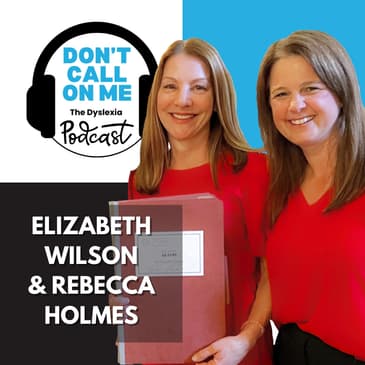
In this powerful episode, hosts Megan and Eryn sit down with Elizabeth Wilson and Rebecca Holmes, two courageous mothers who turned their personal struggles with the public school system into legislative action. They share their emotional journey of advocating for change in Texas, resulting in the Beckley Wilson Act—named after Elizabeth's daughter, who bravely testified alongside other children in the fight for better support for students. Listen in as they reveal the challenges they faced, the resilience they cultivated, and how their determination helped transform the educational landscape for countless families. This inspiring conversation is a testament to the power of parental advocacy and the impact of standing up for what's right.
Perfect for parents, educators, and advocates alike!
LINKS + RESOURCES FROM THIS EPISODE:
Beckley Wilson 2021
-
Book a consultation with Megan to discuss CALT therapy.
-
Book a consultation with Eryn to discuss advocacy services.
With Love and Gratitude,
Megan, Eryn & The Don't Call On Me Team
[00:00:00] Other States Still Struggling to Come Compliant with IDEA. Please know that we were just a group of moms. We were not professionals. None of us had ever been to the legislature before.
[00:00:14] We're also not educators.
[00:00:16] No, we're not. We're not professionals in any way. But we are just a group of moms who educated ourselves. I really believe in the power of the individual to make change.
[00:00:28] So there are states out there that need to make change. Mama bears, go get them.
[00:00:36] This is Megan, owner of Dyslexia On Demand.
[00:00:40] And I'm Erin, owner of Advocate to Educate.
[00:00:43] And we are the Dont Call On Me Podcast.
[00:00:47] We are here to talk about dyslexia, to remove the stigma, to hear what families really go through, and to share their stories.
[00:00:55] In both of our businesses and personal experiences, on a daily basis, we listen to people telling their stories.
[00:01:03] Many have heartbreak, many have struggle, but most all have a silver lining. Even eventually.
[00:01:11] It's all about the stories. The more we share, the more we realize we aren't alone and we are a community.
[00:01:18] No, a tribe standing together.
[00:01:23] Today's episode is sponsored by Advocate to Educate.
[00:01:27] We help parents navigate through the confusing maze of special education in public schools in California.
[00:01:34] We support families starting as early as preschool through 12th grade, creating individual education plans to support the specific needs of your unique and amazing child.
[00:01:45] To learn more, go to our website, advocate2educate.com
[00:01:52] Today's episode is sponsored by Dyslexia On Demand.
[00:01:55] Dyslexia On Demand uses only the highest trained dyslexia therapists.
[00:02:00] And it's all one-on-one and individualized to your child's needs.
[00:02:05] The best part is that it doesn't matter where you're located, because it's all virtual.
[00:02:10] Visit us at dyslexiaondemand.com to learn more.
[00:02:15] Welcome back, listeners.
[00:02:18] We are so excited today to have both Elizabeth and Rebecca here.
[00:02:24] I was just telling them that I awkwardly fangirled them and were stalking them on the website because of some amazing things that they have done for Texas legislation.
[00:02:37] So we are just over the moon that they're here.
[00:02:40] So I'm going to give them each a chance to introduce themselves really quickly before we kind of unwrap the surprises to what they did.
[00:02:47] Hi, I'm Elizabeth.
[00:02:48] I have a daughter who's dyslexic and a son who's dysgraphic.
[00:02:52] Hi, I'm Rebecca, and I have a son who's dyslexic.
[00:02:55] And Elizabeth and I are neighbors in Dallas.
[00:02:58] Oh, you're neighbors.
[00:03:00] That's so cool, too.
[00:03:01] So you have so many reasons to, like, bond.
[00:03:04] Well, these two ladies did some awesome, awesome things for the state of Texas.
[00:03:10] And I'll let them give you a little bit of background as to what it is.
[00:03:14] But it really changed the trajectory of what we're doing in the state of Texas.
[00:03:20] So their work was monumental.
[00:03:22] First, you know, if you're one of our listeners, you know, we ask the same static questions every single time.
[00:03:28] But this time is going to be a little bit different because of their experience and everything that they're bringing to this conversation.
[00:03:35] So I'll start out by just asking you guys a little bit about your dyslexia journey just in general.
[00:03:44] What brought you to the point that you, you know, did this life-changing legislation?
[00:03:50] And, you know, kind of what helped propel you to make that decision to make that change in that action?
[00:03:57] Yeah, I want to hear about your kid's story, too.
[00:03:59] So maybe if you can share, like, just share what it was like when you stepped into the world of dyslexia and what it was like for your child.
[00:04:09] Let's let's start with that.
[00:04:11] So we have four kids and our son is dyslexic.
[00:04:16] And we figured that out in about second grade in the midst of some significant health challenges that he had during elementary school.
[00:04:26] And so for us, dyslexia came in a season that was already really challenging.
[00:04:32] And unfortunately, our school district was not willing to recognize his dyslexia identification or provide appropriate services.
[00:04:41] And so we left our school district for a few years.
[00:04:46] He did and attended a private school and then later returned back into our school district about three years later.
[00:04:54] And getting appropriate services was always a challenge.
[00:05:00] And Elizabeth and I met in the midst of both experiencing that with our kids in the same school district.
[00:05:07] Were you guys neighbors at the time?
[00:05:10] Yes.
[00:05:11] That's very cool.
[00:05:12] We attended a meeting that our school district hosted where they felt like they were going to encourage parents about what was being offered for dyslexia.
[00:05:21] And instead, the parents left in a complete panic about the district's plan.
[00:05:26] And Elizabeth sent out an email in one of our neighborhood groups that said,
[00:05:29] Hey, was anyone at that dyslexic meeting today and left a little bit concerned?
[00:05:33] And so that was the beginning.
[00:05:37] So did y'all know each other at that point as neighbors or that's when you, okay, then you figured it out.
[00:05:43] So just for frame of reference, um, for our listeners and for me, what year would you say that was?
[00:05:49] Because I know where we are now in 2024 and I know what y'all did was in 2021.
[00:05:54] I want to say 2016.
[00:05:56] 2016.
[00:05:57] Okay.
[00:05:57] All right.
[00:05:58] Are you, are your kids the same age?
[00:06:00] No.
[00:06:01] Okay.
[00:06:02] All right, cool.
[00:06:03] And Elizabeth, do you want to share about, about your family?
[00:06:06] Um, my daughter Beckley is the dyslexic child and we figured out, well, we kind of had a suspicion in kindergarten, but nothing happened.
[00:06:18] So we went through first grade and we still felt, um, she's a super bright child.
[00:06:25] So he had tricked everybody and we, and they thought she was a really great reader, but what she was really great at was memorization.
[00:06:32] And so she would always pick the book, the teacher, um, had read to bring home and reread.
[00:06:40] Um, and so something just didn't feel right to me.
[00:06:44] And one time she brought home a book and the pages stuck together and I pulled them apart and they weren't read by the teacher.
[00:06:52] And so she couldn't read those pages.
[00:06:55] And we knew that instantly there was a problem.
[00:06:57] Um, yeah, we got a dyslexia only evaluation through the school district at that time, but because Beckley is one is also gifted.
[00:07:05] She's a twice exceptional child.
[00:07:08] It didn't show her strengths and weaknesses.
[00:07:10] It just made her look average.
[00:07:11] Right.
[00:07:11] And so they thought there was no issue.
[00:07:14] And so they just suggested it was developmental and that we hold her back.
[00:07:20] Um, at the time, you know, we're new to all of this.
[00:07:24] We trusted the school and we held her back.
[00:07:27] And it was probably the most, I will cry if I say it, but it's probably the most traumatic event of her life.
[00:07:33] Um, being held back.
[00:07:34] It was awful by her second round of first grade.
[00:07:38] Things were not improving.
[00:07:41] So she started, um, kind of a pre-program, but they wouldn't offer her a program until she hit second grade because our district didn't offer anything for children her age.
[00:07:53] Yeah.
[00:07:53] So we had to wait until she was in second grade to start, um, her dyslexia therapy.
[00:07:59] Um, and it was after the first year of her dyslexia therapy that we recognized things weren't progressing as we had suspected.
[00:08:07] And we had a misinterpretation that she would just stay in this program until she figured it out.
[00:08:15] And it all started clicking.
[00:08:17] And, um, that we ended up at that district meeting and that was not what the district presented to us.
[00:08:24] The district presented to us at that time because in Texas, the dyslexia handbook said districts only had to offer two years of dyslexia intervention.
[00:08:34] And then they were done.
[00:08:36] And so, oh boy, we saw, um, private school in our future.
[00:08:40] We knew we were nowhere near ready to be finished with dyslexia intervention.
[00:08:47] And, um, that's when I attended the meeting and met Rebecca.
[00:08:51] So I didn't actually meet Rebecca at the meeting.
[00:08:54] I met her after.
[00:08:55] Yeah.
[00:08:56] I threw out the ATV to the neighborhood and then I held a meeting at my house and that's where I met Rebecca.
[00:09:02] Okay.
[00:09:03] So you said so many important things that I want to unpack and partly because, um, some of the history of Texas is what's important to understand because we have a national international audience.
[00:09:15] Um, and it looks different in, uh, you know, from state to state as you've probably figured out.
[00:09:20] So one of the things that I want to, uh, just bring up and explain is that, um, prior to these wonderful ladies, uh, Texas dyslexia fell under section 504.
[00:09:33] So not under special education, which is where it is supposed to be housed because of what she's talking about with Beckley is that we have to understand the comprehensive, like the landscape of the child's brain to really be able to see, um, what's going on.
[00:09:49] And if dyslexia is there, because in a situation like her daughter's where we have a gifted kiddo twice exceptional, um, her dyslexia related numbers are going to look average.
[00:10:01] They're not, we're not going to be able to see dyslexia because we have to look at, well, compare that to where's the rest of her brain functioning.
[00:10:08] Right.
[00:10:09] And so that's a, that's one of the reasons why Texas technically was like in trouble with the department of ed, um, federally because they were doing this or we were out of compliance.
[00:10:19] Um, but that's a little bit of something else that we'll get to.
[00:10:22] But the other piece is that the fact that you guys trusted the school, which is probably what every single listener here.
[00:10:30] I mean, I hear it on a daily basis.
[00:10:32] We trusted the school and, uh, you know, they don't know what they don't know.
[00:10:36] So we're not sitting here trying to critique everyone in the school setting.
[00:10:39] I always say teachers, um, love your babies.
[00:10:42] They are not trying to hurt anyone.
[00:10:45] They just are ignorant when it comes to dyslexia, sadly.
[00:10:49] And I know it's a harsh word, but it is the reality still in 2024.
[00:10:52] And they're asking these kids to be retained.
[00:10:55] And that is such a huge impact to their social emotional self.
[00:11:00] And guess what?
[00:11:01] If they weren't taught the right way in first grade, first round, it's not going to change the second round.
[00:11:07] So I always say, if I don't speak Spanish and you just speak louder to me in Spanish, I still don't speak Spanish.
[00:11:13] It's the same thing, but all we've done is hurt this child because their inner voice was already saying what's wrong with me.
[00:11:21] And now their peers moved ahead of them.
[00:11:24] Um, and, uh, they just feel like dirt about themselves.
[00:11:30] And, but as parents, you're doing your best.
[00:11:33] And it's hard to hear that too after the fact, right?
[00:11:37] Because we don't have that perspective.
[00:11:38] We're just trying to, um, follow what the experts say.
[00:11:42] So just a couple of things to interrupt you with, but.
[00:11:45] Yeah.
[00:11:46] No, I think it's totally fair because I think at that time when you first realize your child's dyslexic, it's like drinking from a fire hose.
[00:11:54] Yes.
[00:11:54] That's what I say too.
[00:11:56] Yeah.
[00:11:56] All that information.
[00:11:57] It's a lot.
[00:11:58] Mm-hmm.
[00:11:58] And there's a lot of fear of the future.
[00:12:02] And there's a lot of, unfortunately, the answers to how to remediate and support the child when you are Googling are not in front of all the fears and the scare tactics, especially with two e-kiddos.
[00:12:17] There's so much information out there about their mental health and suicide awareness before there's, okay, there's actually treatment for dyslexia.
[00:12:28] It's very scary for parents.
[00:12:31] And there's so much information, whereas, and I've, I've brought this up before early intervention for other diagnoses, right?
[00:12:39] We don't hear how scary their life's going to be.
[00:12:41] We hear, if you hear autism, you see ABA.
[00:12:45] That is, um, the way that even the media or our advertising world shows what to do.
[00:12:53] But with dyslexia, it's still kind of like a mystery, um, which is pretty silly.
[00:13:00] The other thing I wanted to bring up, um, going back to your description of having her read something unknown, um, and the pages that were stuck together.
[00:13:12] And that's such a great, um, description as a dyslexic myself.
[00:13:18] I can just imagine being in that situation going, oh no, like, oh no.
[00:13:24] I didn't see these two pages stuck together.
[00:13:27] And I was outed.
[00:13:28] Oh my gosh.
[00:13:29] Right.
[00:13:29] Um, but I think there's a piece that parents, and I want to remind parents that are listening to remember is your own gut intuition about something off about your child's learning in a traditional school system.
[00:13:48] Because our school systems are designed to have kids be literate.
[00:13:54] And when they aren't, it affects every single area.
[00:13:57] And one thing I tell a lot of my clients is, you know, when you listen to your child read, what do they sound like?
[00:14:06] Because most of the time, most dyslexics, while I'm not talking about the kids that have had years of intervention, but most dyslexics, when they read out loud, they don't have that cadence and pace that a reader has that where it comes very naturally.
[00:14:24] And I'm, I'm not making a statement.
[00:14:25] And like, that's how every single dyslexic is.
[00:14:28] But it's a great place to start.
[00:14:31] Because that's actually tangible, like your witness to what it sounds like when they're reading.
[00:14:37] Or if they write something by hand with a pencil, and you see either a zillion erase marks, or you see their frustration builds as they write it, or it takes them too long, or they're in sixth grade, and they write two sentences, and then they're done.
[00:14:52] And you realize the vocabulary in there is that of a first grader.
[00:14:56] Those are all signs that parents can absolutely use as a red flag.
[00:15:02] But a lot of times parents are second guessing because maybe they took a diagnostic at school, and it placed them in as average.
[00:15:12] But that's the nature of, we have to remember the nature of these tests and the purpose, and be skeptical.
[00:15:20] Because the purpose of these tests are not to uncover, unfortunately, are not to uncover dyslexia in the way that we need to see it, especially when kids have something like a great memory, right?
[00:15:34] Because that's just going to be blocking the details that we need to see.
[00:15:40] So I just wanted to add that.
[00:15:42] Okay, go on.
[00:15:43] So you guys are at your house, you've had the meeting, and y'all realize your neighbors, and now what?
[00:15:51] So at that point, we started a neighborhood parent group.
[00:15:55] And we had, both of us had relationships with people who were leading in decoding dyslexia Texas at the time.
[00:16:02] And specifically, we both knew one person who was one of the leaders that was a shared friendship for both of us.
[00:16:09] And she was instrumental in connecting us with each other, connecting us with other decoding Texas leaders, and really teaching us along the way of leading in our parent group, growing in our understanding, not just of our kids, but of the structure of public school.
[00:16:30] And what to us and to the other parents felt like individual challenging cases, the whole decoding Texas team really mentored us and helped us see it from a more systemic standpoint.
[00:16:44] Yeah.
[00:16:44] And they were patient with our zillion questions for years.
[00:16:49] And so we spent several years leading a parent group, welcoming.
[00:16:54] There would be people who would come, and it would be their first time, and they would be in tears that their child was dyslexic and just need someone to comfort them.
[00:17:03] They wanted to hear stories of older kids and parents that had gotten settled and felt more confident about things.
[00:17:11] And it was sweet to watch those parents who had been the tearful parents then kind of, you know, a year or two later welcome the next batch of tearful parents.
[00:17:20] And I think in the process, we realized that what felt like a lot of individual challenges were really we were all kind of running into the same wall in our district.
[00:17:30] Yeah.
[00:17:30] And so at that point, our group, I think, turned from just being a support to parents to figuring out, hey, how do we work through this process from the campus level to the administrative level to the school board level?
[00:17:45] And so that was really the next chapter of our group.
[00:17:49] Just in general, right?
[00:17:51] There is a decoding dyslexia chapter in all 50 U.S. states, if you're a listener right now.
[00:17:57] Texas has an exceptionally strong one for a lot of different reasons.
[00:18:03] But you guys are like the change makers when we look at what's happened with dyslexia nationwide.
[00:18:10] It's always, I would say, the parents in the pen.
[00:18:13] It is you guys taking action because it's not going to be the schools taking action.
[00:18:19] And even professional organizations related to dyslexia are surprisingly not organized enough to do it.
[00:18:28] It's you guys who have led all that change.
[00:18:31] And so thank you so much to every parent who's involved in decoding dyslexia and who, as a whole, in your state, nationally, whatever, for the work and the change that you've done.
[00:18:42] And clearly, like, that has led to kind of next steps as to what you guys chose to do.
[00:18:48] So what are the – I know what they are.
[00:18:50] But why don't you tell our listeners about the identified problems that you were saying that we keep hitting that systemic wall?
[00:18:57] How can we break through that?
[00:18:59] Tell us a little bit more about that.
[00:19:00] Sure.
[00:19:01] Well, I think some of it Elizabeth already referenced with the challenge of Texas wrongly serving dyslexic kids through 504 meant that evaluations were always limited and that they were not performed by someone who was an evaluator or a diagnostician.
[00:19:19] Because of the way the handbook was written at the time and because 504 is not an education law.
[00:19:24] And when I referenced the handbook, Texas has a Texas dyslexia handbook for people who are listening from other states.
[00:19:30] And that's our – those are our state-specific guidelines related to dyslexia.
[00:19:35] And what was common practice really across the state was that a school would buy a box program like Take Flight or MTA or something along those lines.
[00:19:46] And it was good in that, yes, there was dyslexia-specific intervention provided to students.
[00:19:52] What wasn't good is it was all happening outside of the umbrella of IDEA, which has all the process and protections for students with disabilities and their education.
[00:20:01] So there was no progress monitoring.
[00:20:03] And the parent wasn't a required member of the team.
[00:20:06] And what was routinely happening, and we saw it firsthand in our district, is kids would be at the end of third grade and they would be finishing two years of whatever the boxed program was.
[00:20:18] And they were still maybe barely reading.
[00:20:22] And the school was saying, you're done with intervention.
[00:20:24] You finished the program.
[00:20:26] And parents would just be in tears over, but my child can't read.
[00:20:31] And schools would say, well, the great news is there's never been a better time to be a kid who can't read because we have all of this technology.
[00:20:41] And we have audio books and we have screen readers.
[00:20:44] And your child is going to be so supported to live in this time as a person who can't read.
[00:20:50] And it really is very positive.
[00:20:52] And, of course, it was not positive to the parents and it was not positive to the student.
[00:20:56] But under 504, there was no structure legally to point to why that wasn't okay.
[00:21:03] And so I think that was the biggest catalyst for our neighborhood group and our statewide group that we eventually formed was the protections of IDEA matter for kids with disabilities, to have progress monitoring, to have goals, to look at their present levels, to have a parent at the table,
[00:21:22] to make sure that whatever you're pulling them out of class for every day for years is actually making a difference for them.
[00:21:29] And that was just absent.
[00:21:31] You know what's really interesting hearing you say all of this?
[00:21:34] Because I'm in California and under a specific learning disability, that's where all of the dyslexia falls under.
[00:21:42] And I am a very, very busy advocate.
[00:21:47] So it's so interesting because, yes, getting the protections there for parents to have them is so critical because even though we have it set up this way,
[00:22:02] the implementation of what the kids need is such a hot mess.
[00:22:07] That's the professional language I'm going to use.
[00:22:09] Hot mess.
[00:22:10] It is a SHIT show.
[00:22:13] I mean, 100%.
[00:22:15] So while I'm hearing you, I'm also thinking it's so sad that it's not necessarily like the grass is always greener because you may be looking at other states thinking,
[00:22:29] oh, well, if we just had this through an IEP or you call them ARDS.
[00:22:36] Is that what you call them?
[00:22:36] Yeah, we call them ARD meetings.
[00:22:38] ARDS, yeah.
[00:22:40] It's the same as an IEP meeting.
[00:22:42] It just rolls off your tongue, Erin.
[00:22:44] Right.
[00:22:48] But, you know, and I'm sitting here thinking, yeah, it's still a mess.
[00:22:52] I'm not saying like you need this next step for Texas critical because there needs to be a way to legally protect these kids.
[00:23:03] Totally.
[00:23:03] And it's so sad that that is the case.
[00:23:07] It is.
[00:23:07] It's heartbreaking because we still have parents in California that have the IEP and the services that are provided are so pathetic.
[00:23:17] Like you said, it's the district buys a program.
[00:23:21] And they do an hour training.
[00:23:22] And now this teacher is qualified.
[00:23:24] And when they're in due process and they are talking about a qualified teacher, what that actually means is nothing.
[00:23:32] Because I'm a qualified special ed teacher.
[00:23:36] I'm a mild, moderate, certified teacher.
[00:23:40] I went to teacher credentialing school.
[00:23:42] And I never learned how to teach a child to read ever.
[00:23:47] I remember I took a test on reading.
[00:23:51] I actually got 100%, believe it or not, which was like so I like didn't even really like I'm not a big reader.
[00:23:58] But somehow I remember I got a five out of five, not five questions.
[00:24:02] But I was like that, you know, the way that they measured it.
[00:24:07] But I remember once I started teaching going, wait, what?
[00:24:11] Wait, did I did I actually learn how to teach a kid how to read?
[00:24:15] Absolutely not.
[00:24:16] I didn't know Orton Gillingham was a thing.
[00:24:19] I had no idea.
[00:24:20] So just to add that in, that that's that next unfortunate part that's going on here.
[00:24:29] And I'm wondering, well, I'll ask the question once we get there for the next step.
[00:24:34] Just circle back to what Rebecca said.
[00:24:36] So on a micro level, what she was just saying was literally happening to Beckley.
[00:24:42] Yeah.
[00:24:42] He was given a box program.
[00:24:45] It was moving too fast for her.
[00:24:47] She was very stressed out through the entire process.
[00:24:51] We weren't getting progress monitoring or goals for her in particular.
[00:24:57] We were getting goals or progress monitoring for the program.
[00:25:03] And so from there, she graduated from the program.
[00:25:09] And when we tested her, she was still reading on the first grade level that she came in.
[00:25:14] But hey, good luck.
[00:25:16] But hey, we checked the box.
[00:25:18] Right.
[00:25:19] We checked the box.
[00:25:20] You have accommodations.
[00:25:21] Go forth.
[00:25:22] Yeah.
[00:25:23] So I realized and recognized.
[00:25:25] So that was my child.
[00:25:26] But then as Rebecca was saying, we realized that was basically every child with dyslexia in our district.
[00:25:33] And so we were like, oh, my goodness.
[00:25:35] So all the kids in our district are having this issue.
[00:25:38] And then somewhere around 2018, we started really digging in and created, I don't know, what is it, a manifesto?
[00:25:48] I don't know.
[00:25:48] What do you call that document?
[00:25:50] We started.
[00:25:50] I think we called it a report.
[00:25:52] A report.
[00:25:53] A report on our district's dyslexia services.
[00:25:58] And we did it.
[00:26:00] We wrote about an 80-page report that included Texas law, federal law, case law, PENES data, federal data, and showed in all sorts of other statistics and research to basically show why what Texas was doing was wrong and why what was happening in our district was wrong.
[00:26:19] So if you're watching this on YouTube, these ladies look not scary, but you should be scared of them.
[00:26:25] Because anyway, that document is what helped us make the connection that this wasn't just a local issue.
[00:26:37] It was a statewide issue.
[00:26:39] We started to realize as we were developing the document, we started to realize and understand the history of dyslexia.
[00:26:47] And Texas has its own unique dyslexia history.
[00:26:51] And so we started putting that together.
[00:26:53] And then we started to realize that, oh, my goodness, this is a statewide issue that our kids are not able to access IDEA.
[00:27:04] Yeah.
[00:27:04] And that was the first sort of aha.
[00:27:07] We're like, OK, well, it's not our district is not behaving any differently than every other district across the state of Texas.
[00:27:15] This is what they are all doing.
[00:27:18] Yeah.
[00:27:19] And so we took that information and we met with a gentleman named Morgan Meyer, who is a representative in our district.
[00:27:27] And he said, well, write a bill, which we laughed at.
[00:27:35] And they were like, well, why don't you propose what you like the law to say?
[00:27:41] And we were like, are you serious?
[00:27:43] Like, we provide that input.
[00:27:45] And they were great to say, hey, we understand the legislative process.
[00:27:50] But you and there were other moms with us in our kind of core group at the time.
[00:27:56] And they're like, y'all understand dyslexia in Texas public schools better than we will ever understand it.
[00:28:03] So you have the content knowledge of what's not working and where it could be fixed.
[00:28:07] And we have the knowledge of how to get a bill passed.
[00:28:10] And so we're a team.
[00:28:12] We work together.
[00:28:12] And so we got off that call and Googled schoolhouse rock, how a bill becomes a law.
[00:28:20] That is true.
[00:28:22] That is true.
[00:28:22] That is really true.
[00:28:24] I was going to say you would have had me at, yeah, no.
[00:28:28] Okay.
[00:28:29] Like, so good for you.
[00:28:31] I love it.
[00:28:32] A big part of it was we had spent the better, we spent probably 2,000 man hours working on that report.
[00:28:40] We had written for our district with like a team of people in our district who met every week of parents, just volunteer parents.
[00:28:47] We met every week for months and total spent probably 2,000 hours writing that report.
[00:28:52] And I don't believe anyone in our district read it.
[00:28:56] Not a special education person, dyslexia person, superintendent, school board member.
[00:29:01] And so that was a real aha for us of like, wow.
[00:29:07] Like we will have to go outside of our district because what we just wrote is we are trying to find a way to engage them on a governance level.
[00:29:16] Not just like a my kid, my individual situation, but from a governance role.
[00:29:22] And their complete indifference to it.
[00:29:25] And even that they felt no liability concern about it.
[00:29:30] Just the whole thing was very telling.
[00:29:33] And shortly after that COVID happened.
[00:29:35] And so then we kind of had to like step back and go, okay, if they couldn't tackle this when life was normal, they're certainly not going to be able to tackle it right now.
[00:29:45] But when COVID happened, because everyone was trying to figure out what's an appropriate expectation for dyslexia services during COVID, kind of the parent and advocacy world around the state collapsed because we could all meet and connect across the state.
[00:30:02] And everyone was like, what's your district doing?
[00:30:03] What's happening in your district?
[00:30:05] Have your services resumed?
[00:30:06] What are y'all getting?
[00:30:07] And so there was a lot of connection and crosstalk online that then really formed the basis for the group that we took into that legislative session.
[00:30:19] Yeah.
[00:30:19] I'm wondering if also, did you have like an upsurge in parents during that time that wanted to be part of it?
[00:30:26] Because I'm also, I mean, obviously it would help that the parents, we were all kind of home.
[00:30:31] I don't know what was going on in Texas, but here in California we were.
[00:30:34] But I know during that time, a lot of families and parents that were trying to support their kids online were noticing things that they never had noticed before about their academic skills and their struggle.
[00:30:48] Because all of a sudden now everything needs to be read.
[00:30:51] Directions need to be read.
[00:30:53] Typing in the chat to comment during a teacher's lecture or whatever, right?
[00:30:59] And so I know that that was a time where a lot of parents recognized that something was off.
[00:31:06] So I'm just, I'm wondering if you, if there were parents that kind of came out of nowhere during that time.
[00:31:12] Absolutely.
[00:31:13] Yeah.
[00:31:14] I would say that happened some, but I would also say that the core of our group had had a similar trajectory that Elizabeth and I had in our district.
[00:31:23] They were in large part people who had already been trying in their districts and with their schools and had kind of gone from the optimistic rose colored glasses of, oh, the district, they said they're going to help my child.
[00:31:38] It's all going to be fine to being on the other side of, I am my child's only advocate in this and the system is broken.
[00:31:46] And I think that's where our parents who were most committed were pretty, either there or pretty close to that point.
[00:31:53] Yeah.
[00:31:53] The people who really helped lead.
[00:31:55] Literally, I think every single parent of a child with dyslexia has, those are the stages, right?
[00:32:04] They, everybody is going to have some kind of time of rose colored glasses.
[00:32:09] I like the way that you like present that.
[00:32:12] And when I talk to parents, I very often try to say, hey, you know, these are the stages, but recognize that you might need to jump and fast forward past that stage because everyone hits the same final stage of I am my own child's advocate, period.
[00:32:30] And then maybe hire somebody like Aaron, right?
[00:32:33] Yeah, exactly.
[00:32:34] I will say that COVID really highlighted how kids were served in Texas because all of those children who were served via IDEA were, the school districts were still trying somehow to get them their services.
[00:32:51] But all of our children with dyslexia on 504s got nothing.
[00:32:55] No, I know.
[00:32:56] There was nothing for them.
[00:32:57] And that highlighted, really highlighted the importance of our children also being allowed to be supported in the appropriate way.
[00:33:07] Yeah.
[00:33:07] So you guys wrote this bill.
[00:33:09] Tell us, I loved the schoolhouse rock thing.
[00:33:12] That was amazing.
[00:33:13] So you wrote a bill and then kind of what happened next?
[00:33:17] I would say it was like a roadshow of new relationships for Elizabeth and me because we had to become connected to the larger disability community that's very active every session at the legislature.
[00:33:29] And we were just the complete newbies with really no credibility and no experience.
[00:33:36] And they're like, who are these two new people on the call?
[00:33:40] Yeah.
[00:34:10] She was amazing with Decoding Texas of just helping us.
[00:34:15] She would always say, you want to make the least amount of changes with the most bang for your buck.
[00:34:20] And she was masterful at that, of finding the one word that needed to be removed or the one word that needed to be added versus showing up with like, here are three new pages of law we'd like to have, which is just going to be more challenging.
[00:34:35] Totally.
[00:34:36] Shout out to Robbie Cooper.
[00:34:39] Like I and Robbie P.S.
[00:34:41] I'm going to hit you up pretty soon for something.
[00:34:44] You don't even know who I am.
[00:34:45] But I do believe that like we need to make a statue of Robbie somewhere.
[00:34:52] We concur.
[00:34:53] Yeah.
[00:34:54] We concur.
[00:34:55] Yes.
[00:34:55] She's 100%.
[00:34:56] Amazing.
[00:34:58] Amazing.
[00:34:58] So that's awesome.
[00:35:00] So I would say that after the bill was, we got the bill back.
[00:35:05] Morgan Meyer's office submitted it for us.
[00:35:07] And then we had to go out and educate everybody.
[00:35:12] And we created a little kitchen.
[00:35:14] We called it the kitchen table group of women in our area.
[00:35:17] And we just got on.
[00:35:20] We just called everybody, every legislator, every representative, every senator.
[00:35:25] And we just asked them to meet with us, asked them to talk to us.
[00:35:30] I mean, we had crazy schedules throughout that time period, zooming constantly with people to educate them about the history of dyslexia in Texas and how we were violating federal law by not having our kids served via IDEA.
[00:35:50] And it was, I mean, I can't countless man hours that we spent calling all these people in an attempt to get someone to actually carry the bill.
[00:36:02] Yeah.
[00:36:03] So the point at which I learned about this is when I saw your daughter, Elizabeth, on the House of Rep floor giving her testimony.
[00:36:14] And I am about to start crying just because every single time I watched that video and I watched it again this morning and I was brought to tears again.
[00:36:25] So tell us more about that.
[00:36:28] And we will drop the link to that video in the notes.
[00:36:34] But how did you convince her to do that?
[00:36:37] First of all, that's what I want to know.
[00:36:39] Yeah.
[00:36:39] Oh, my gosh.
[00:36:40] Well, once we got Representative Dutton to sponsor the bill, at a certain point, we realized we were all going to have to talk about our experiences.
[00:36:51] And I asked Beckley if she would speak like her experience for the kids.
[00:36:57] And we sat down and wrote it.
[00:37:00] She wanted to own it.
[00:37:02] But when she got up there to speak, I mean, it killed me.
[00:37:08] Oh, my gosh.
[00:37:09] It was – she was so brave.
[00:37:12] She was 12.
[00:37:14] She was so brave.
[00:37:15] She was so young.
[00:37:16] And I think her personal experience was every Texas child's story.
[00:37:24] Yes.
[00:37:24] Yes.
[00:37:24] And it resonated.
[00:37:27] And parents were like, yes.
[00:37:29] They felt heard.
[00:37:31] They felt seen.
[00:37:32] And they felt like it was the first time somebody could articulate the experience that they've had.
[00:37:40] Yeah.
[00:37:40] And it sort of exploded out from there.
[00:37:44] Yeah.
[00:37:44] Her voice was the voice of every kid with dyslexia.
[00:37:48] And her experience was the same.
[00:37:50] And I'm, like, crying.
[00:37:53] She was amazing.
[00:37:55] It was.
[00:37:55] She was amazing.
[00:37:56] And is that why they named – I mean, how did – it's the Beckley-Wilson Act.
[00:38:01] And so is it as a result of – like, did they name it after or was the name before?
[00:38:07] It was after.
[00:38:08] Yeah.
[00:38:08] Wow.
[00:38:09] When it passed through the first – in the first session, when it passed through the House,
[00:38:15] it passed through unanimously.
[00:38:17] And during that time, Representative Morgan Meyer came forward and with a –
[00:38:23] Proclamation?
[00:38:25] I can't remember exactly what the word was.
[00:38:27] Yeah.
[00:38:28] And named it after Beckley.
[00:38:30] We were – they voted it through.
[00:38:32] And we were gobsmacked because we were not expecting.
[00:38:35] Yeah.
[00:38:36] Yeah.
[00:38:36] We were not expecting that at all.
[00:38:37] I was just going to say, I think, one, it was a complete honor and recognition of Beckley's
[00:38:45] courage to speak and the story that she had lived.
[00:38:49] I think the other thing that was really significant long-term for us with the bill is it always put
[00:38:55] students and families front and center of our bill.
[00:38:58] Our bill never became primarily about professional organizations, school boards, teachers' organizations,
[00:39:06] all of those things.
[00:39:08] We always had a seat at the table, but we still had to fight for it.
[00:39:13] But we belonged in that conversation because the bill was named after Beckley.
[00:39:18] And as long as the bill retained her name, you could not divorce it from the students and
[00:39:24] families who were advocating and who were reaching out to their legislators.
[00:39:28] And I think it was such a win for the bill long-term that it kept the student and family experience
[00:39:35] central to it.
[00:39:36] And I don't think it would have been the same without Beckley's testimony or having the
[00:39:40] bill named after her.
[00:39:42] I think the more typical players who are always in Austin and who have paid lobbyists and the
[00:39:47] people who follow the legislature professionally would have outweighed the student and parent
[00:39:53] voice without that.
[00:39:55] It makes it real.
[00:39:56] It humanizes it.
[00:39:57] Yeah.
[00:39:58] Yeah.
[00:39:58] I was just going to say, you know, it makes me think that kids really need to be part of
[00:40:04] the movement because when we hear it directly from them and we see them get the courage to
[00:40:11] speak out and speak up, it sounds like to me, she got their attention.
[00:40:18] I mean, clearly I watched it too.
[00:40:21] Unbelievable.
[00:40:22] Unbelievable.
[00:40:23] What a difference for the other kids who will get to watch this to say, look, this is an
[00:40:32] opportunity you have.
[00:40:33] You've been given this gift of dyslexia.
[00:40:35] And with that gift comes a responsibility to help others that are going to come after
[00:40:41] you.
[00:40:42] And that is really that generational protection that we're seeing.
[00:40:48] We're seeing the younger group of students starting to say, this isn't okay anymore.
[00:40:53] I mean, and we're, and I'm seeing that a lot in the mental health space of kids deciding
[00:40:58] they're going to be sober.
[00:40:59] And because, you know, knowing that alcohol is a big problem, they're not participating and
[00:41:06] that's coming out more and more.
[00:41:08] So I just think that this is an opportunity that we can build upon and try to make more
[00:41:16] moves in this space, because as you guys probably know, this is an incredible, incredible
[00:41:24] feat that you guys accomplished.
[00:41:26] And there's so much to do.
[00:41:28] And so maybe we should learn from this and use our children really to speak out.
[00:41:34] There were so many kids who testified and would come back for the House Public Education
[00:41:40] Committee and the Senate Education Committee.
[00:41:42] And when we got voted through on the House floor and when we get, you know, be up for a
[00:41:46] vote in the Senate, I mean, people returned to Austin again and again, and we would make
[00:41:51] maps of the Capitol and there are about 250 offices in the whole Capitol.
[00:41:55] And we would divvy it up like, okay, you couple parents and kids take these offices and we'd
[00:42:01] divvy it all up.
[00:42:02] We've hit all 250 offices over a day or two's time.
[00:42:05] And the kids would lead the way into every office.
[00:42:08] We'd stand outside the office and they'd have a flyer or something, you know, a little something
[00:42:14] to give away.
[00:42:14] And then they'd decide between them who's going to start, who's going to hand over the
[00:42:18] flyer.
[00:42:19] Oh my gosh.
[00:42:20] They got so great at it.
[00:42:22] And they would go in and I mean, even like as young as second grade would go in and go,
[00:42:27] is your education staffer available?
[00:42:29] Oh my gosh.
[00:42:30] Of course, someone who would, if we walked in with no appointment and said, is your education
[00:42:35] staffer available?
[00:42:36] It would be a hard no.
[00:42:37] But the person at the front desk would just smile and be like, actually, you know what
[00:42:40] he is?
[00:42:41] Hey, Joe, we've got someone here to see you.
[00:42:43] And then our kids would be able to have a conversation with the staffers in those offices
[00:42:48] and they would stop what they were doing and listen to them.
[00:42:51] And with, if we had not had the kids with us in Austin, our bill would not have passed.
[00:42:56] It would have been a completely different experience.
[00:42:58] And I don't think, you know, just to double down on that, it was very sweet and quite
[00:43:05] the honor to name it after Beckley, but she was not the only child there.
[00:43:09] There were children from across the state.
[00:43:11] There were families from across the state.
[00:43:13] Because like we said, through COVID, when we started connecting, we also started sharing
[00:43:18] that document.
[00:43:19] And like, it was like, there was a similar aha realization throughout the state.
[00:43:25] And we had people who would come that, I mean, we've now become friends with people all across
[00:43:31] the state because they would just come in with their kids and their stories and their treats
[00:43:36] and, you know, and with a sole goal of helping us to educate the senators and representatives
[00:43:44] because they just didn't know.
[00:43:46] You don't know what you don't know.
[00:43:47] And that's what we really worked hard to do the first time around.
[00:43:52] That's something I didn't realize until we've interviewed other people.
[00:43:58] And that's the exact thing.
[00:44:00] I always thought it was just Beckley.
[00:44:02] So that's, I mean, I wish I could have seen that.
[00:44:05] And I think that, I hope that your like giveaway was little many things of Kleenex with your bill
[00:44:13] number on it because I can't, I can only imagine how many tears were flowing all those days.
[00:44:19] And half of it probably just from parents out of pride for their kids.
[00:44:23] Well, what was also really cool is we would go into the offices and it might be the front desk
[00:44:27] person and be like, this is so cool.
[00:44:29] I have dyslexia.
[00:44:30] Tell me again what you're doing.
[00:44:31] Or someone would come out of an office who was overhearing and be like,
[00:44:34] hey, what are y'all talking about?
[00:44:35] I'm dyslexic or my sister's dyslexic.
[00:44:38] And so it was rare that we would go into an office where there was not some personal connection
[00:44:44] to it.
[00:44:45] And because the kids were there and they were so vulnerable and open and charming and adorable,
[00:44:53] people engaged with them very honestly.
[00:44:55] And we would get in lots of big conversations with people who would all come in because it
[00:45:00] is so common.
[00:45:01] And people would definitely say, this is so great.
[00:45:04] We had even a lobbyist who basically started donating his time for us and just having like
[00:45:10] little extra side conversations and keeping us in the loop on things.
[00:45:13] Because he was like, hey, you have parents here from the school district I grew up in
[00:45:17] and I was dyslexic and all these things happened to me.
[00:45:20] And like it's now, you know, 15 years later and it's clearly still the same.
[00:45:25] And y'all are here trying to make a difference.
[00:45:27] I'm happy to help however I can.
[00:45:29] So it was pretty universal.
[00:45:31] The first, we did not succeed in 2021.
[00:45:35] That's the first year we tried to push the legislation through.
[00:45:38] We got all the way to the Senate on the Senate floor for the final vote.
[00:45:43] And it got turned into a study and then went away.
[00:45:49] So we were deflated.
[00:45:51] We were hopeful.
[00:45:53] But I think at the time, Texas couldn't even, like, I don't think they expected us.
[00:45:58] They called us the moms.
[00:46:01] I don't think they expected the moms to take over the legislature.
[00:46:06] But we did.
[00:46:07] And we were recognizable.
[00:46:09] And I think it was overwhelming.
[00:46:10] And this big ship just, you know, was coming through and coming to the schools.
[00:46:16] And I think at the time, they realized they were not ready to turn that ship.
[00:46:21] So we did not succeed the first time.
[00:46:24] But during the first session, there was a representative, Steve Toth, who testified as well.
[00:46:33] He was so proud of all the kids getting up to testify that he got up for the first time in his entire life and told his story and how it felt for him as a dyslexic student.
[00:46:46] And it was heartbreaking.
[00:46:49] And I'm pretty sure there wasn't a dry eye in the room after he stopped speaking.
[00:46:53] He just took such personal care of us and the bill after that point.
[00:46:58] You'll hear Elizabeth and I say many times, without this, the bill would have never passed.
[00:47:02] Without this, the bill would have never passed.
[00:47:04] And it's like we had to strike lightning a hundred times.
[00:47:07] And Steve Toth was absolutely one of those moments.
[00:47:11] Without Representative Toth, the bill would not have passed.
[00:47:15] You had that dyslexic perseverance.
[00:47:20] And I think we weren't really even sure that we were going to try to go through the legislature again.
[00:47:26] It was such a daunting experience.
[00:47:29] And we were so outmatched.
[00:47:31] And the complexity, the pace, the odds were so against us.
[00:47:39] And the Texas dyslexia handbook had been updated after that first legislative session.
[00:47:45] And we're like, well, maybe that's just all that is going to come of it.
[00:47:49] But then Representative Toth reached out to Elizabeth and another mom.
[00:47:53] And you should tell that part, Elizabeth.
[00:47:56] About opening day.
[00:47:58] Yes.
[00:47:59] He asked Beckley to come down and another young man to come down for the first day of session.
[00:48:07] And, you know, we weren't expecting anything.
[00:48:10] And he said, well, no, no, we're going to get this passed.
[00:48:14] The first time was practice.
[00:48:16] Now we're going to do it.
[00:48:17] And we just had no idea.
[00:48:19] And it was through his perseverance that we, you know, we were like, okay, I guess we're doing this.
[00:48:27] I guess we're going to go back.
[00:48:29] Because Beckley and Maddox sat with him on the House floor when the legislative session opened.
[00:48:34] I mean, that was his signal of like, this is my priority this session.
[00:48:38] You, your kids and your families are my priority.
[00:48:42] And so we were like, well, if he's in, we're in.
[00:48:44] I mean, I guess we're going again.
[00:48:47] Well, you guys did get it passed.
[00:48:49] And it has changed the landscape for Texas significantly and put it where it was supposed to be the whole time.
[00:48:58] There's been a trickle down or not trickle down, but a snowball, I think, somewhat impact that has happened for Texas after.
[00:49:05] And, you know, the ironic thing actually, in a way, is this big mountain that we had to pass, that you guys passed for us.
[00:49:15] Believe it or not, Texas is actually like one of the U.S. leaders in dyslexia legislation.
[00:49:22] And that was probably even, I was like, was it before this?
[00:49:27] I don't know.
[00:49:27] I mean, we've been ahead of the curve for a while, but it just goes to show how much growth everyone, even Texas, needed to make kind of as a whole.
[00:49:37] And, you know, even the fact that you guys are referencing that the school had intervention once upon a time, right, when it was failing for your kids.
[00:49:47] They even had it.
[00:49:49] So many states don't even have that.
[00:49:51] So many states aren't even naming dyslexia.
[00:49:54] You know, just the growth that as a nation we have to make is it's still a mountain for so many people.
[00:50:02] But you guys just like kind of forever changed that landscape for us.
[00:50:06] So I want to just I want you guys to tell us about kind of now your kids are older.
[00:50:12] So I want to know where they are now and how your engagement in this process has shifted their outlook for themselves.
[00:50:23] And kind of, you know, what do you guys talk about at home about this now that they're older and not in it in elementary school going through this process?
[00:50:33] Beckley is now in 10th grade.
[00:50:36] She's driving.
[00:50:38] Oh, my.
[00:50:39] Yeah.
[00:50:40] I will tell you after the first session, she struggled with a lot of grief because it was really painful for her to dredge up that story and to tell that story over and over and over again.
[00:50:56] It was really difficult for her.
[00:50:59] But it also gave her her voice back.
[00:51:04] And it also she learned that she's a strong advocate.
[00:51:10] She speaks up for herself and she is the first to speak up for others.
[00:51:17] So I think it forever changed who she is as an as an individual.
[00:51:22] She is at a private school called Shelton for kids with learning differences.
[00:51:27] Shelton.
[00:51:28] Mm hmm.
[00:51:29] Um, we had to move her there in fourth grade since she couldn't get the services and, um, she loves it there.
[00:51:36] She's made a lot of great friends and we're just going to stay there and finish out our high school years.
[00:51:42] Awesome.
[00:51:43] And what about your son, Rebecca?
[00:51:45] So he is now a junior in college.
[00:51:47] So I was chuckling at the, how do y'all talk about it at home?
[00:51:51] I'm like, well, not very often.
[00:51:54] He's not really at home.
[00:51:56] Um, but he is studying finance in college and in his junior year and doing well.
[00:52:02] And so he was late high school or the first time we ran the bill through.
[00:52:08] And when the bill passed, he was already a sophomore in college.
[00:52:11] And so I think for a lot of our families, um, the bill in many ways was a pay it forward.
[00:52:18] Just because of how steep the learning curve is, is you can't absorb the challenges your child has.
[00:52:25] At the same time you absorb the obstacles in the system and you certainly can't help your child by fixing the system fast enough for it to help your child.
[00:52:36] And so, um, I think most of our, there are very few parents in our group whose children are actually benefiting from the change because it was like we solved for our kids.
[00:52:48] Then we understood the system.
[00:52:50] Then we spent years trying to figure out how to impact the system.
[00:52:53] Then our efforts were finally successful.
[00:52:56] And at that point, our kids were, most of them are long out of the window to be impacted by it, um, personally.
[00:53:03] Yes.
[00:53:03] Even Beckley.
[00:53:05] Oh yeah.
[00:53:05] Impacted by the educational shift, but the mental shift of watching and being part of this, this systemic change and recognizing.
[00:53:16] I think it's a lot of the dyslexic people that we interview have a similar inner voice that says, no matter how hard I try, it's kind of irrelevant.
[00:53:27] I'm just going to fail because I'm just not smart.
[00:53:30] Maybe more.
[00:53:31] So this is proof through hearing this story.
[00:53:35] This is proof that that's actually not true.
[00:53:38] You try, you fall, you get back up and then you try again and try again and try again.
[00:53:45] And look, we made great change.
[00:53:48] Helping other people feel so much better than helping ourselves.
[00:53:51] And that feeling of, and you nailed it.
[00:53:54] I have so many parents that come to me and they're like, well, I want to get involved right now in the system and make change because my child needs intervention next year.
[00:54:03] And I'm like, yeah, that's not how it works, but, but I get your sentiment and like, yeah, but in this case and my hope for your kids and all the other kids that were part of this is that their inner dialogue changes because they were able to see and have proof that that that is not accurate.
[00:54:25] And the more you try and the more you don't give up, you do get better.
[00:54:31] You do make change and you can break through that wall.
[00:54:36] That doesn't mean you're going to become a speed reader or be on a spelling bee, but that's irrelevant.
[00:54:41] It's not part of what I'm speaking to.
[00:54:43] I'm speaking to that inner voice that stems from our trauma of being dyslexic and not getting the right help and not understanding why we're not learning and we're different and or learning in this area.
[00:54:55] But when you have that unresolved trauma and you continue on with life, it bleeds into all other areas.
[00:55:03] And what better way to tell that trauma to take a hike than to see proof of all these people coming together and making a big difference for all the next generations to come?
[00:55:16] Yeah, 100%.
[00:55:18] Well, even in the difference of our first run at the legislation and our second, there was a whole brand new batch of children.
[00:55:27] Yeah.
[00:55:27] A whole brand new batch of children who heard the message of the first group and realized, that's me.
[00:55:34] And they came.
[00:55:36] And any one of those children would have been Beckley.
[00:55:39] And they all spoke and they were brilliant.
[00:55:43] And I think there's a catharsis that happens for all of them when they speak out and they tell their stories.
[00:55:52] And they see others overcoming.
[00:55:56] The catharsis that you're mentioning, I can relate to that so deeply.
[00:56:02] And every interview we've had when we're interviewing the child that's actually dyslexic right on the screen, it's like we know each other and we know our struggles and we get each other.
[00:56:16] There's a there's just a yeah, you get it.
[00:56:19] Yeah, I get it.
[00:56:20] Yeah.
[00:56:20] And then it's like unspoken.
[00:56:22] It's really, really beautiful.
[00:56:24] And that connection and for them to see that so young and especially in the age of technology and social media where we're pulled back from being connected in person.
[00:56:36] So this just hearing about this, I'm so happy they got that experience because it's so important for those that have dyslexia to know they're not alone.
[00:56:48] Hence why we're doing this podcast.
[00:56:49] Hence why we're connecting parents and other individuals with dyslexia because you don't have to do this alone.
[00:56:57] There are enough people out there that get you.
[00:57:00] If you're listening right now, there are people that understand that you don't need to explain yourself.
[00:57:05] We get it.
[00:57:06] We get it.
[00:57:07] And, you know, I always just this this little bit.
[00:57:11] I whenever I have a family who has a child that's dyslexic, but neither of the parents are dyslexic.
[00:57:17] I always tell the parents watch what they say to their children, because when they say to their child, honey, I know this is really hard or whatever.
[00:57:28] In the back of that kid's head, they're thinking you absolutely have no idea because you don't struggle with this.
[00:57:35] And I tread lightly when I encourage parents to get them a mentor because I don't want the parents to feel like they, you know, shouldn't be that they're not suitable to be their parent.
[00:57:45] They absolutely are.
[00:57:46] But the best thing that they can say is, gosh, this must be difficult instead of I know how you feel.
[00:57:53] I've done hard things, too.
[00:57:55] It's just not relatable to the kids when when they're struggling in their own head about this.
[00:58:00] So getting all these groups of kids together is magical.
[00:58:05] Totally.
[00:58:06] I wanted to also bring up something you said about other states still struggling to come compliant with IDEA.
[00:58:15] Please know that we were just a group of moms.
[00:58:19] We were not professionals.
[00:58:20] None of us had ever been to the legislature before.
[00:58:24] We're also not educators.
[00:58:26] No, we're not.
[00:58:28] We're not professionals in any way.
[00:58:30] But we are just a group of moms who educated ourselves.
[00:58:34] I really believe in the power of the individual to make change.
[00:58:39] So there are states out there that need to make change.
[00:58:43] Mama bears, go get them.
[00:58:45] It's true.
[00:58:47] Yes.
[00:58:47] Yes.
[00:58:48] And even if you're even if it's not IDEA compliance and it's something else, you know, like related to dyslexia, because there's so much change that needs to happen all over the place.
[00:58:59] And just there it's different topics all under dyslexia, like that dyslexia umbrella.
[00:59:05] And so I love what you said, Elizabeth.
[00:59:08] And there is no such thing as just moms.
[00:59:10] Right.
[00:59:11] But still.
[00:59:12] But we we all get your point is that you had no background in any of this kind of stuff.
[00:59:18] You can't wait for that one person who might know something.
[00:59:21] And you got to take it into your own hands when it comes to pretty much everything related to dyslexia.
[00:59:27] And Rep Toth was great to remind us of that all along the way.
[00:59:31] We would get discouraged and he would say, guys, get back down here.
[00:59:34] You don't know the power that you have.
[00:59:36] Like you got to be in the building.
[00:59:38] You got to be here.
[00:59:39] You don't know.
[00:59:40] We feel it when you're here and you your presence makes a difference.
[00:59:45] And at the times when we would just be like, it just doesn't seem like like we're making any progress.
[00:59:51] And he would always just encourage us and remind us of like, hey, your your voice carries more weight than you realize.
[00:59:59] And and not to give up is a great encouragement.
[01:00:02] I just want to thank you guys so much for sharing your story.
[01:00:06] And I know that other parents are going to want to connect with you to say, how do we do this?
[01:00:11] What do we do?
[01:00:12] So I'm sure you'll gladly say, I don't know.
[01:00:16] We're just moms.
[01:00:18] But you have so much knowledge and I hope that you'll continue to share this everywhere.
[01:00:24] I'm just honored.
[01:00:25] Thank you so much for joining us today.
[01:00:28] Totally.
[01:00:28] Hugs.
[01:00:29] Thank you for having us.
[01:00:30] I would say if the if your listeners want to see a little bit of our work, we have a Twitter and a Facebook page for the Texas Dyslexia Coalition.
[01:00:41] And that was just our very kind of loose terminology for basically there were all these pockets of all these different neighborhood groups and advocacy groups and individuals who all joined together to work on the bill.
[01:00:54] And so that Texas Dyslexia Coalition, Twitter and Facebook.
[01:00:58] You can kind of see some of the seasons that we went through and the moments in the bill process and the structure of things that we were working towards with the bill.
[01:01:09] So that's kind of our probably our best place that has a living history of what that journey looked like.
[01:01:16] So we'll put links to that, too, because I know that after people listen to this podcast, I know that everyone's going to want to go and see that YouTube video that I was referencing.
[01:01:29] So, yes.
[01:01:30] Thank you, guys.
[01:01:31] Yeah.
[01:01:31] Thank you guys again for your time today and for, you know, letting me stalk you even when you didn't know that I was stalking you.
[01:01:41] All right.
[01:01:42] Bye.
[01:01:43] All right.
[01:01:43] Thank you all.
[01:01:44] Bye.
[01:01:44] Thank you.
[01:01:45] Bye.